How to Start Whole30: Rules, Food List, and Your First Week Plan
Learn how to start Whole30 with this comprehensive guide to its rules, approved food list, and a helpful plan for your first week. Reset your eating habits.

If you’re feeling stuck in a cycle of unhealthy eating or dealing with nagging symptoms that might be food-related, Whole30 offers a structured reset. This 30-day elimination diet removes common inflammatory foods like sugar, grains, dairy, and legumes, helping you identify what truly works for your body. In this article, you’ll find the core rules, a complete food list, and a practical first-week plan to get started.
Key Takeaways
- Whole30 is a 30-day elimination diet, not a long-term plan, focusing on whole foods.
- Forbidden foods include sugar, alcohol, grains, legumes, and dairy for the full 30 days.
- Plan meals and prep ingredients weekly to avoid accidental non-compliant choices.
- After 30 days, reintroduce one food group at a time to identify sensitivities.
- Consult a healthcare professional before starting, especially if you have medical conditions.
What is Whole30 and How Does It Work?
Whole30 is a 30-day elimination diet designed to help you identify food sensitivities and improve your overall health. For the full month, you strictly avoid common inflammatory foods: sugar (real or artificial), alcohol, grains, legumes, and dairy. The program focuses on whole, unprocessed foods like meat, seafood, eggs, vegetables, fruits, and healthy fats. The goal is to reset your cravings and break unhealthy eating patterns. After 30 days, you systematically reintroduce each food group to observe how your body reacts. This reintroduction phase is the key to understanding what works for you. It’s not a long-term diet but a structured reset.
Essential Whole30 Compliant Foods for Your Pantry

Stocking your pantry with compliant foods makes the 30 days much easier. Focus on these categories:
- Meat and seafood: Beef, pork, chicken, turkey, fish, shrimp, scallops, all without added sugar or fillers.
- Eggs: A versatile protein source for any meal.
- Vegetables: All fresh or frozen vegetables except corn and peas (they are legumes).
- Fruits: Eat them in moderation, and skip dried fruit with added sugar.
- Healthy fats: Olive oil, coconut oil, avocado oil, ghee, nuts, and seeds (except peanuts, which are legumes).
- Herbs, spices, vinegars: Check labels, avoid blends with added sugar or MSG.
Ingredients you must avoid entirely: sugar (real or artificial), alcohol, grains, legumes, dairy, carrageenan, MSG, and sulfites. Tip: Read every label meticulously. Hidden sugars and additives sneak into broths, canned vegetables, and spice mixes.
Your Step-by-Step Guide to a Successful Whole30 Program

Follow these steps to set yourself up for a successful 30 days.
- Consult a healthcare professional: Before starting, talk to your doctor, especially if you have a medical condition, are pregnant, breastfeeding, or take medications. If you have a history of disordered eating, seek professional guidance.
- Plan your meals and grocery lists: Sit down for an hour and map out your first week. Write a detailed list of compliant foods so you’re never caught hungry without options.
- Read every food label: Check for hidden sugar, MSG, sulfites, carrageenan, and non-compliant oils. If you can’t pronounce an ingredient, look it up.
- Focus on vegetables, protein, and healthy fats: Build each meal around these three. There is no calorie counting or portion control, eat until satisfied.
- Avoid the scale: Whole30 is not a weight-loss diet. Stepping on the scale can distract from the real goal: identifying food sensitivities and resetting your habits.
- Prioritize sleep and stress management: The program asks you to aim for 7-9 hours of sleep per night and find ways to manage stress. These factors affect how your body responds to food.
- Prepare for reintroduction: Around day 28, start planning how you’ll add foods back one at a time. This phase is where you learn the most.
Whole30 First Week Meal Plan Example
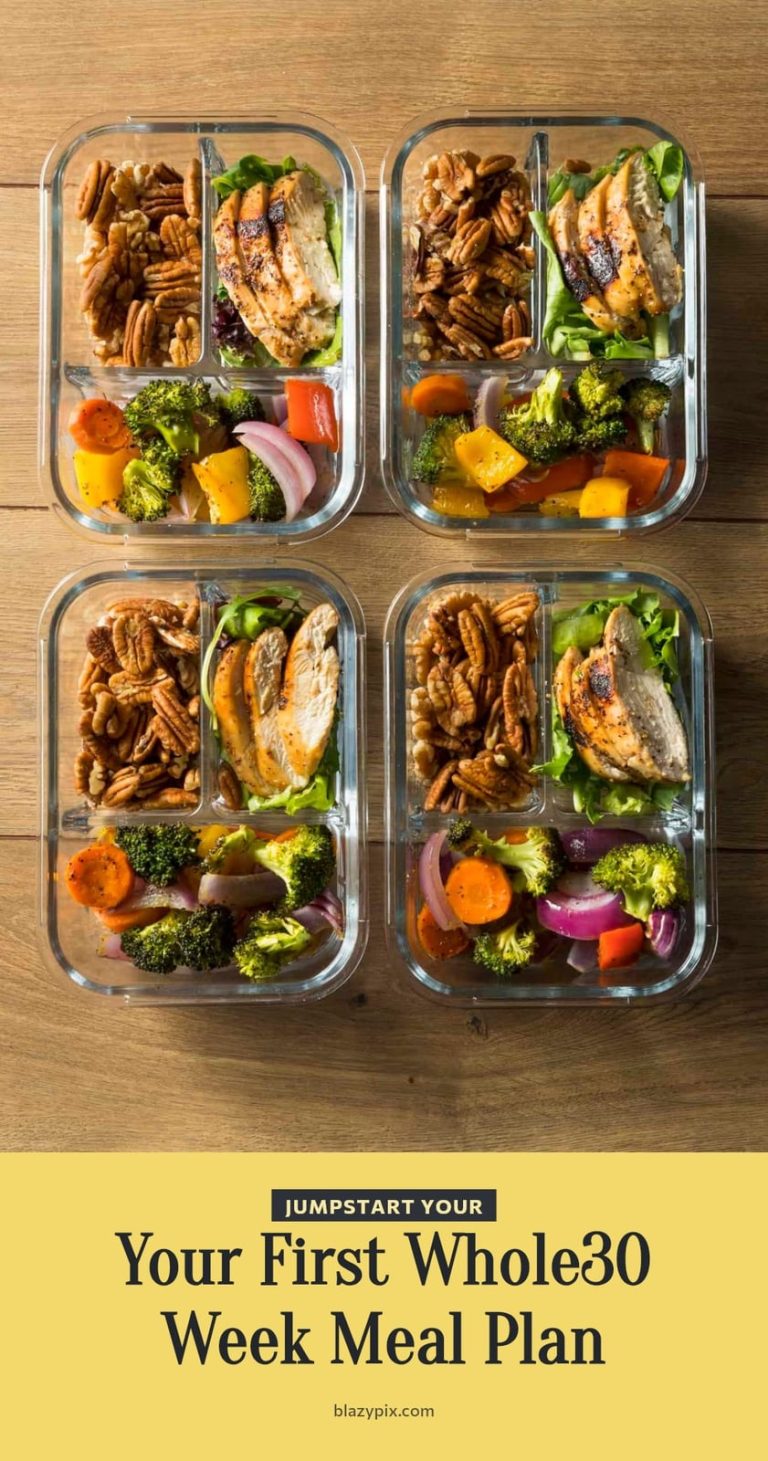
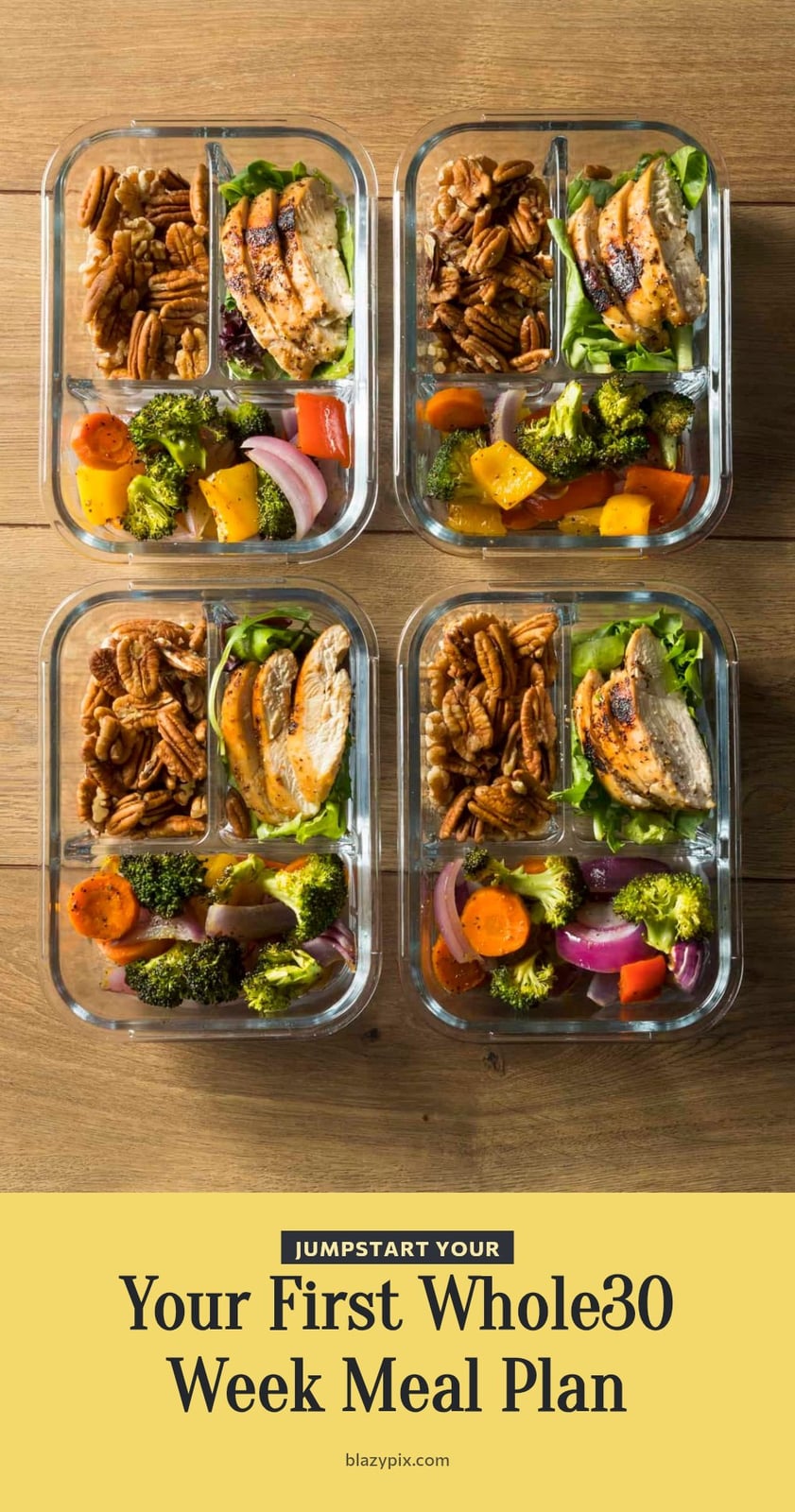
Here’s a sample first week to get you started. Each meal includes protein, vegetables, and healthy fat. Adjust portions to your appetite.
| Day | Breakfast | Lunch | Dinner |
|---|---|---|---|
| 1 | Scrambled eggs with spinach and avocado | Grilled chicken salad with olive oil vinaigrette | Baked salmon with roasted broccoli and sweet potato |
| 2 | Frittata with mushrooms and bell peppers | Leftover salmon over mixed greens with walnuts | Beef stir-fry with zucchini, carrots, and coconut aminos |
| 3 | Two hard-boiled eggs and an apple | Tuna salad with lettuce, cucumber, and avocado | Pork chops with sautéed kale and butternut squash |
| 4 | Sweet potato hash with ground turkey and onions | Grilled shrimp over arugula with lemon and olive oil | Roasted chicken thighs with roasted Brussels sprouts |
| 5 | Banana and almond butter (no sugar added) | Leftover chicken over spinach with sunflower seeds | Baked cod with steamed asparagus and coconut rice |
| 6 | Veggie omelet with tomatoes and basil | Lettuce wraps with sliced beef, bell peppers, and guacamole | Lamb chops with roasted eggplant and mint salad |
| 7 | Leftover lamb with sautéed Swiss chard | Shrimp and avocado salad with lime and cilantro | Roast turkey with roasted carrots and a side of olives |
Drink water with every meal, and if you need a snack between meals, reach for a handful of nuts, a piece of fruit, or raw vegetables.
Common Whole30 Mistakes and How to Avoid Them
Not planning meals: Without a plan, you risk grabbing non-compliant food when hunger hits. Set aside time each weekend to prep ingredients and map out your week.
Not reading labels carefully: Hidden sugars, sulfites, and MSG sneak into broths, sauces, and seasonings. Check every label for words ending in “-ose” or any additive you don’t recognize.
Treating it as a weight-loss diet: Whole30 is an elimination program, not a calorie-cutting plan. Focus on how your body feels, not the number on the scale (which you should avoid during the 30 days).
Skipping the reintroduction phase: The real insights come after day 30. Without systematic reintroduction, you won’t know which foods cause reactions.
Getting discouraged by detox symptoms: Headaches, fatigue, or irritability in week one are common as your body adjusts. They usually pass within a few days.
Focusing on restrictions instead of abundance: You can still eat plenty of vegetables, meats, seafood, eggs, fruits, and healthy fats. Shift your mindset to what you can add rather than what you remove.
Practical Tips for Navigating Your Whole30 Journey
Stay hydrated: Drink water throughout the day. It helps manage hunger and eases detox symptoms.
Prep compliant snacks: Keep nuts, seeds, fruit, or hard-boiled eggs on hand for emergencies. This prevents last-minute non-compliant choices.
Keep a food journal during reintroduction: Write down what you eat and how you feel afterward. This helps you spot patterns and identify problem foods.
Connect with the community: Join online Whole30 groups or forums. Others can offer recipe ideas, encouragement, and answers to questions.
Experiment with new recipes: Try one new vegetable or cooking method each week. Variety keeps meals interesting and prevents boredom.
The Crucial Reintroduction Phase After 30 Days
The reintroduction phase after day 30 is where you learn how specific foods affect your body. Add back one food group at a time, such as dairy or grains, and eat it for two meals in one day. Then wait two to three days while you return to strict Whole30 eating. During that window, note any physical symptoms like bloating, headaches, or skin changes, as well as emotional shifts like mood or energy levels. This slow, systematic process helps you identify which foods are problematic and which you tolerate well.
When to Consult a Healthcare Professional
Always consult a healthcare professional before starting Whole30, especially if you have a medical condition, take medications, or are pregnant or breastfeeding. Seek professional guidance if you experience severe or persistent symptoms during the program, such as extreme fatigue, dizziness, or digestive distress. Approach this program with caution and professional support if you have a history of disordered eating, as the strict rules may be triggering.
Frequently Asked Questions
Can I drink coffee on Whole30?
Yes, coffee is allowed on Whole30 as long as it’s black or with compliant additives like unsweetened almond milk or coconut milk. Avoid sugar, cream, or non-compliant creamers. Plain coffee or tea without milk or sweeteners is your best bet.
Is Whole30 good for weight loss?
Whole30 is not designed for weight loss, though some people may lose weight as a side effect. The program’s primary goal is to identify food sensitivities and reset eating habits. If weight loss is your main goal, you might need a different approach.
What if I accidentally eat a non-compliant food?
If you accidentally eat a non-compliant food, you must restart the 30-day count from day one. This strict rule is in place to ensure a clean elimination period. Double-check all labels and ingredients to avoid this, and don’t get discouraged.
How do I manage cravings during Whole30?
Craving management starts with planning. Eat three meals a day with protein, vegetables, and healthy fats to stay full. Keep compliant snacks like nuts, seeds, or fruit on hand. Stay hydrated, and remind yourself that cravings often fade after the first week.
Can I do Whole30 if I’m vegetarian or vegan?
Whole30 is challenging for vegetarians and vegans because it excludes legumes, grains, and dairy, which are common protein sources. You can adapt by focusing on eggs, nuts, seeds, and vegetables, but you may need to consult a healthcare professional to ensure adequate nutrient intake.
Final Thoughts
My tip: Focus on what you can eat rather than what you can’t, and keep a food journal during reintroduction. Expect the first week to feel challenging as your body adjusts, but many people find the clarity gained from the reintroduction phase worth the effort. Whole30 is a tool to learn about your body, not a permanent diet.
This article provides general information about the Whole30 program and is not a substitute for professional medical or nutritional advice. Consult your doctor or a registered dietitian before starting any new dietary program, especially if you have a medical condition, are pregnant, breastfeeding, or have a history of disordered eating.