Cardio at Home for Beginners: Easy Workouts to Burn Calories
Discover simple, effective cardio workouts you can do at home to boost your heart health and burn calories, even if you're just starting out.

Starting cardio at home is simpler than it looks, and you do not need a gym membership or fancy equipment to get your heart pumping. Any activity that raises your heart rate counts, and you can begin with moves like marching in place, knee lifts, or modified jumping jacks right in your living room.
This article walks you through beginner-friendly exercises, a weekly plan, and the mistakes to avoid so you can build stamina and burn calories without burning out.

Key Takeaways
- Aim for at least 150 minutes of moderate-intensity cardio per week, or about 30 minutes on five days.
- Start with shorter sessions of 10-15 minutes and gradually increase duration and intensity over several weeks.
- Always include a 5-10 minute warm-up before and a 5-10 minute cool-down with gentle stretching after.
- Stop immediately if you feel sharp pain, chest pain, dizziness, or severe shortness of breath.
- Check with a doctor before starting if you have health conditions, are pregnant, or have been inactive.
1. Warm-Up: Marching in Place
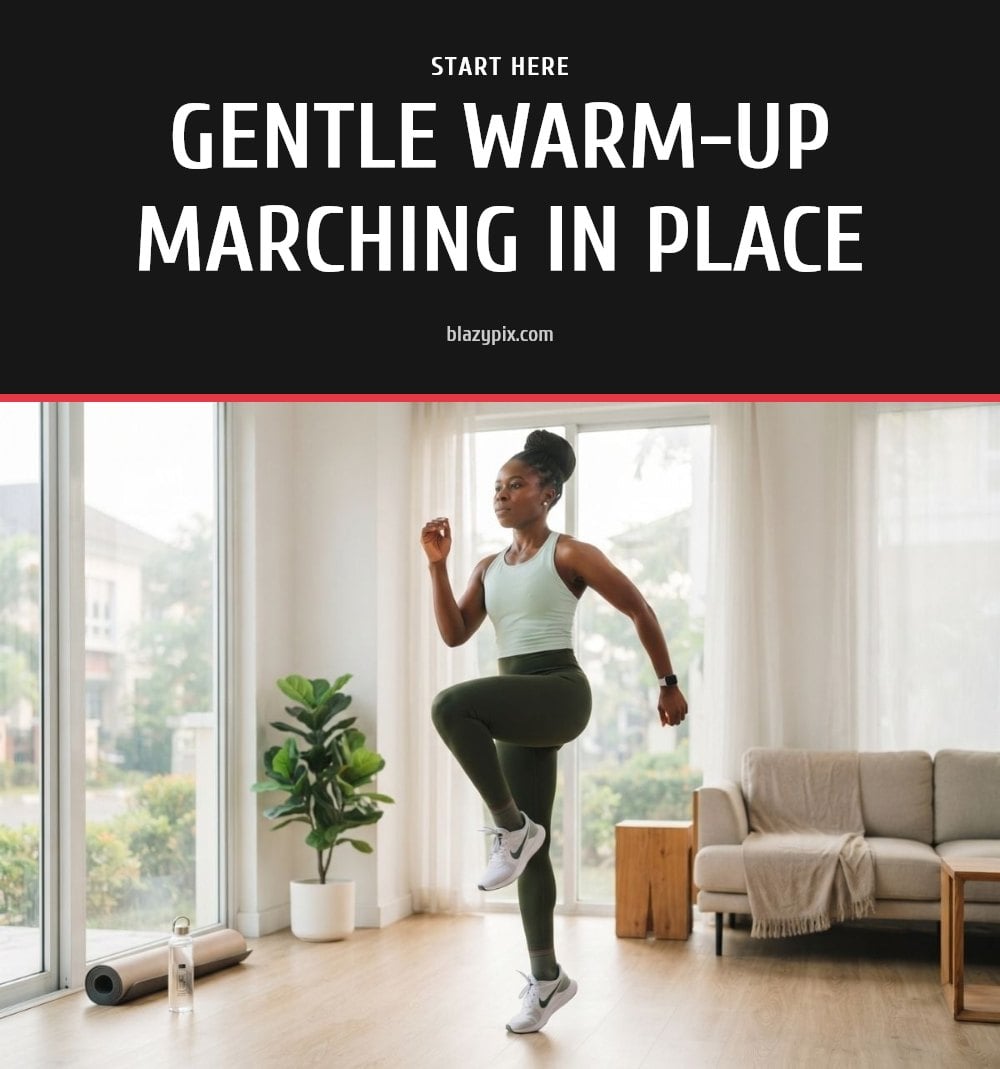
Stand up straight and start lifting your knees gently toward your chest, one at a time, while swinging your arms naturally at your sides. Keep the movement light and rhythmic. This is not a race, just a way to wake up your muscles and get blood flowing. Continue for 5 minutes to gradually raise your heart rate and loosen your joints.
- Time: 5 minutes at a comfortable pace.
- Form cue: Land softly on your feet and keep your shoulders relaxed, not hunched.
- Make it easier or harder: Lift your knees lower for less intensity, or raise them higher and speed up slightly for more challenge.
2. Knee Lifts
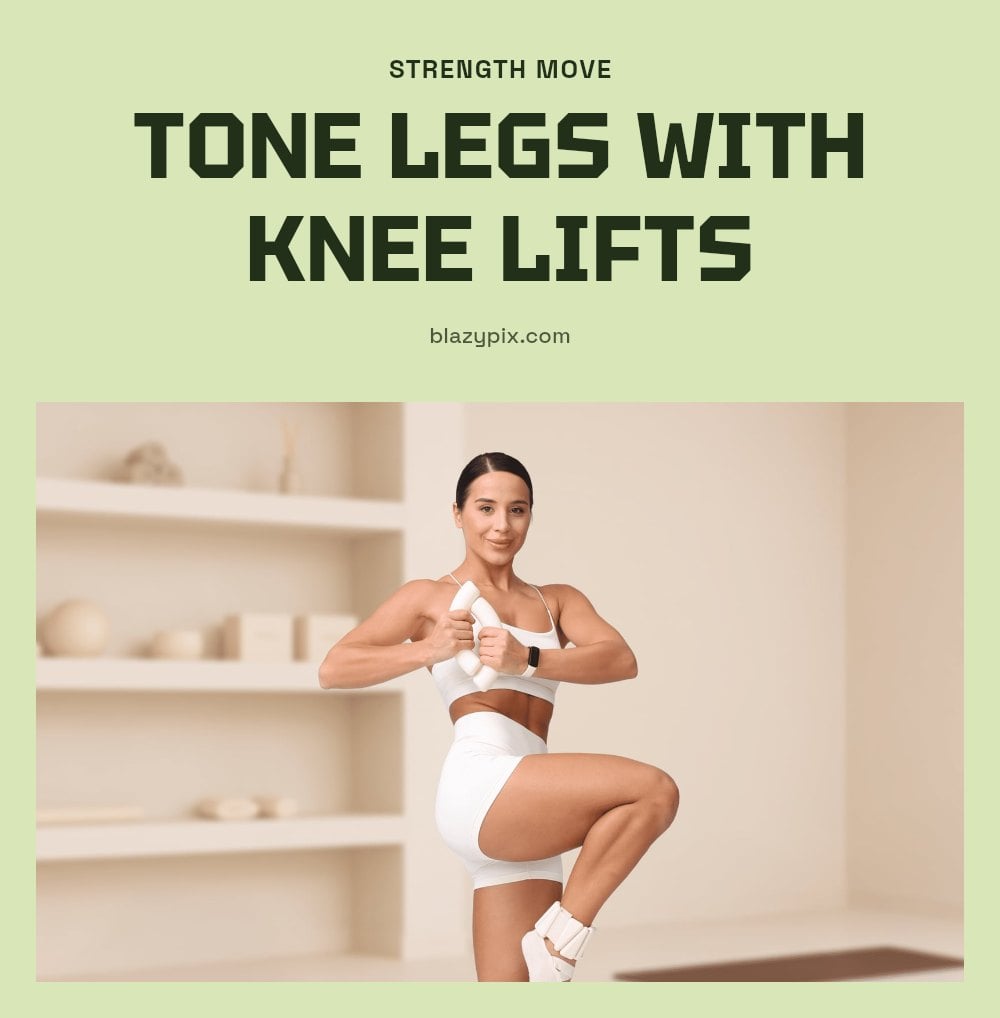
From a standing position, lift one knee toward your chest as high as feels comfortable, then lower and repeat with the other leg. Keep your core engaged and your back straight throughout the movement, avoid leaning backward or forward. This exercise builds coordination and strengthens your hip flexors while keeping your heart rate up.
- Sets and reps: 3 sets of 10-12 repetitions per leg.
- Form cue: Pull your belly button toward your spine and keep your chest lifted.
- Make it easier or harder: Lift your knee only to hip height for less effort, or add a slight hop for more intensity.
3. Butt Kicks
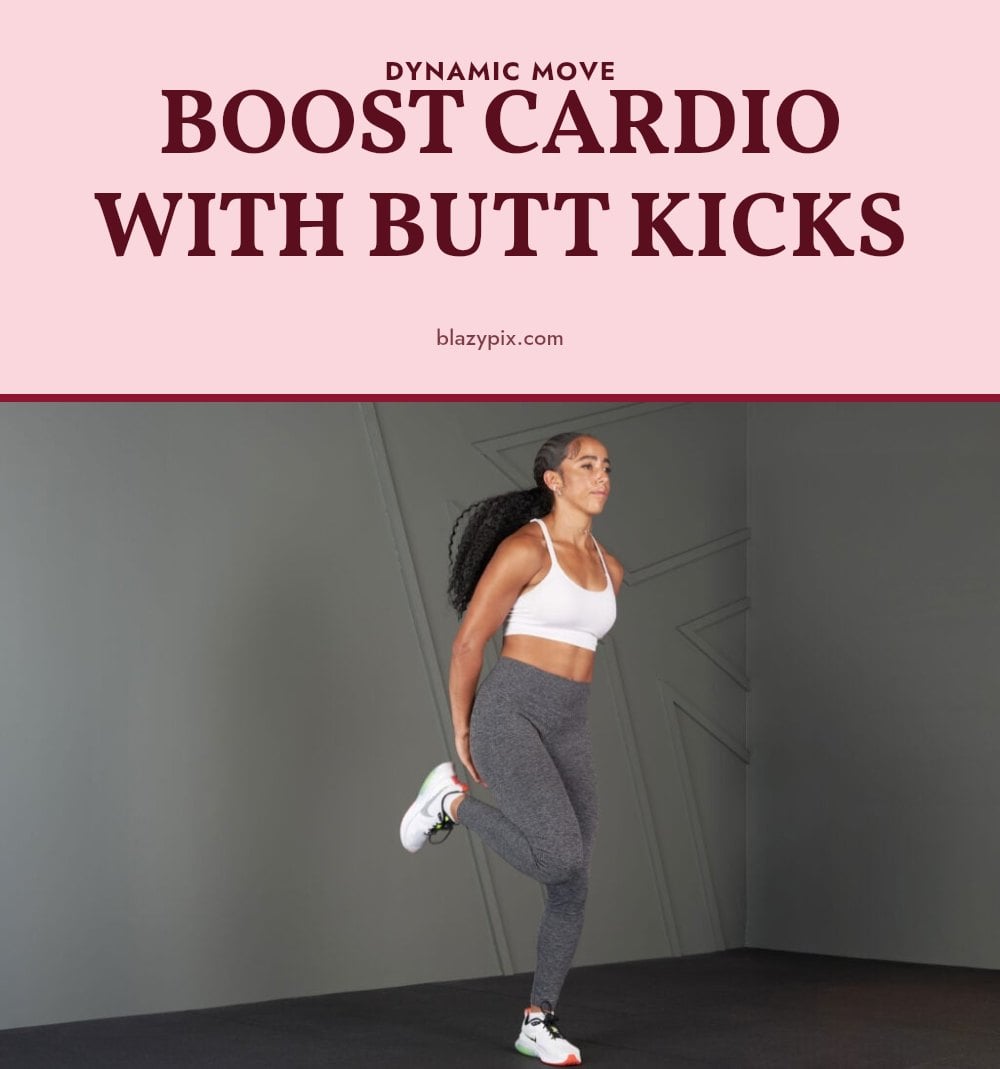
Start jogging lightly in place, and as you do, kick your heels back toward your glutes with each step. Keep the pace quick and light, focusing on making contact between your heel and back of your thigh. This move targets your hamstrings and gets your blood pumping without jarring your joints.
- Time: 30-60 seconds per set, rest 30 seconds, then repeat for 2-3 total sets.
- Form cue: Keep your torso upright and your arms swinging naturally for balance.
- Make it easier or harder: Slow the pace and only lift your heels halfway for less intensity, or increase speed for more challenge.
4. Modified Jumping Jacks

Instead of jumping, step your right foot out to the side while raising both arms overhead, then return to center and repeat on the left side. Keep the movement controlled and avoid any bouncing. This version is kind to your knees and ankles. It still raises your heart rate and works your shoulders and legs.
- Sets and reps: 3 sets of 10-15 repetitions per side.
- Form cue: Keep your feet hip-width apart when returning to center, and don’t lock your elbows.
- Make it easier or harder: Take smaller steps for less range of motion, or add a small hop for a traditional jumping jack.
5. Arm Circles
Stand with your feet shoulder-width apart and extend both arms straight out to your sides at shoulder height. Make small, controlled circles forward, keeping your shoulders relaxed and your core stable. After 10-15 circles, reverse the direction and repeat going backward.
- Sets and reps: 10-15 circles each direction, 2-3 sets
- Form cue: Keep your wrists and elbows soft, not locked
- Make it easier or harder: Make circles smaller for less effort, larger for more
6. Side Shuffles
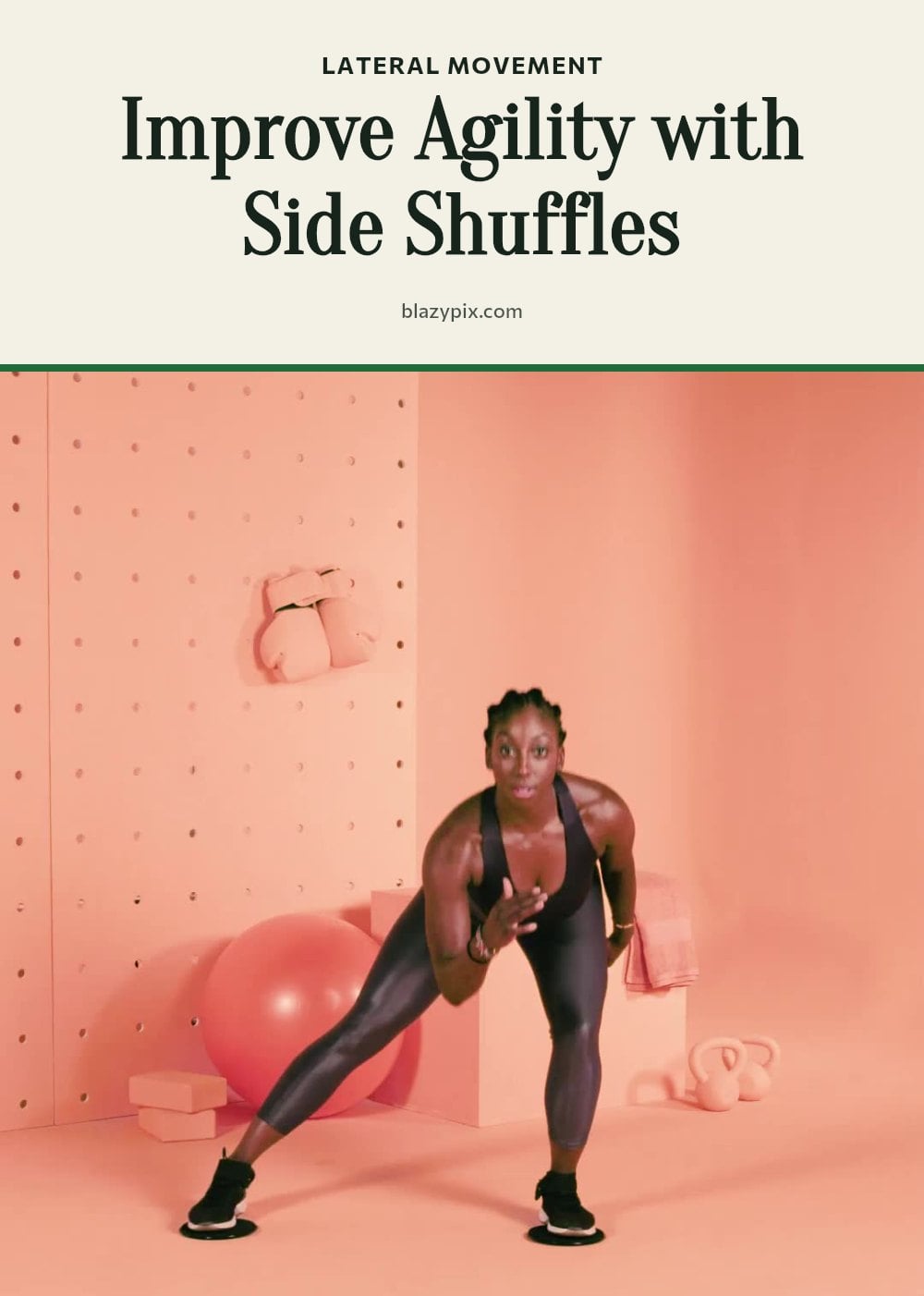
Stand with your feet together and knees slightly bent. Take two or three quick steps to your right, keeping your feet light and staying low to the ground, then reverse direction and shuffle left. Use your arms for balance by swinging them naturally as you move.
- Time: 30-45 seconds per set, 2-3 sets with rest
- Form cue: Keep your hips low and don’t let your feet cross over
- Make it easier or harder: Take smaller steps for less intensity, wider steps for more
7. Shadow Boxing
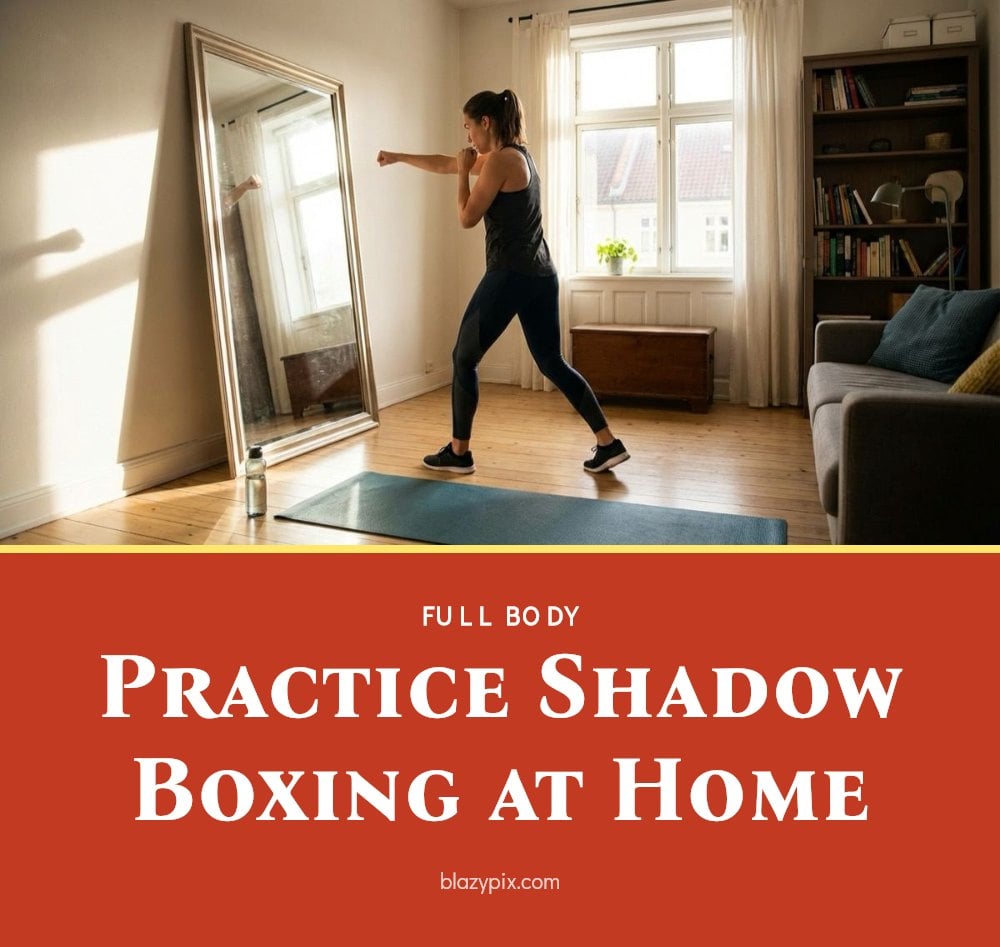
Stand with your feet shoulder-width apart and your knees slightly bent, keeping a light bounce in your feet. Alternate punching the air in front of you with your right and left arms, rotating your torso slightly with each punch. Keep the punches quick and controlled, maintaining a fluid, continuous motion.
- Time: 1-2 minutes per set, 2-3 sets with rest
- Form cue: Keep your wrists straight and your hands loose, not clenched
- Make it easier or harder: Punch slower for less effort, add shoulder rolls between sets for more
8. Cool-Down: Gentle Stretches
After your last cardio exercise, slow down and transition into gentle stretches. Reach one arm overhead and lean to the opposite side for a side stretch, then stretch your hamstrings by bending forward at the hips, and your quads by pulling one heel toward your glutes. Hold each stretch for 15-30 seconds while breathing deeply, focusing on lengthening the muscles and letting your heart rate come down.
- Time: 15-30 seconds per stretch, total 5-10 minutes
- Form cue: Never bounce in a stretch; hold still and breathe
- Make it easier or harder: Use a wall for balance during quad stretch; deepen the stretch only when comfortable
Your Weekly Beginner Cardio Plan
The American Heart Association recommends at least 150 minutes of moderate-intensity aerobic activity per week for adults. Moderate intensity means you can talk but not sing during the activity. That 150 breaks down to about 30 minutes on five days, and short sessions count too, so three 10-minute blocks in a day add up the same way.
Here is a flexible week you can start with. Treat it as a template, not a rulebook.
| Day | Session | Time |
|---|---|---|
| Monday | Warm-up, knee lifts, arm circles, cool-down | 20-25 min |
| Tuesday | Rest or a gentle walk | As you like |
| Wednesday | Warm-up, modified jumping jacks, side shuffles, cool-down | 20-25 min |
| Thursday | Rest or light stretching | 10 min |
| Friday | Warm-up, shadow boxing, butt kicks, cool-down | 20-25 min |
| Saturday | Pick your favorite moves from the week | 15-20 min |
| Sunday | Rest | Full day off |
Tip: If a session feels too hard, cut the time or drop one exercise rather than skipping the day. Many people find that stamina and energy improve within 2-4 weeks of consistent effort, so adjust the plan to what your body gives you that week.
Common Cardio Mistakes to Avoid
The most common mistake beginners make is starting too intensely. Begin with shorter durations, like 10-15 minutes, and lower intensity. You should be able to talk during the workout; if you can’t, slow down. Gradually increase both duration and intensity over several weeks.
Mistake: Skipping warm-ups and cool-downs. A 5-minute warm-up prepares your muscles and reduces injury risk, while a 5-minute cool-down helps your heart rate return to normal. Never skip these steps, even on busy days.
Mistake: Ignoring your body’s signals. Slight discomfort from working muscles is normal, but sharp pain is a sign to stop immediately. Rest and assess before continuing. If pain persists, consult a healthcare professional.
Mistake: Forgetting hydration. Drink water before, during, and after your workout. Dehydration can cause fatigue, dizziness, and cramping. Keep a water bottle nearby and take small sips as needed.
Mistake: Lack of consistency. Aim for regular sessions, even if they’re short. Three 10-minute sessions per week are more effective than one long session followed by a week off. Consistency builds stamina and prevents burnout.
Frequently Asked Questions
How often should I do cardio as a beginner?
Aim for at least three to five sessions per week. The American Heart Association recommends at least 150 minutes of moderate-intensity aerobic activity weekly for adults, which breaks down to about 30 minutes on five days. Short sessions count too, so a 10-minute workout still adds up over the week.
Can I lose weight with home cardio?
Regular cardio can help manage weight by burning calories, and doing it at home works just as well as at a gym. Weight loss also depends on your overall eating habits and consistency. Many people find that pairing steady cardio with a balanced diet gives the most realistic results over time.
Do I need special equipment for home cardio?
No. Comfortable athletic clothing and supportive shoes are the main things you need, plus a water bottle. A timer or stopwatch is optional, and a yoga mat can be handy for floor exercises and stretching. All the beginner moves in this article use only your bodyweight.
What is moderate-intensity cardio?
Moderate intensity means you can talk but not sing during the activity. If you can only say a few words at a time, you have moved into vigorous territory. For beginners, staying at a talk-friendly pace is the safest way to build stamina without overdoing it.
How long should a beginner cardio workout be?
Start with 10-15 minutes per session at a lower intensity, then add a few minutes each week as your stamina grows. A full session includes a 5-10 minute warm-up and a 5-10 minute cool-down with gentle stretching, so plan for a bit more total time.
Final Thoughts
My tip: pick three to five days a week and treat your cardio session like an appointment you keep with yourself, even if it is only 10 minutes on a busy day. Expect to notice better stamina and energy within 2-4 weeks of consistent effort, not overnight. Steady beats intense when you are just starting out.
Keep sessions short and talk-friendly at first, then add a few minutes or a little more effort each week. Your body will tell you when it is ready for more.
This article is general information and not medical advice. Check with a doctor before starting a new exercise program, especially if you have health conditions, are pregnant, or have been inactive. Stop and seek professional care if you feel chest pain, dizziness, or persistent sharp pain.