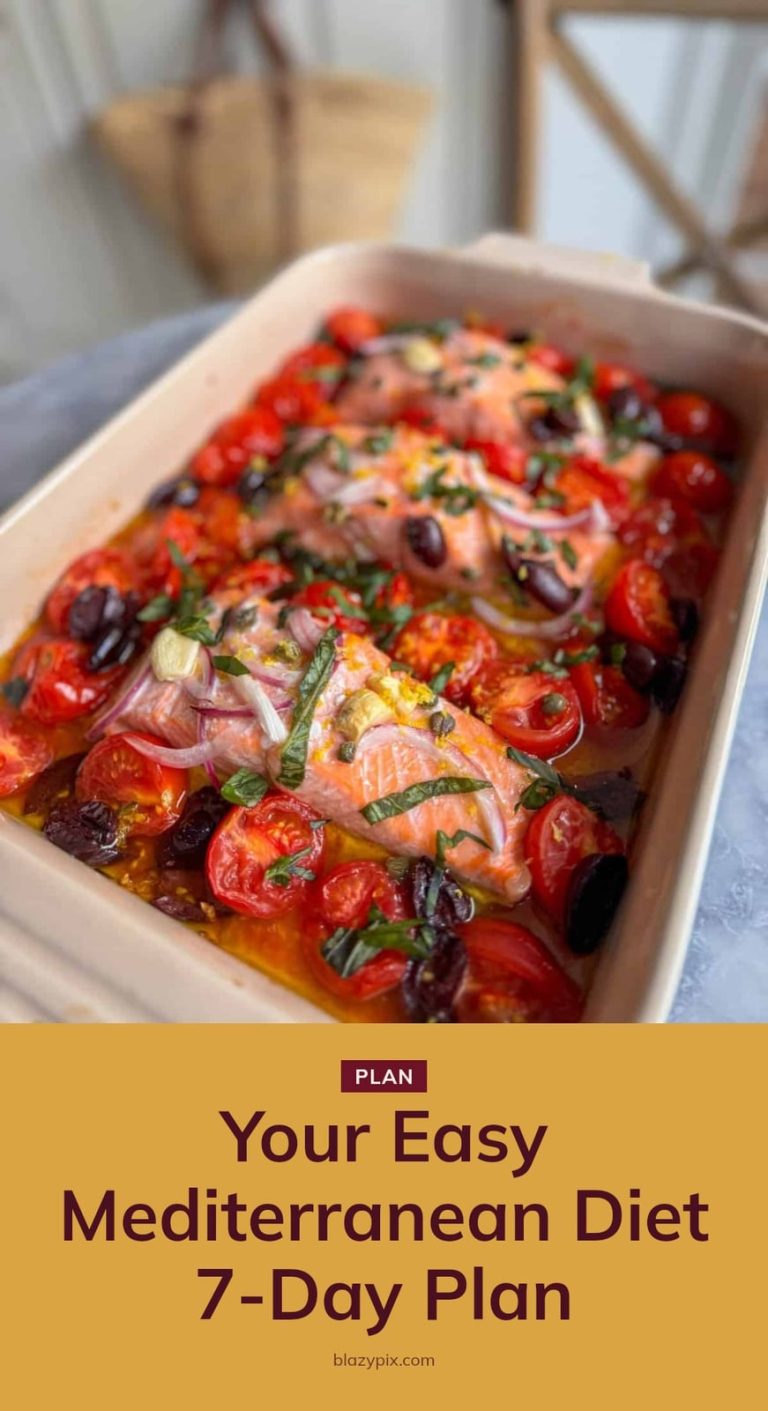
Mediterranean Diet: Your Easy 7-Day Meal Plan and Food List
Learn how to adopt the Mediterranean diet with our easy 7-day meal plan and comprehensive food list. Discover delicious, healthy meals for better well-being.

You want a way of eating that feels more like a lifestyle than a strict diet, and the Mediterranean diet might be exactly what you need. It’s built around whole, plant-based foods, healthy fats like olive oil, and lean proteins, and it’s consistently ranked as one of the healthiest patterns by experts. This article gives you a practical shopping list, a simple 7-day meal plan, and tips to make it work for you.
Key Takeaways
- Make fruits, vegetables, whole grains, and legumes the base of every meal.
- Use extra virgin olive oil as your main fat for cooking and dressings.
- Eat fish or seafood at least twice a week for lean protein.
- Limit red meat to a few times per month and avoid processed foods.
- Enjoy meals socially and stay active for the full lifestyle benefit.
What Is the Mediterranean Diet?
The Mediterranean diet is a flexible, plant-focused way of eating inspired by the traditional cuisines of countries like Greece, Italy, and Spain. It emphasizes whole foods such as fruits, vegetables, whole grains, legumes, nuts, and healthy fats, particularly from extra virgin olive oil. This eating pattern promotes heart health and overall well-being without relying on strict calorie counting, making it a sustainable lifestyle choice rather than a short-term diet.
Your Mediterranean Diet Shopping List
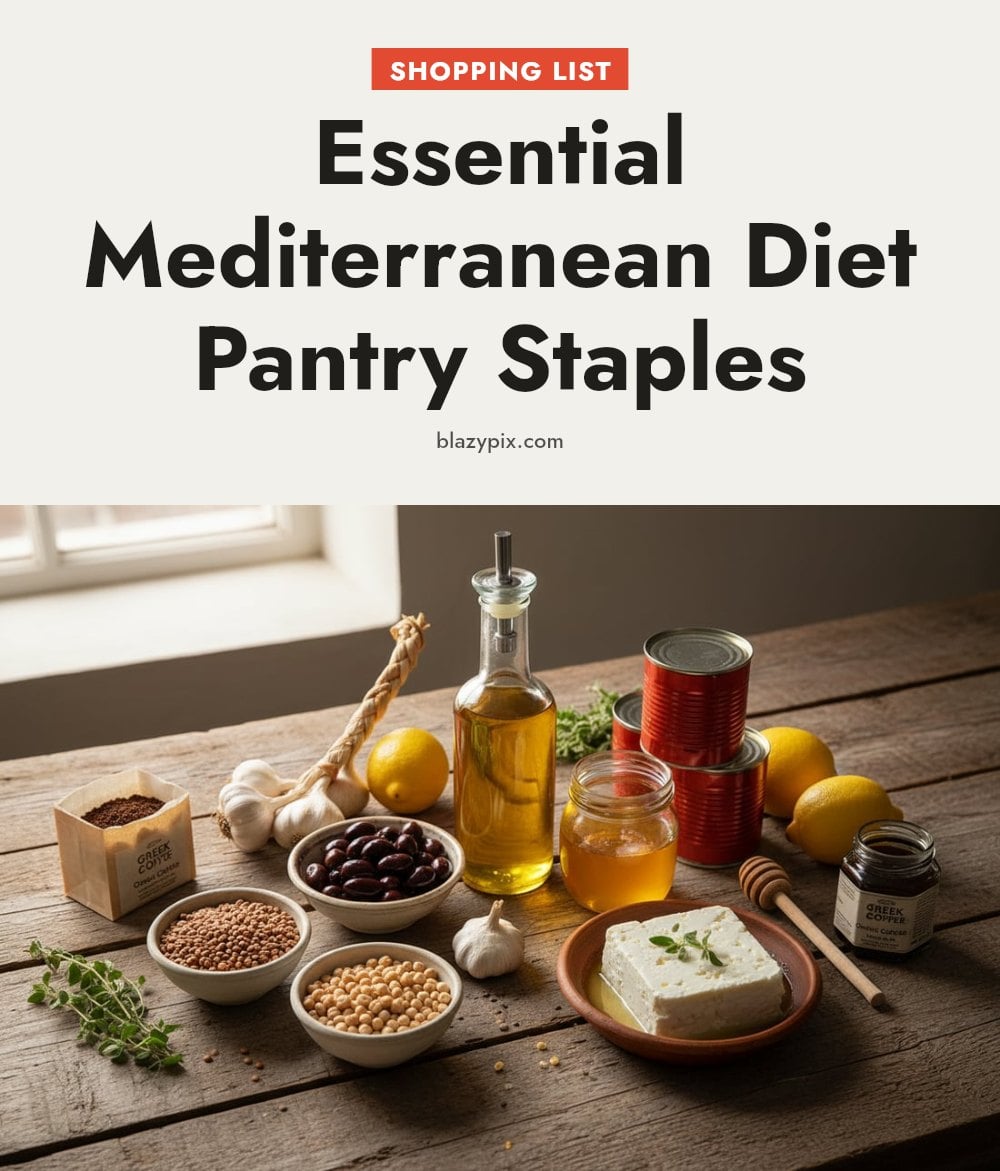
Stock your kitchen with these core categories to make Mediterranean eating simple. Fruits and vegetables: Load up on fresh and frozen options for daily use. Whole grains: Choose oats, quinoa, brown rice, and whole-wheat bread or pasta. Extra virgin olive oil: Make this your primary fat for cooking, dressings, and dipping. Legumes, nuts, and seeds: Keep lentils, chickpeas, almonds, walnuts, and sunflower seeds on hand. Protein sources: Include fish (especially fatty fish like salmon and sardines), poultry, eggs, and moderate amounts of dairy like Greek yogurt and cheese.
Your 7-Day Mediterranean Diet Meal Plan
This 7-day plan focuses on plant-based foods, healthy fats, and lean proteins. Feel free to swap meals based on what you have or what’s in season. Drink plenty of water throughout the day.
| Day | Breakfast | Lunch | Dinner |
|---|---|---|---|
| Monday | Greek yogurt with berries and a drizzle of honey | Lentil soup with a side of whole-wheat bread | Grilled salmon with roasted vegetables and quinoa |
| Tuesday | Oatmeal with walnuts and sliced banana | Chickpea and vegetable salad with lemon-olive oil dressing | Whole-wheat pasta with tomato sauce, olives, and a side of steamed greens |
| Wednesday | Scrambled eggs with spinach and tomatoes | Hummus and vegetable wrap on whole-wheat flatbread | Baked cod with roasted potatoes and a cucumber-tomato salad |
| Thursday | Smoothie with spinach, apple, and almond milk | Quinoa bowl with chickpeas, cucumber, and tzatziki | Grilled shrimp with bell peppers and brown rice |
| Friday | Whole-wheat toast with avocado and a poached egg | Mediterranean grain bowl with farro, roasted vegetables, and feta | Grilled sardines with lemon-herb dressing and a side of green beans |
| Saturday | Greek yogurt parfait with granola and fresh fruit | Stuffed grape leaves (dolmas) with a side salad | Lamb kofta with tabbouleh and a yogurt dip |
| Sunday | Frittata with zucchini, onion, and herbs | Leftover vegetable and chickpea stew with pita | Vegetable and chickpea stew with a side of whole-wheat couscous |
For snacks, reach for a handful of almonds, an apple, or plain Greek yogurt.
Expert Tips for Embracing the Mediterranean Diet

These tips help you build the Mediterranean habits that stick. Make olive oil your best friend: Use extra virgin olive oil for cooking, dressings, and even dipping bread. Spice it up naturally: Flavor dishes with herbs and spices like oregano, basil, and cumin instead of reaching for the salt shaker. Snack smart: Keep fruits, nuts, seeds, or plain Greek yogurt handy for between meals. Hydrate consistently: Drink water throughout the day; it supports digestion and energy. Enjoy meals mindfully: Savor each bite and share meals with family or friends when you can, as the social aspect is part of the lifestyle.
Common Mediterranean Diet Mistakes to Avoid
Mistaking it for a quick fix: The Mediterranean diet is a lifestyle, not a restrictive diet for rapid weight loss. Focus on sustainable changes like adding more vegetables to your plate rather than cutting out foods entirely.
Overdoing the wine: While moderate wine is part of the culture, the diet’s core is whole foods. Don’t prioritize wine over healthy eating; limit it to one glass per day for women and two for men, and only if you already drink.
Ignoring healthy fats: Don’t shy away from olive oil; it’s a cornerstone of the diet and crucial for nutrient absorption. Use it generously in cooking and dressings.
Eating too much red meat: Red meat is consumed sparingly on this diet, typically a few times per month, not weekly. Save it for special occasions and choose fish or poultry instead.
Forgetting the lifestyle: Physical activity, social meals, and mindful eating are just as important as the food choices. Take a walk after dinner or enjoy a meal with family to fully embrace the approach.
When to Consult a Healthcare Professional
If you have specific health conditions like kidney disease or allergies, consult a doctor or registered dietitian before making significant dietary changes. They can help you adjust the plan to your needs.
If you have a history of alcohol abuse, avoid wine consumption entirely and discuss any concerns with a healthcare provider. The diet works well without alcohol.
Always ensure proper food hygiene, especially when preparing fish and seafood, to prevent foodborne illness. Cook seafood to safe internal temperatures and store it properly.
Frequently Asked Questions
Can I lose weight on the Mediterranean diet?
Yes, many people find it helpful for gradual weight management because it focuses on whole, filling foods and limits processed items. However, weight loss depends on your overall calorie intake and activity level. It’s best seen as a sustainable lifestyle change rather than a quick fix.
Is the Mediterranean diet suitable for vegetarians?
Absolutely. The diet is naturally plant-forward, so you can easily skip the fish and poultry. Just focus on legumes, nuts, seeds, whole grains, eggs, and dairy for protein. You can also include tofu or tempeh as alternatives.
How much wine can I drink on the Mediterranean diet?
Moderate wine consumption is optional for adults, typically one glass per day for women and up to two for men, often with meals. If you don’t already drink, there’s no need to start. If you have a history of alcohol abuse, avoid it entirely.
What are some quick Mediterranean snack ideas?
Try a handful of nuts with fresh fruit, Greek yogurt with berries, hummus with veggie sticks, or a small piece of cheese with whole-grain crackers. These are easy, portable options that fit the diet’s emphasis on whole foods.
Do I need to buy special ingredients for this diet?
No, you don’t need anything fancy. Most ingredients like fruits, vegetables, whole grains, beans, and olive oil are available at any grocery store. Start with what you have and gradually add items like lentils or quinoa.
Final Thoughts
My tip: Start by adding one more serving of vegetables to your plate each day and swapping butter for olive oil. Realistic results like improved heart health markers or gradual weight management typically show over several weeks to months of consistent adherence. Remember, this is about abundance and variety, not restriction.
This article is for general informational purposes only and does not constitute medical or dietary advice. Always consult a healthcare professional or registered dietitian before making significant changes to your eating habits, especially if you have a health condition or specific dietary needs.