
How to Do a Brain Dump Step by Step for a Clear Mind
Learn how to do a brain dump step by step to offload all your thoughts, gain clarity, and reduce mental clutter for improved focus and productivity.

When your mind feels like a browser with too many tabs open, a brain dump can help you close them one by one. This simple technique involves writing down every thought, task, and worry without any judgment or organization. In this article, I’ll walk you through a step-by-step method to clear mental clutter and get back to focusing on what matters most.

Key Takeaways
- Do a brain dump weekly, ideally on a Saturday or Sunday, to start your week with a clear mind.
- Use a different colored pen to categorize items after the initial dump, keeping categories minimal.
- Break down large projects into the smallest possible actionable steps to make them less daunting.
- Transfer quick tasks (20 minutes or less) to your weekly planner right away.
- If overwhelming anxiety persists, consider speaking with a mental health professional.
What is a Brain Dump and Why Do I Need One?
A brain dump is a simple technique where you transfer every thought, task, idea, and worry from your mind onto paper or a digital document. The goal is to get it all out without judgment or organization. This externalization reduces mental clutter, gives you clarity, and helps you see what actually needs your attention. You free up mental space for current tasks and approach your to-do list with a clearer perspective and improved focus.
Gather Your Brain Dump Essentials
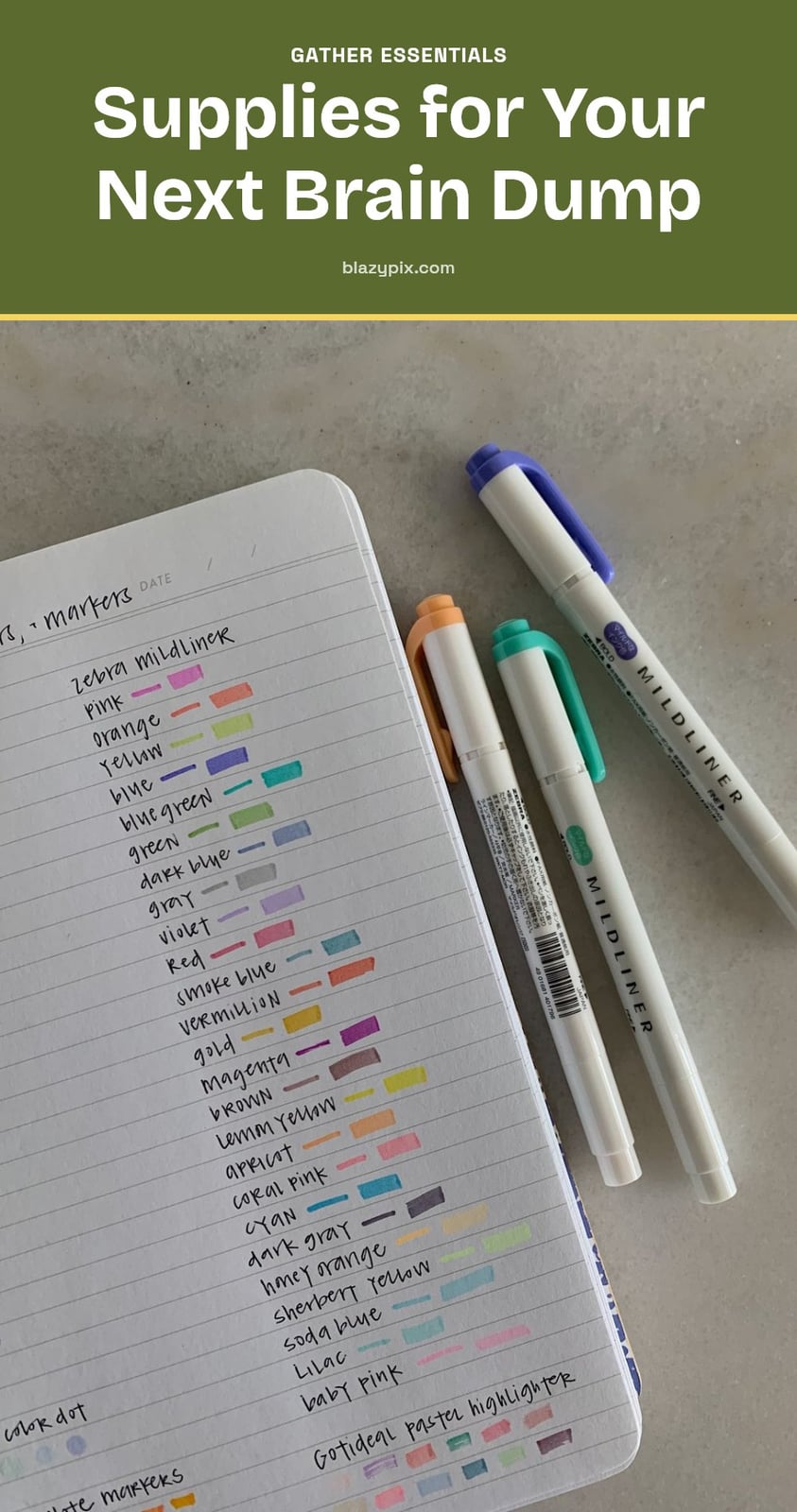
Grab these items before you start:
- Paper or notebook: Choose something you won’t lose, like the notes section of your planner.
- A smooth pen: A pen that glides makes the process easier.
- A different colored pen: You will use this for categorizing after the initial dump.
- Your planner or calendar: You will need it to schedule tasks later.
Your Step-by-Step Guide to a Mind-Clearing Brain Dump

- Title and date your page: Write ‘Brain Dump’ at the top and add today’s date. This helps you track when you last did one and remember due dates.
- Dump everything out: Write down every single thought that comes to mind, in any order. Include tasks, ideas, frustrations, projects, chores, things you are learning, or anything you are reading. Do not judge or organize. Keep writing until your mind feels clear.
- Categorize with a different color: Grab your second pen and go through your list. Mark each item with a category. Keep the number of categories minimal, such as personal, work, errands, or ideas. This prevents you from feeling overwhelmed.
- Break down large projects: On a new sheet of paper, take any big task from your categorized list and break it into the smallest possible actionable steps. For example, ‘plan birthday party’ becomes ‘choose date,’ ‘book venue,’ ‘send invites.’ This makes the task manageable.
- Assign flexible dates: Next to each small step, write a rough timeframe: ‘today,’ ‘this week,’ ‘this month,’ or ‘in a couple of months.’ These dates are just estimates and can be adjusted later.
- Transfer quick tasks to your planner: Open your weekly planner. Look for any task on your detailed list that can be done in 20 minutes or less. Move those to your planner and mark them off your brain dump list. This gets the small stuff done fast.
- Repeat weekly: Do this whole process once a week, ideally on a Saturday or Sunday. This keeps your mind clear and your week organized.
Here is the method in action: The Organized Money demonstrates it in about 9 minutes. The how-to part starts at 0:44.
Common Brain Dump Mistakes to Avoid
- Organizing as you dump: Do not try to categorize or prioritize while you are still writing. This slows you down and defeats the purpose. Get everything out first, then organize.
- Forgetting your list: Write your brain dump in a place you will remember, like the notes section of your planner. If you lose the list, the whole exercise is wasted.
- Too many categories: Keep your categories to 3-5 at most. More than that can feel overwhelming and make the organizing phase harder.
- Not breaking down big tasks: Large, vague tasks like ‘clean house’ can lead to procrastination. Break them into the smallest steps, like ‘vacuum living room,’ ‘wipe kitchen counters.’
- Skipping the processing phase: The initial dump is only half the work. Set aside time to review, categorize, and schedule your items. Without this step, your list stays just a list of thoughts.
Best Tips for an Effective Brain Dump
Set a timer: If you get stuck or distracted, set a timer for 10-20 minutes for the initial dump. This keeps you focused and efficient.
Don’t censor yourself: Write down every thought, no matter how small, silly, or negative. The goal is a completely clear head.
Be flexible with dates: The dates you assign are rough estimates. Adjust them if plans change, but keep the task on your calendar so it stays in front of you.
Review regularly: Make brain dumping a weekly habit or whenever you feel overwhelmed. Regular practice prevents mental clutter from building up again.
Consider digital tools: Pen and paper work well, but try note-taking apps or word processors if you prefer typing or need easy searchability.
Keep Your Mind Clear: Making Brain Dumps a Habit

Schedule it: Pick a consistent time each week, like Saturday or Sunday morning, for your brain dump. This routine stops mental clutter from piling up.
Integrate with your routine: Make the brain dump a natural part of your weekly planning or review session. It is a continuous tool, not a one-off fix.
Be kind to yourself: Do not get discouraged if your list feels overwhelming at first. The act of externalizing is a win; processing comes next.
Break the cycle: If you notice recurring worries or tasks that keep getting pushed back, use your brain dump to ask why they are stuck or if they need a different approach.
When to Seek Professional Help
If your brain dumps consistently bring up overwhelming anxiety or depressive thoughts that you cannot manage on your own, consider speaking with a mental health professional.
Seek help if feelings of overwhelm, stress, or mental clutter are significantly impacting your daily life, relationships, or work. Also reach out if you find yourself unable to process or act on your lists due to persistent hopelessness or paralysis.
Frequently Asked Questions
How often should I do a brain dump?
Doing a brain dump weekly is a great starting point, especially on a Saturday or Sunday to prepare for the week ahead. You can also do it whenever mental clutter feels overwhelming, such as before a big project or after a stressful day.
Can I do a brain dump digitally?
Yes, you can use a digital document, note-taking app, or whiteboard instead of pen and paper. The key is to choose a method that feels comfortable and ensures you won’t lose your list. Digital tools can also make it easier to categorize and search items later.
What if my brain dump list feels overwhelming?
That’s normal at first. Start by categorizing the list using just a few categories, then break down large tasks into tiny steps. Focus on transferring only quick tasks (20 minutes or less) to your planner for the current week, and leave the rest for later.
How do I prioritize tasks after a brain dump?
After categorizing and breaking down tasks, assign rough timeframes like ‘today,’ ‘this week,’ or ‘this month.’ Then, transfer any task that can be done in 20 minutes or less to your weekly planner. For larger tasks, keep them on your calendar with flexible dates.
What if I keep pushing tasks back on my calendar?
When a task gets pushed back, simply adjust its date to a later time instead of deleting it. This keeps it visible and ensures you don’t forget it. If a task is repeatedly postponed, consider whether it’s truly necessary or if it can be delegated or discarded.
Final Thoughts
My tip: Make this a weekly habit, and you’ll notice how much lighter your mind feels. Realistically, the initial dump takes 10 to 30 minutes, with extra time for organizing and scheduling. Start this weekend, and give yourself the gift of a clear head.
This article is for informational purposes only and does not constitute medical or professional advice. If you experience persistent feelings of overwhelm, anxiety, or depression, please consult a qualified mental health professional.