19 Trendy Sports Hairstyles 2027 for Active Lifestyles
Trendy Sports Hair 2027 featuring sleek dark brown ponytails, messy styles with wispy bangs, and high blonde braid ponytails. See 19 active looks.

Whether you are sprinting on the track or lifting in the gym, a hairstyle that stays put and looks intentional is a small victory. The current shift favors soft face-framing layers and lived-in color that move with you, not against you.
This collection of 19 Trendy Sports Hair ideas covers the range from a five-second ponytail to intricate braided updos that hold through a full training session. For anyone with fine hair that slips out of a basic elastic or thick hair that feels like a weight, these styles offer a practical solution without sacrificing style. Expect a mix of DIY-friendly options and looks that benefit from a salon visit.
Sleek Dark Brown Mid-Back Ponytail
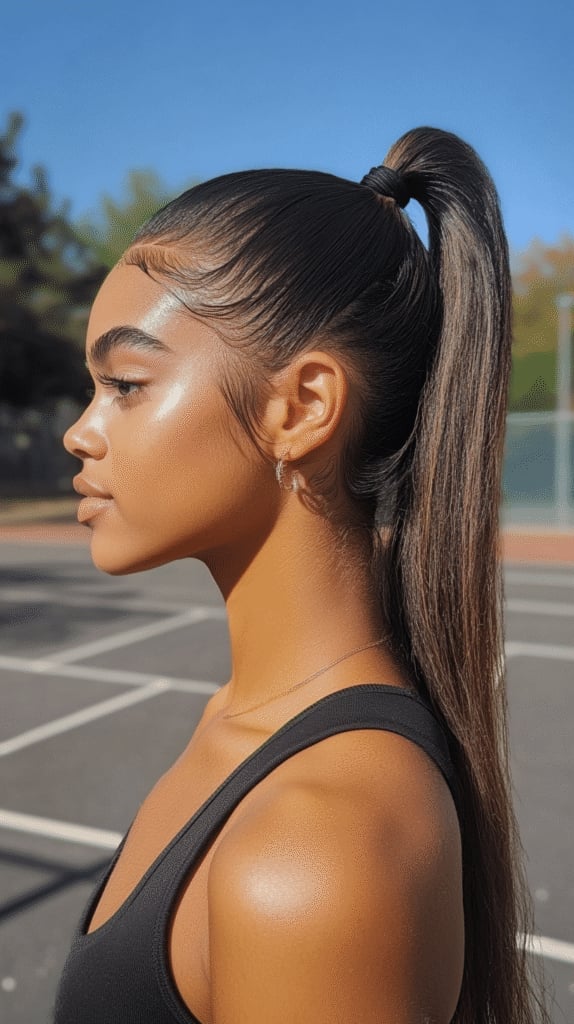
This mid-back length ponytail is built on precision: a middle parting, fine straight texture and a glossy finish that holds every strand in place. The side view reveals just how clean the pull-back is, with no bumps or loose sections. Ask your stylist for a sleek, glossy mid-back ponytail, no flyaways. Fine hair needs product to stay this smooth, so a smoothing serum applied from mid-lengths to ends is required. A boar bristle brush distributes the shine evenly and lays down the cuticle. A trim every eight to ten weeks keeps the ends blunt and the shape sharp.
Messy Light Brown Ponytail With Face Framing Wisps
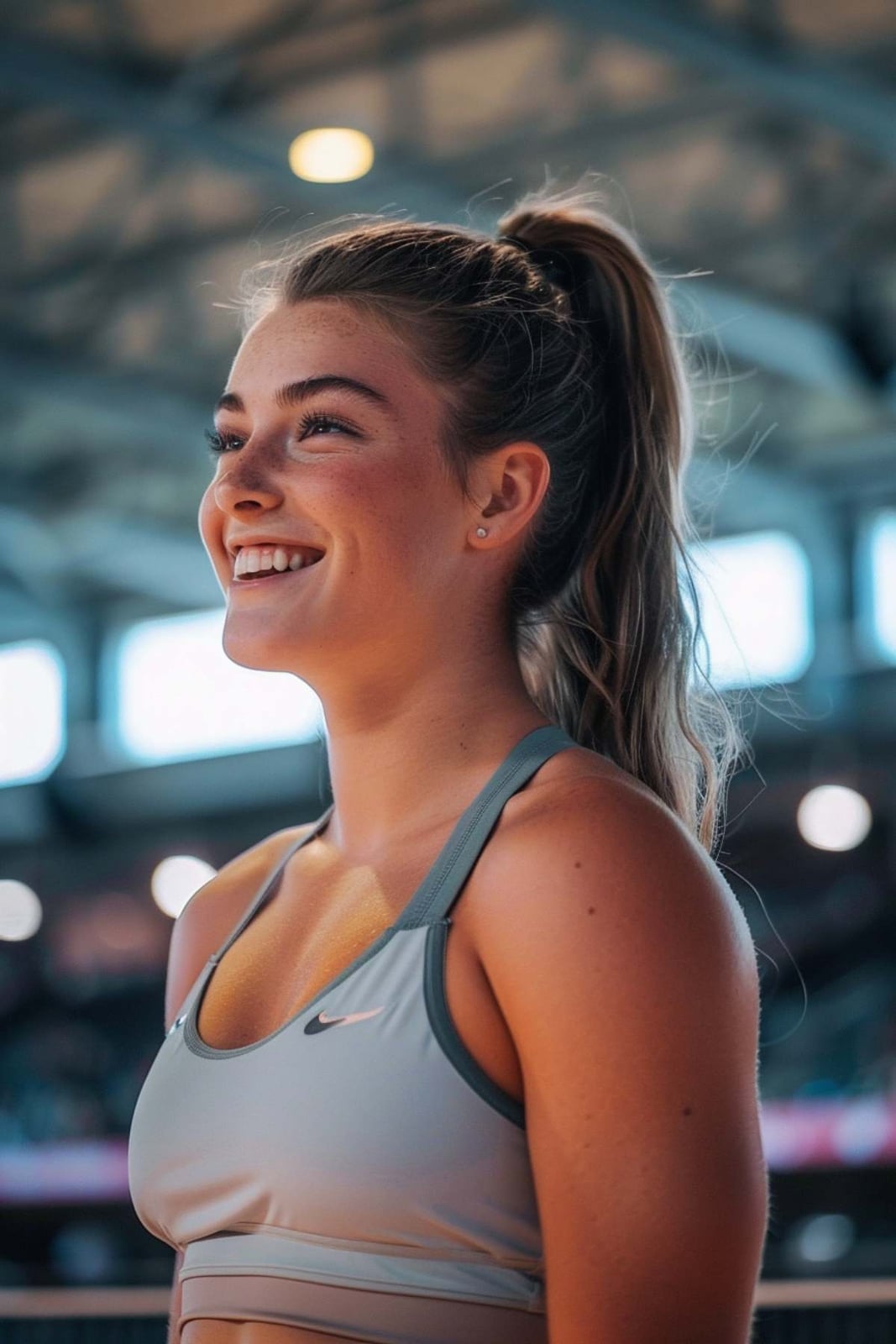
Who actually benefits from a messy ponytail? Medium-density wavy hair, for starters, since it holds the texture without deflating. The light brown base with subtle highlights adds dimension that reads as sun-struck rather than faded. Ask your stylist for a slightly messy high ponytail, loose wispy bangs. A side parting and face-framing wisps soften the pull-back, which suits oval and heart-shaped faces especially well. A flexible hold hairspray keeps the wisps where you put them, and a trim every six to eight weeks prevents the ends from looking raggedy.
High Mid-Back Ponytail With Blonde Highlights
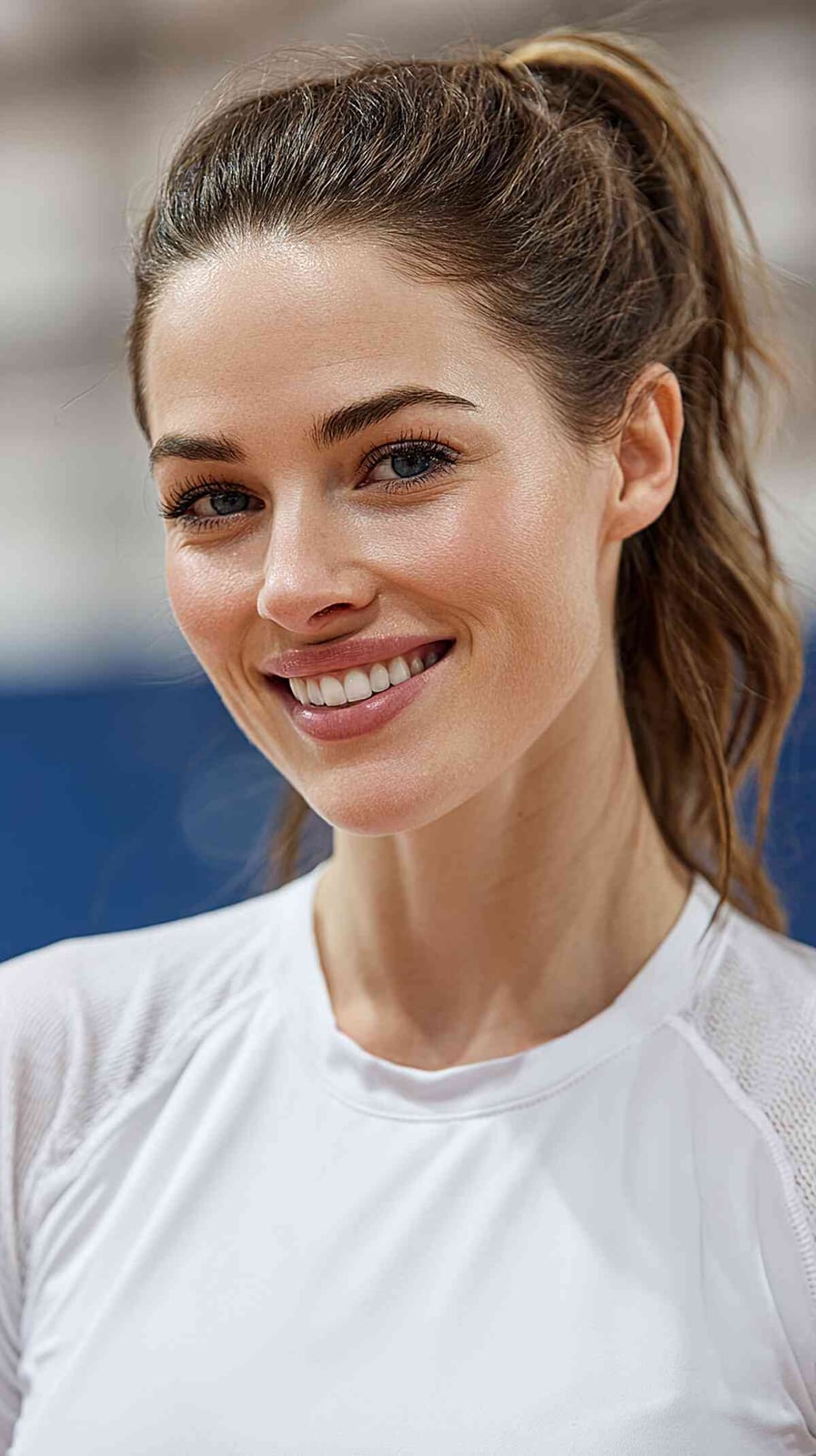
A high ponytail that lands at mid-back relies on layers cut into the length to create the movement you see here. Without them, wavy texture this dense would just hang. The blonde highlights are woven through the light brown base so they are visible even when the hair is pulled back. Ask your stylist for a secure high ponytail, blonde highlights visible. The middle parting keeps the crown smooth, and the layers stack naturally toward the elastic. A strong hair tie and two bobby pins crossed through the base will hold this through a full workout. Plan for a trim every six to eight weeks to keep the layers defined.
Reddish-Brown Braided Ponytail
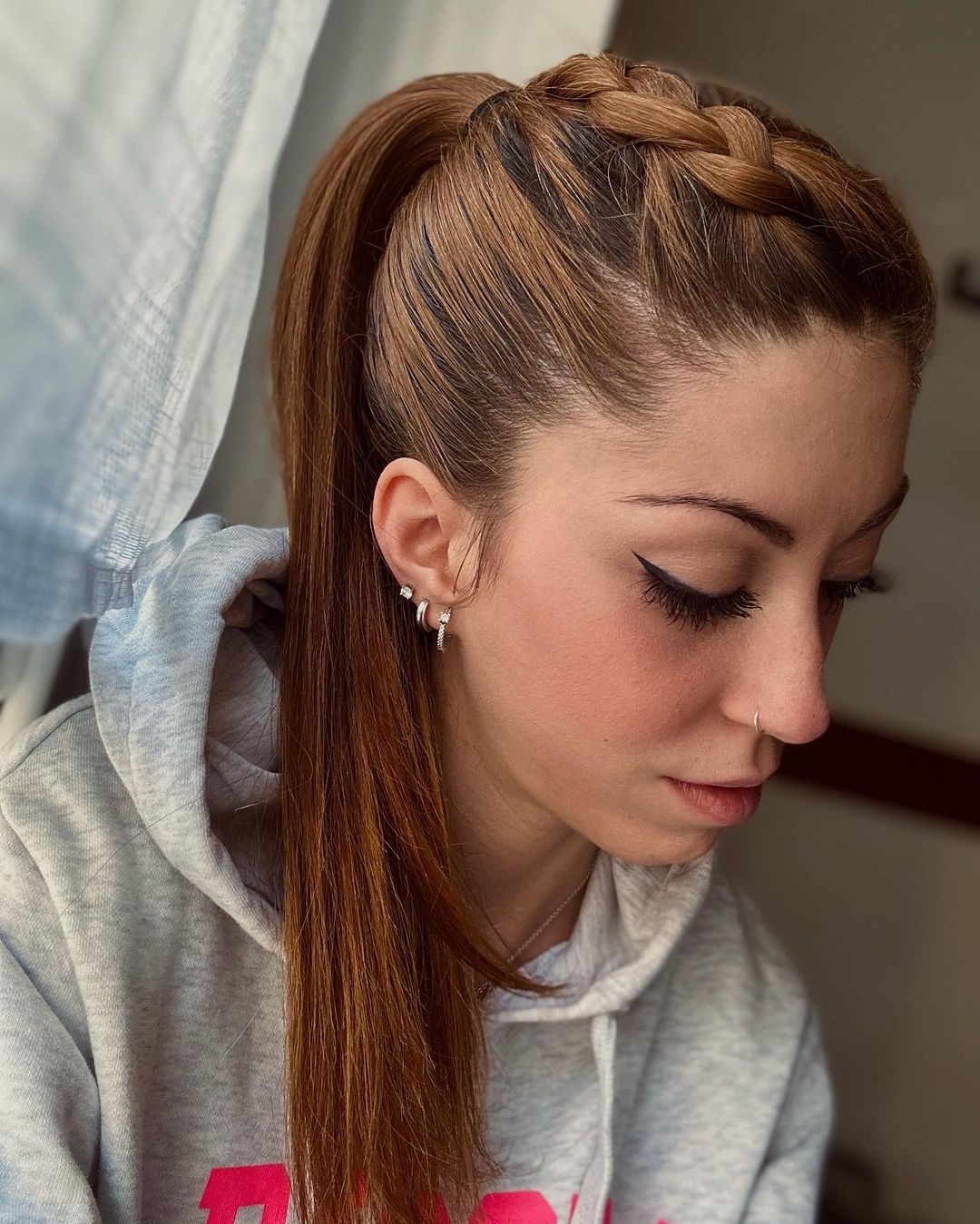
This is not a braid you toss together in thirty seconds, but the result is worth the extra effort. A single braid runs through the length of a high ponytail, turning fine straight texture into something with visible structure. The side parting and rich reddish-brown color give it a polished feel that works for training days when you also have places to go after. Ask your stylist for a side-parted ponytail with a single braid. Braid the ponytail tightly from the elastic down and secure the end with a clear elastic for a seamless finish. A trim every eight to ten weeks keeps the ends from thinning out, which fine hair needs to maintain the braid’s fullness.
Blonde Braided Ponytail With Ribbons
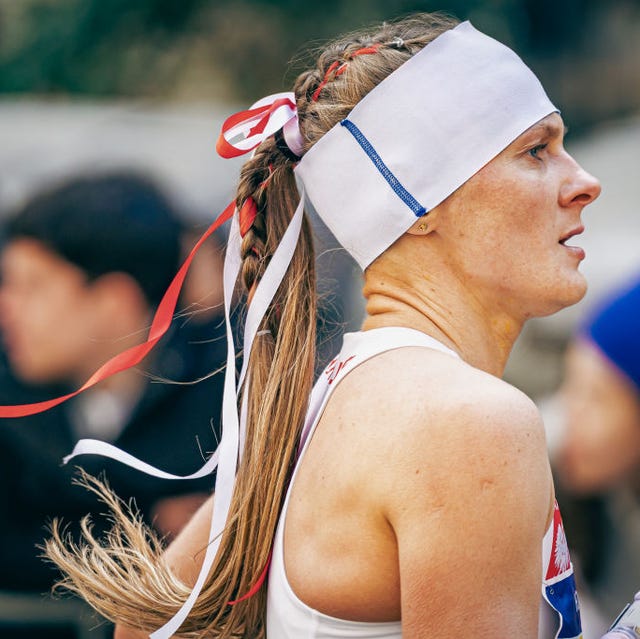
A thick braid that transitions into a ponytail is a structural choice, not just a decorative one. The braid near the scalp anchors the hair securely, while the ponytail section below allows movement. The ribbons woven through add a sporty accent without compromising the hold. Ask your stylist for a thick braid into a ponytail, with ribbons. This is a salon-leaning design: a stylist can place the braid exactly where it needs to sit and secure the ribbons so they stay put through a race or a long practice. A DIY attempt risks uneven tension and slipping ribbons. Thick, wavy hair at mid-back length is the ideal starting point for this style.
Thick Dark Brown Braids With Highlights
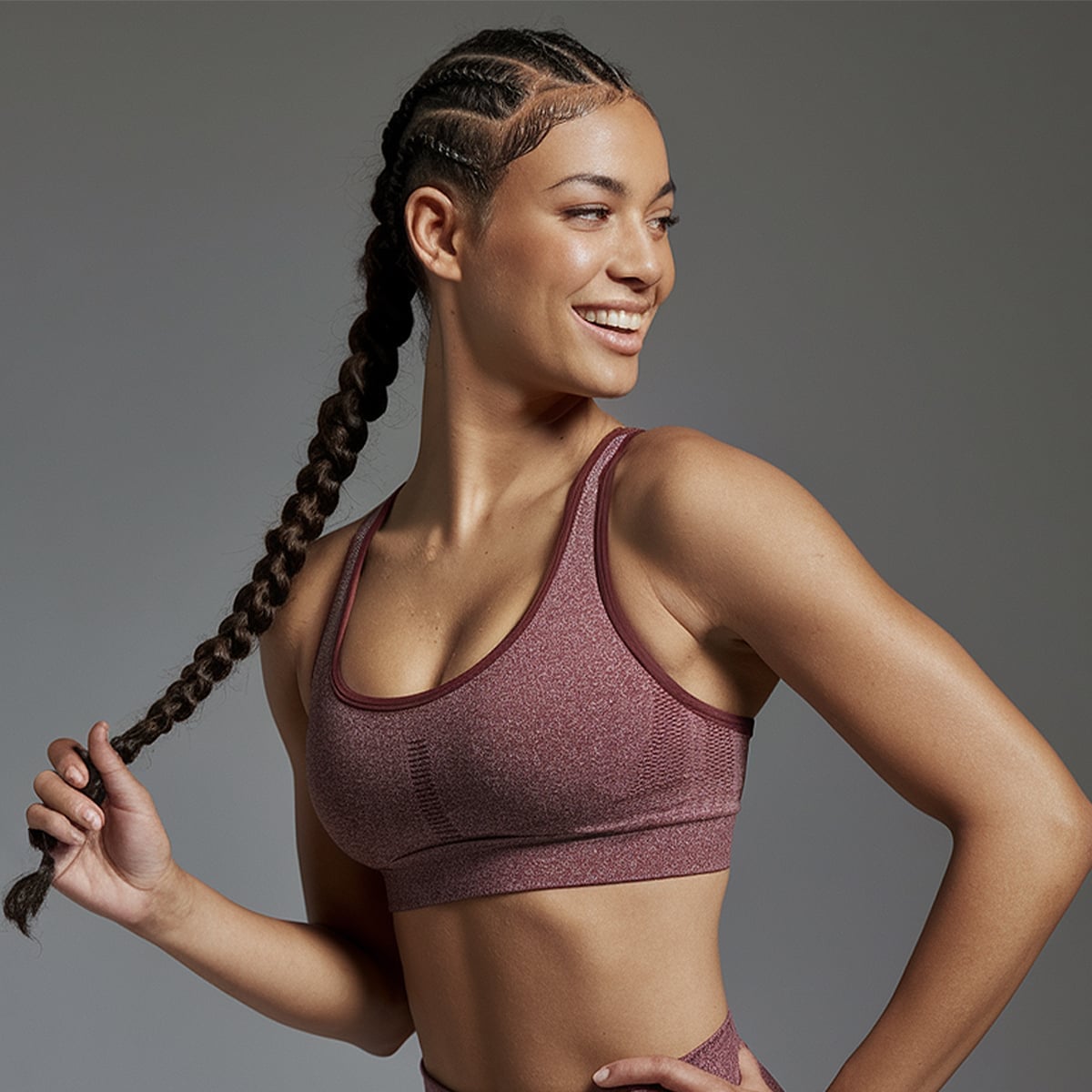
The design starts with multiple tight braids running along the scalp, then funnels into one thick braid that travels down the back. This approach works best on straight, thick hair at mid-back length, where the weight and density let the braids hold their shape without slipping. Ask your stylist for: multiple tight braids into one thick braid. The subtle highlights woven through the dark brown base add depth, so the braid reads as dimensional rather than one solid block.
This is a salon-level technique, not a fifteen-minute DIY before a run. The scalp braids require precision sectioning and even tension to avoid bumps. Plan for a couple of hours in the chair, and budget for a trim every four to six weeks to keep the ends from looking ragged. Apply a lightweight scalp oil to the braids for shine and moisture, and brush gently when detangling to preserve the pattern.
Intricate Black Cornrows Into Braids
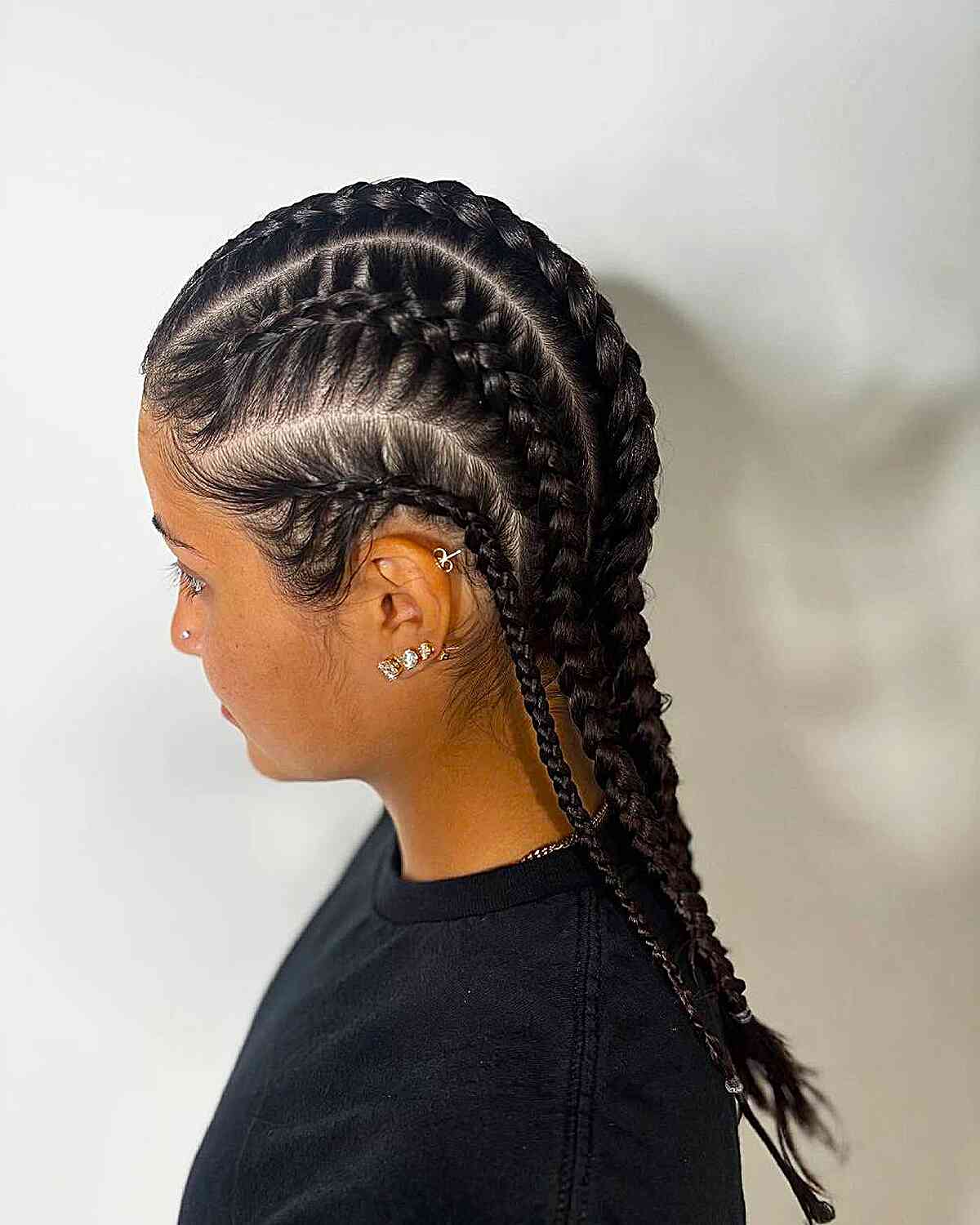
Is it worth sitting still for hours to get cornrows that transition into long braids? For a sporty, low-maintenance style that stays put through sweat and movement, yes. This look suits thick, straight hair of mid-back length, and the middle part helps elongate round faces. Ask your stylist for: neat cornrows into long braids, middle part. Tight cornrows can cause tension at the scalp, especially in the first few days. A braid balm smoothed along the edges and a light moisturizing spray keep the style comfortable, but anyone with a sensitive scalp should think twice before committing.
Double Dutch Braids With Blonde Highlights
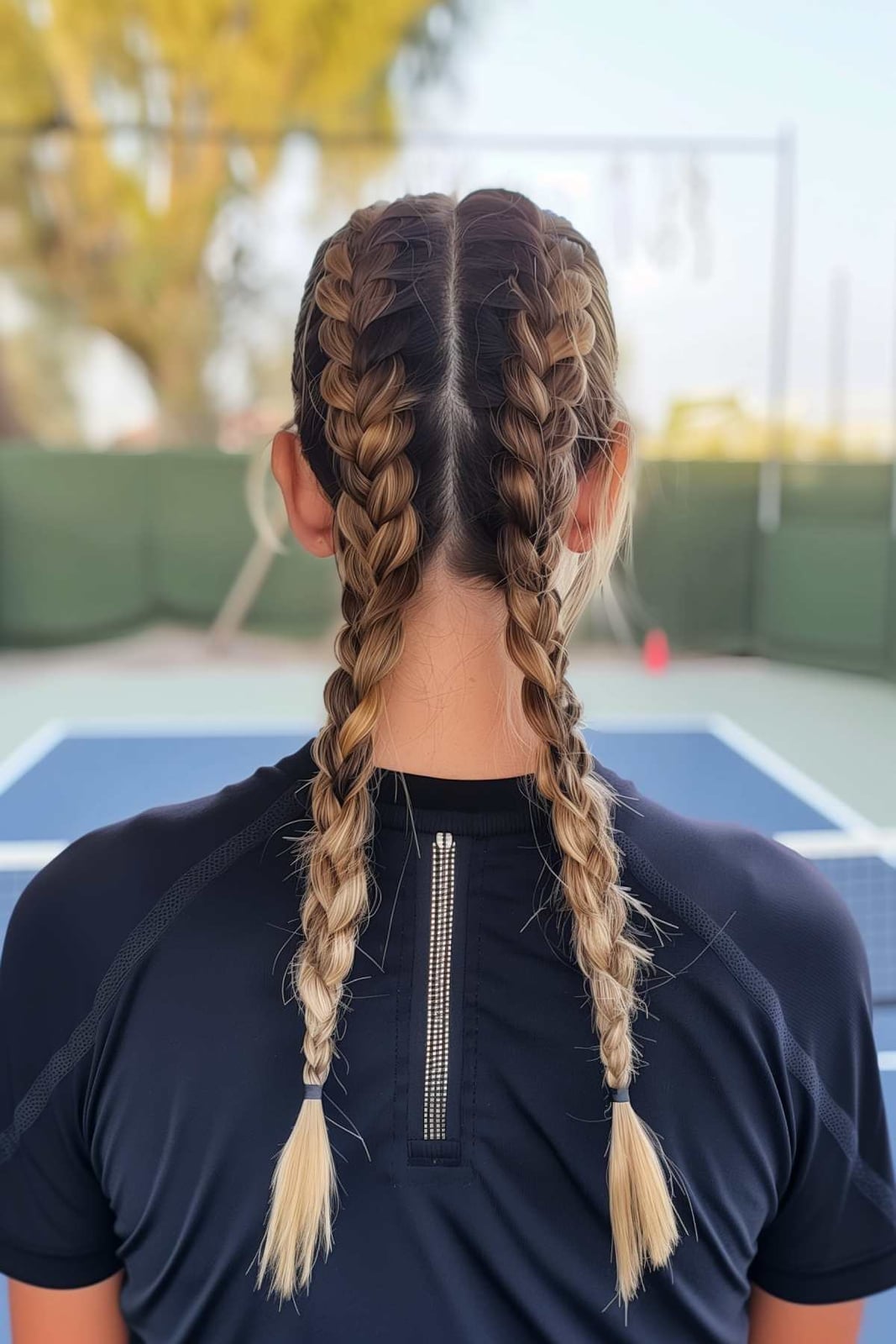
A single braid sits neatly and does the job. Double Dutch braids make a statement, with each plait traveling from the crown to the ends in a raised, visible weave. On thick, straight hair at mid-back length, the two braids frame the back of the head and show off the blonde highlights running through the dark brown base. Ask your stylist for: two neat Dutch braids, middle part. The middle parting keeps the look symmetrical, which matters when the braids are the whole point.
For the best hold, apply a texturizing spray before braiding to give the hair grip. Clear elastics at the ends keep the finish seamless. This style suits anyone with enough length and density to make each braid substantial. A trim every four to six weeks keeps the ends from fraying.
Medium Brown Double Braids
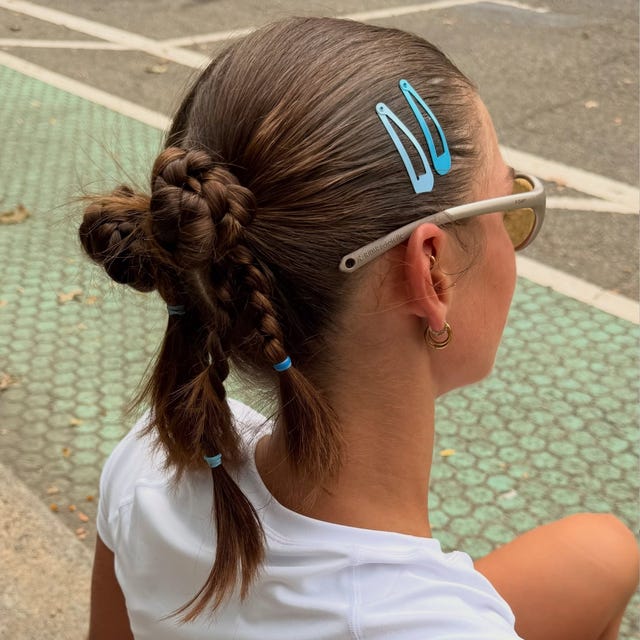
Two neat, thick braids extending down the back create a tidy and intentional look, which is exactly what you want when your hair has natural wave and a lot of density. This style flatters oval and square faces, because the vertical lines of the braids balance a strong jaw or a wider forehead. Ask your stylist for: two neat, thick braids down the back. The medium brown shade keeps the look understated, and the wavy texture gives the braids a slightly fuller appearance than straight hair would. The middle parting anchors the symmetry, and the long layers hidden in the braids prevent bulk at the nape. A light hairspray on the crown tames any flyaways without stiffening the braids themselves.
Dark Brown Braided Pigtails
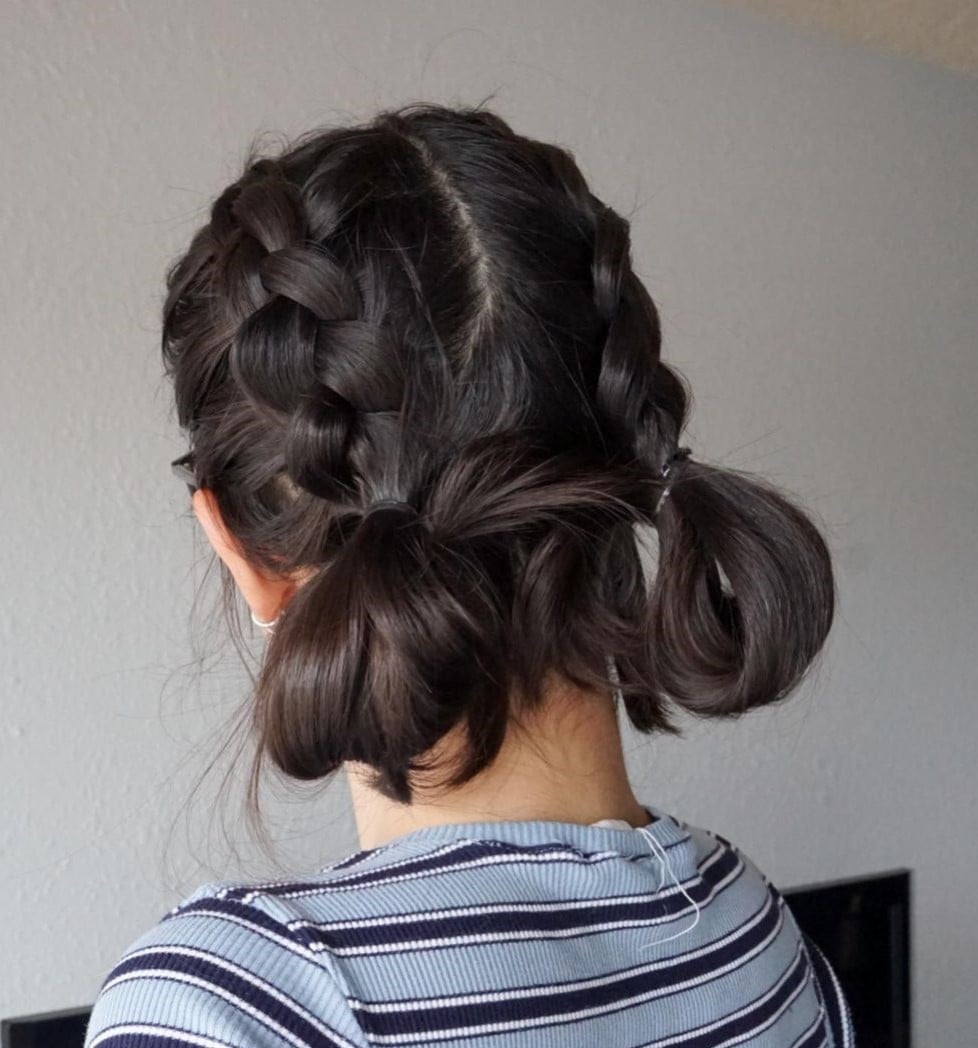
How do you keep shoulder-length hair out of your face during a workout without resorting to a tiny nub of a ponytail? Two thick braided pigtails solve the problem. The middle parting and the wavy, thick texture give each pigtail enough volume to stay visible and not disappear into two thin wisps. Ask your stylist for: two thick braided pigtails, middle part. A texturizing spray applied before braiding adds grip, and strong elastics at the ends keep the braids secure. Expect a trim every six to eight weeks to maintain the shoulder-length shape, since shorter hair shows split ends faster than longer styles do.
Dark Blonde Layered Collarbone Ponytail
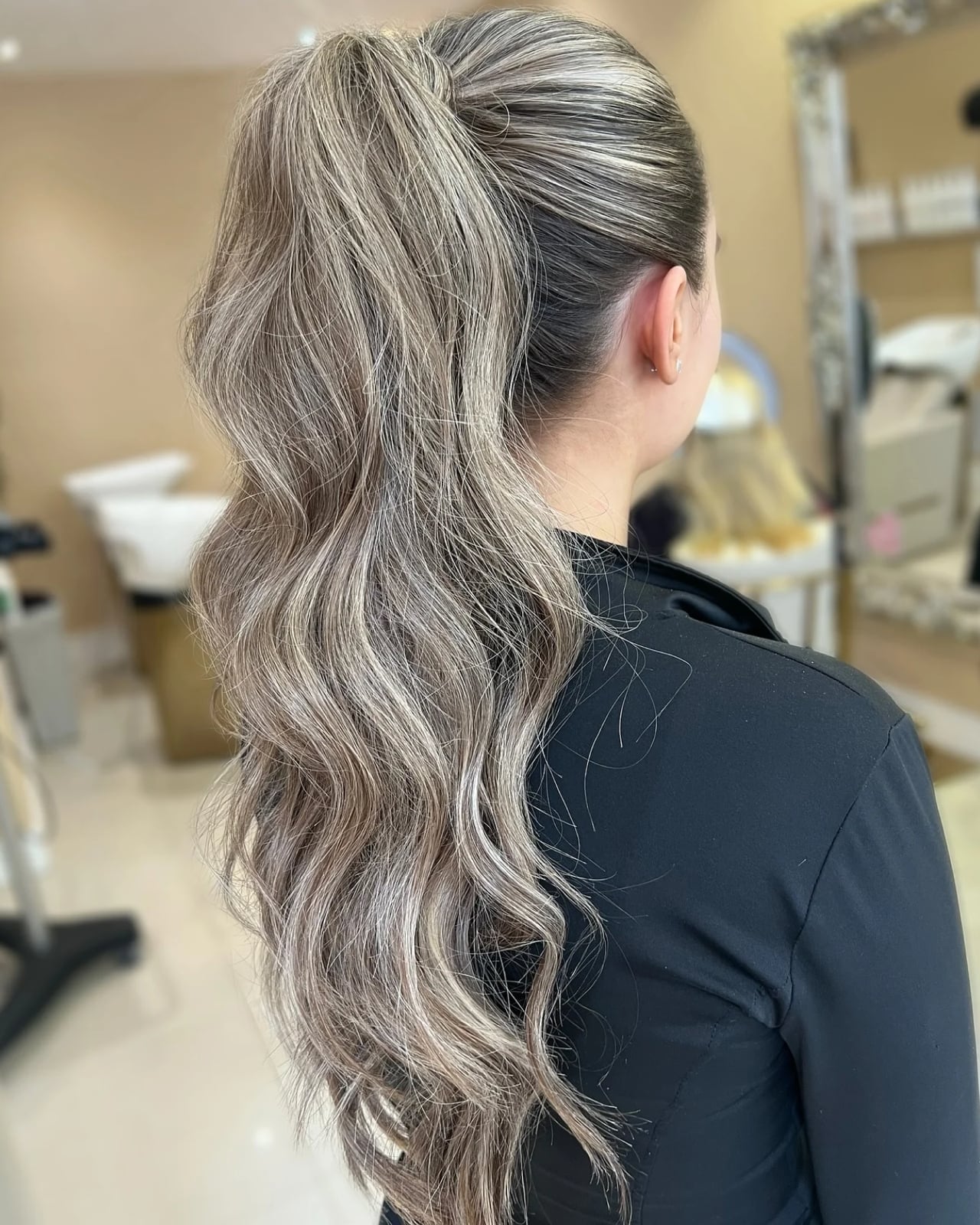
The high ponytail on collarbone-length hair works because of the layering. Multiple layers throughout the cut let the hair gather into a ponytail that looks thick and full, even at this shorter length. The dark blonde base with subtle balayage adds dimension that is visible when the hair is pulled up. A middle parting keeps the front clean. Thick, wavy texture holds the shape without extra grip. Ask your stylist for: collarbone length layered hair in a high ponytail. Spray the layers with texturizing spray before pulling up for volume that lasts through a workout.
Light Brown Braids Into Ponytail With Wispy Bangs
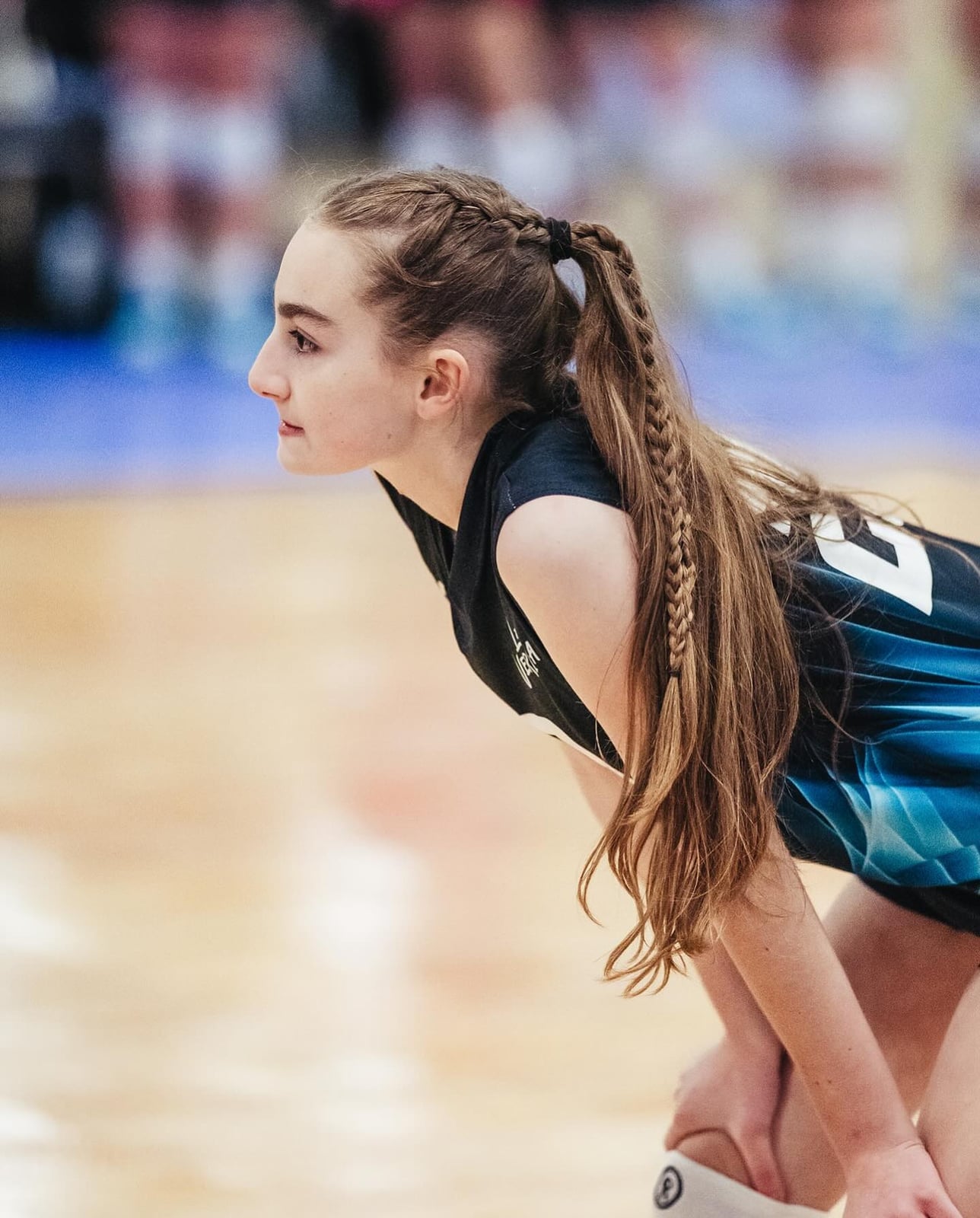
The two braids start at the temples and meet at the back into a single ponytail, a design that keeps every inch of mid-back length controlled. Wispy bangs stay out of the eyes while softening the hairline, a practical detail for running or cycling. Medium-textured, wavy light brown hair gives the braids grip without needing product. The style works for medium to long hair and suits round or square faces by breaking up the horizontal lines.
Ask your stylist for: two braids into a ponytail, wispy bangs. To recreate it at home: part the hair down the middle, braid each side from the temple to the nape, then gather both braids into a ponytail. Secure the ponytail firmly so nothing shifts. A trim every six to eight weeks keeps the wispy bangs from growing past the brows.
Dark Base With Blonde Highlights Braided Ponytail
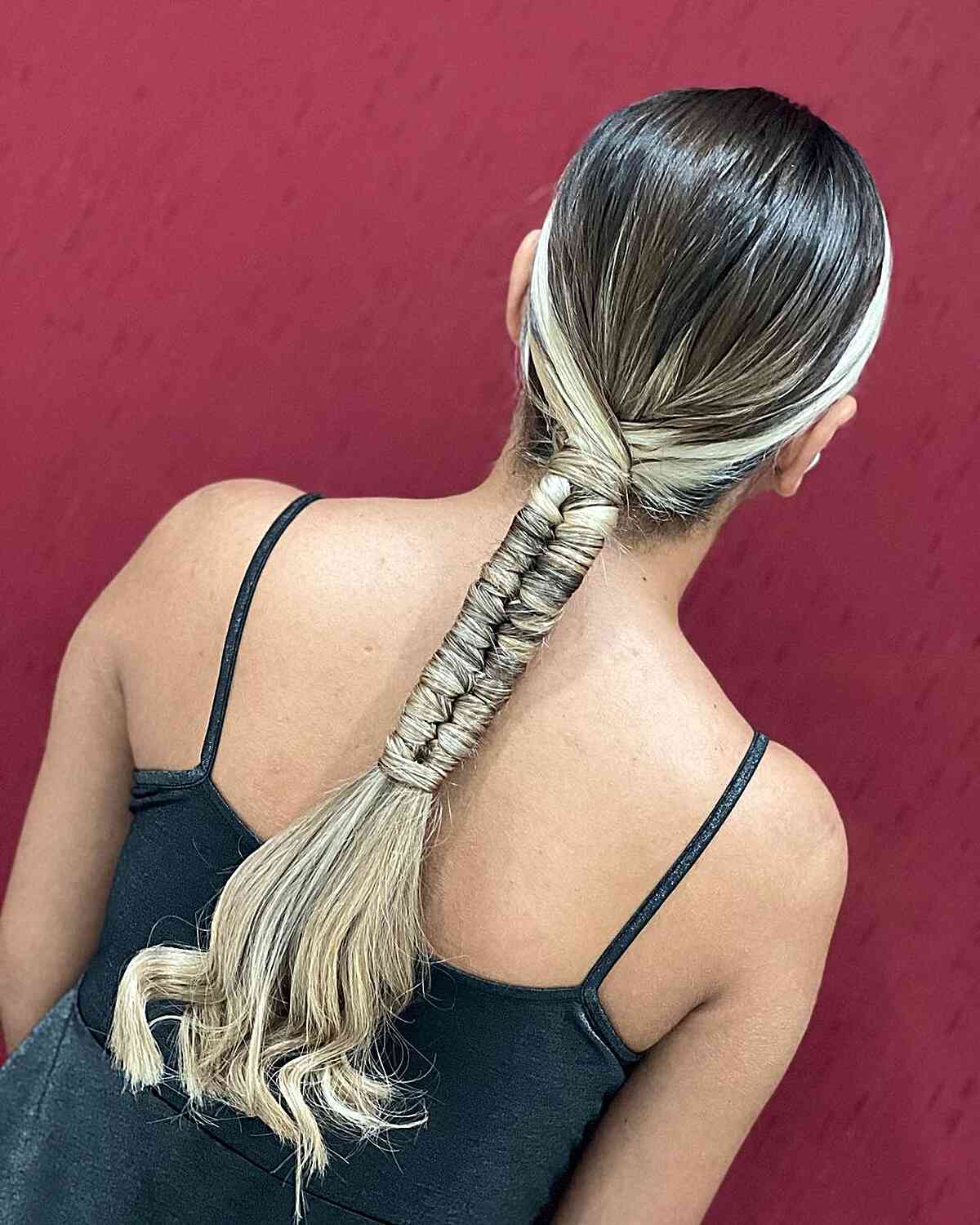
Does the blonde in a dark-base braid ever look brassy? It can, and the remedy is straightforward. This mid-back length ponytail is braided tightly from the nape, with the dark roots and blonde pieces alternating as the braid travels down. The straight, thick texture lets each section sit cleanly next to the next, so the contrast reads clearly. Loose, wavy strands at the end soften the overall line. Ask your colorist for: dark base with blonde highlights, intricately braided ponytail. Blonde highlights on a dark base need a purple shampoo rotation every three weeks to keep the warmth in check. A toning gloss every six weeks helps too.
Neat Dark Brown Braided Bun
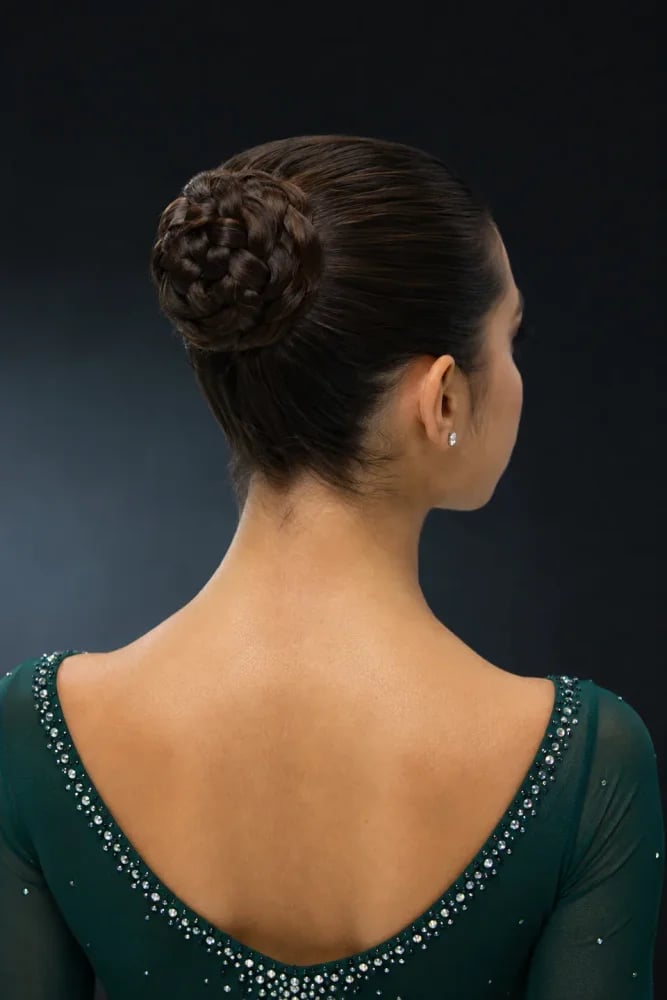
Where a messy ponytail is the go-to for casual sport, this braided bun is the polished counterpart. The dark brown hair is braided from the crown down to the nape, then coiled into a neat, intricate bun that sits flat against the head. No loose strands, no bulk. The straight, thick texture makes the braid definition visible even from a distance. This is a style for active days when you want the hair completely out of the way: think a long run, a dance class or a competition where nothing can shift. Ask your stylist for: neat, intricate braided bun at the nape. It suits round faces by adding vertical length. A trim every eight to ten weeks keeps the ends even for a smooth bun.
Complex Dark Brown Braided Updo
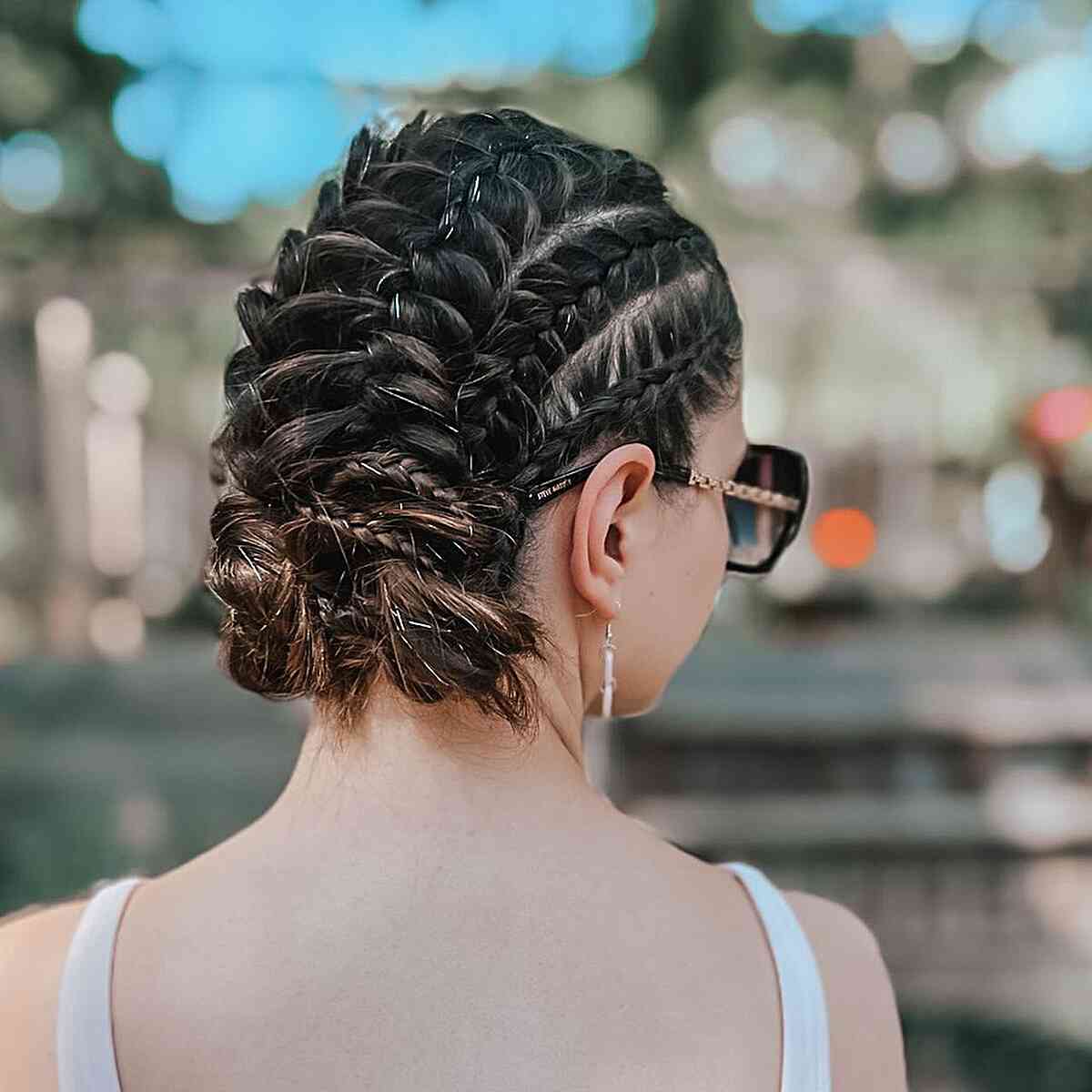
Multiple sections of tightly woven braids converge into a low bun at the nape of the neck. The construction is the point: each braid is a separate piece that wraps around the others, creating a textured, almost sculptural finish. The dark brown base with subtle highlights catches the light differently on each braid, so the pattern stays readable. Thick, wavy hair holds the braids without slipping. A middle parting keeps the front symmetrical. Ask your stylist for: complex braided updo with a low bun. This is a salon-built style: the braiding pattern requires two hands and a mirror, and it is not something you replicate on a Tuesday morning. A trim every eight to ten weeks keeps the ends from fraying into the braids.
Blonde Double Buns With Wispy Bangs
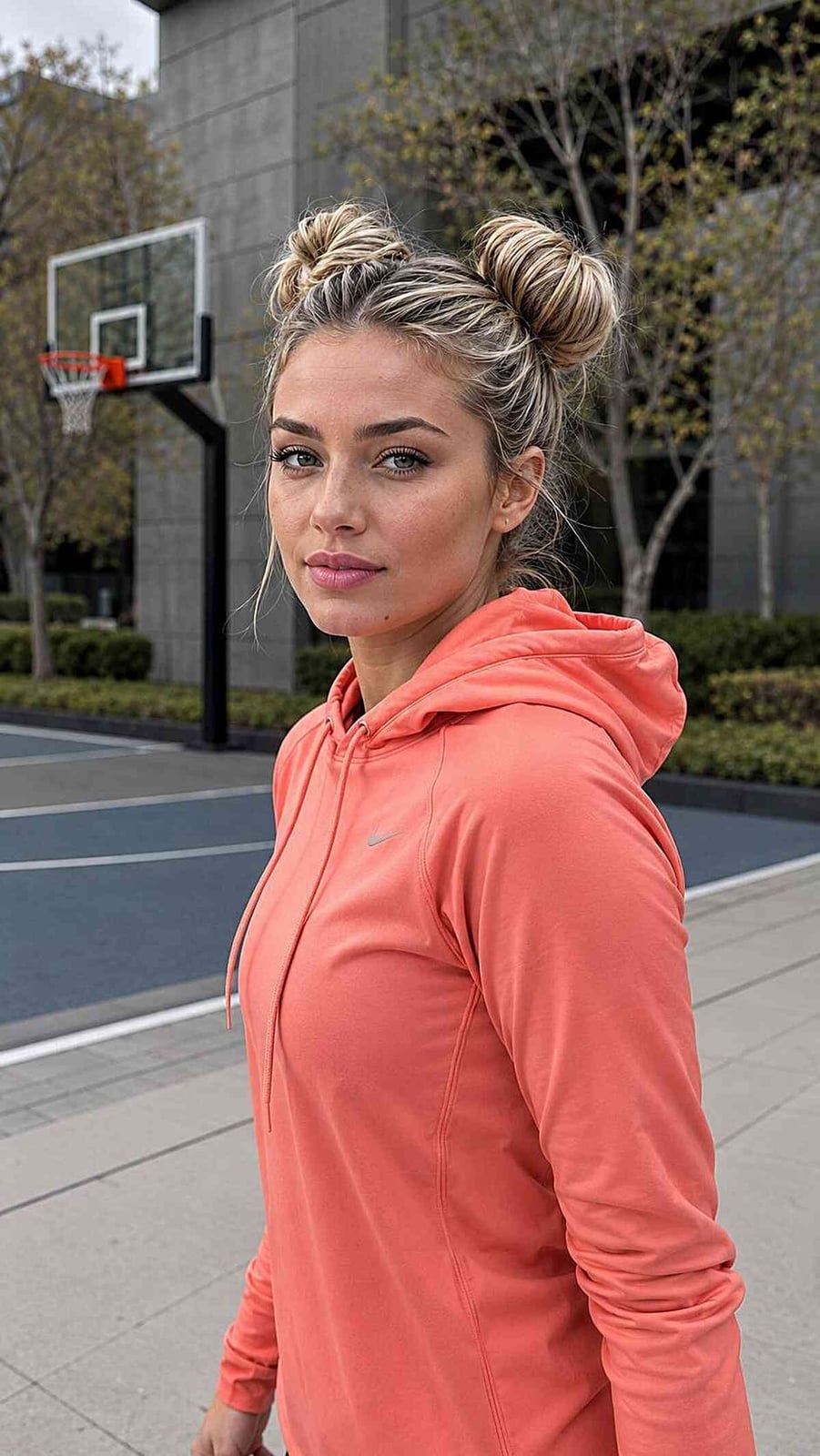
Can wispy bangs survive a workout? In this setup, yes. Shoulder-length, wavy blonde hair with highlights is pulled into two high buns, and the short, wispy bangs stay out of your eyes without needing pins. The style softens square and round faces thanks to the bangs and the volume at the crown. Ask your stylist for: high double buns, short wispy bangs. Tease the roots before forming each bun so they don’t deflate mid-sprint. Trim those bangs every four to six weeks, or they’ll turn into a curtain you didn’t ask for.
Blonde Double Buns With Headband
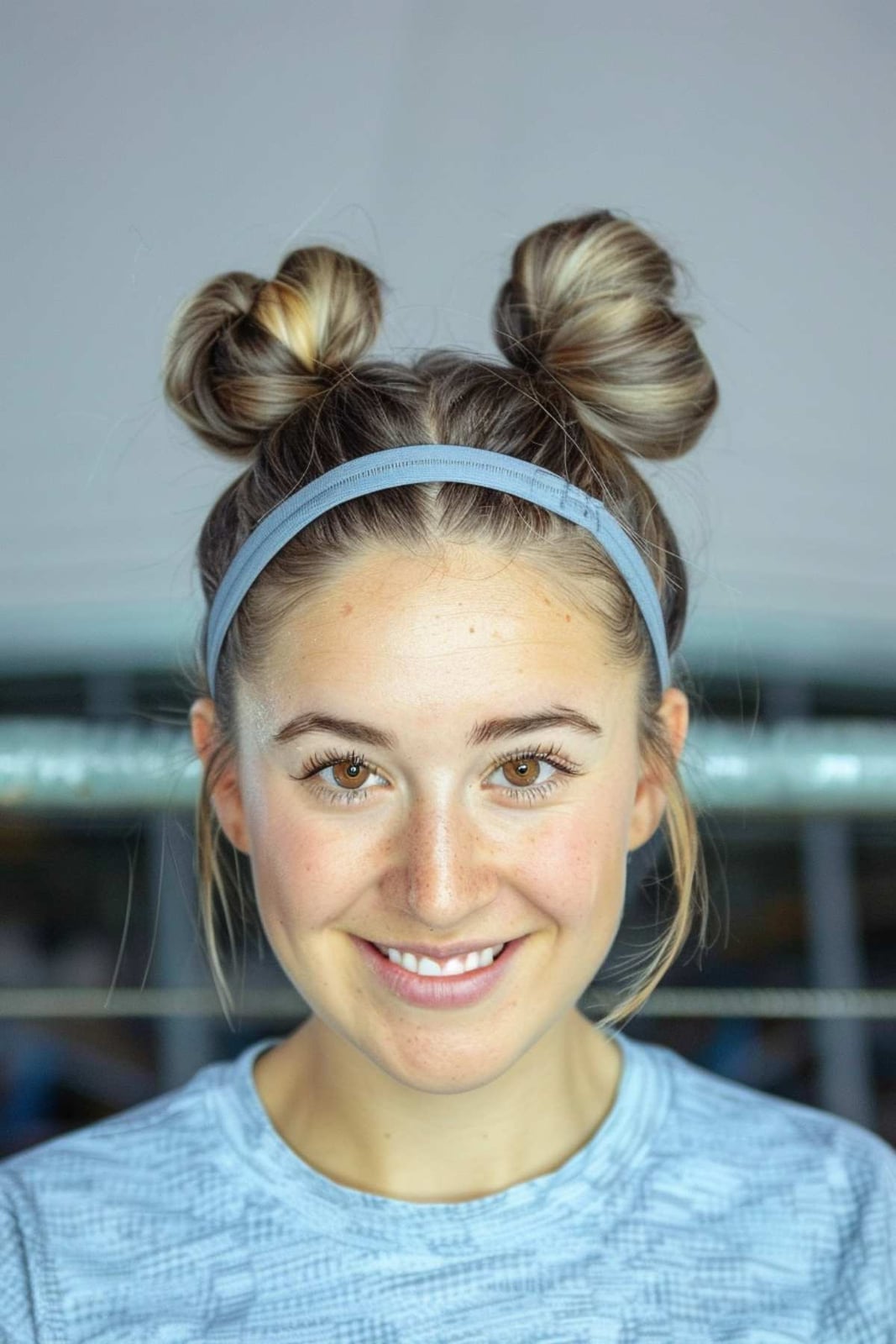
The genius of double buns with a headband is that nothing moves. Shoulder-length, wavy blonde hair with highlights sits in two high buns, secured by a blue headband that catches sweat before it reaches your hairline. This is a DIY-friendly style: section the hair with a middle parting, twist each side into a bun, and add the headband. Ask your stylist for: double buns with a sporty headband. A texturizing spray gives the wavy texture enough grip to stay put. A salon can add face-framing layers, but the styling itself takes ten minutes at home.
Messy Blonde Bun With Wispy Strands
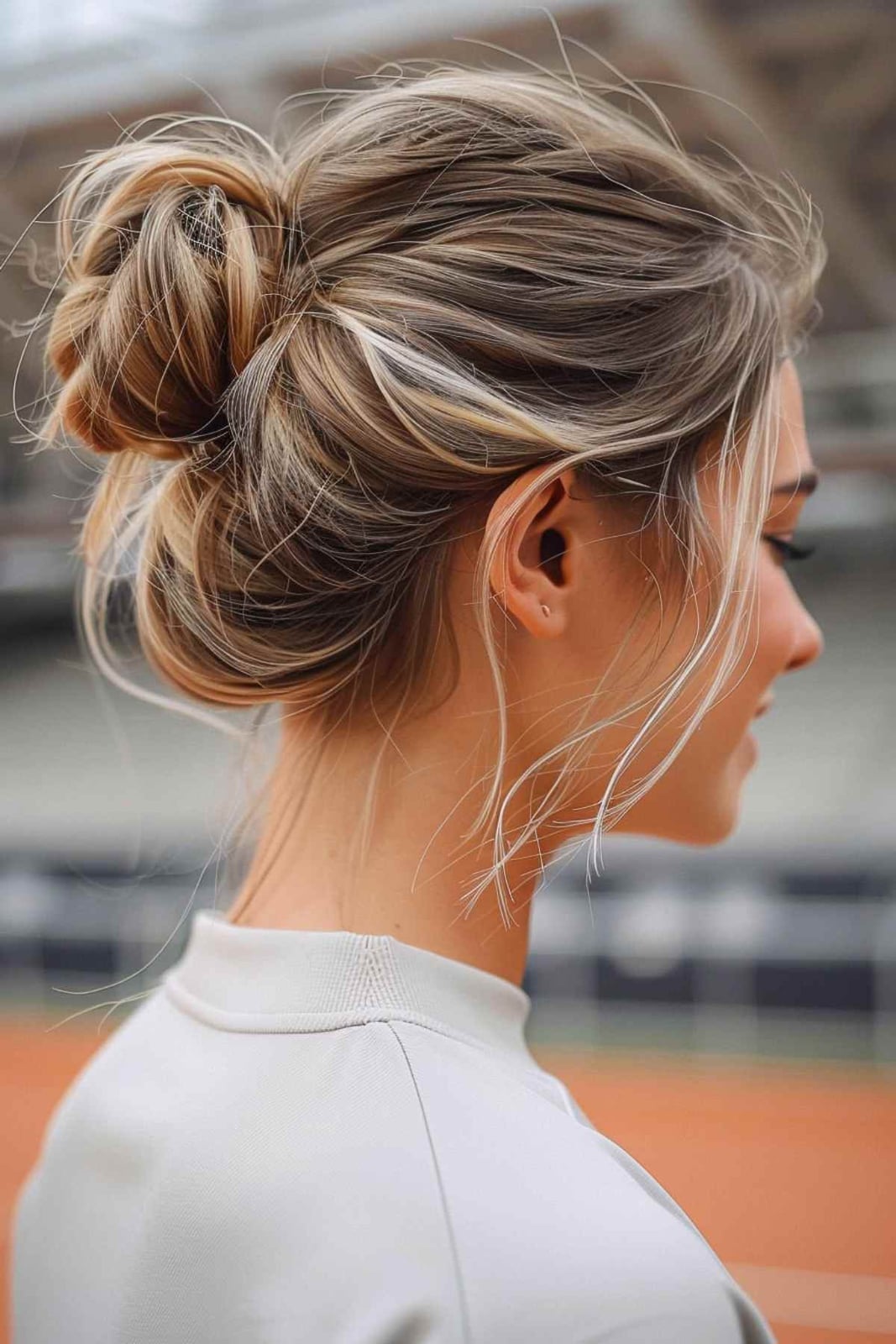
A messy bun on fine, wavy hair risks looking like you gave up halfway through. The difference here is the wispy strands. Shoulder-length blonde hair with highlights is gathered into a loose bun with a side parting, and those deliberate strands soften the whole thing. Ask your stylist for: messy bun, loose wispy strands. A flexible hold spray keeps the texture intentional rather than accidental. The real drawback: fine hair can slip out of the bun during high-impact activity, so pack an extra elastic. Trim the ends every six to eight weeks to keep the layers sharp.
Light Brown Bob With Twisted Front Sections
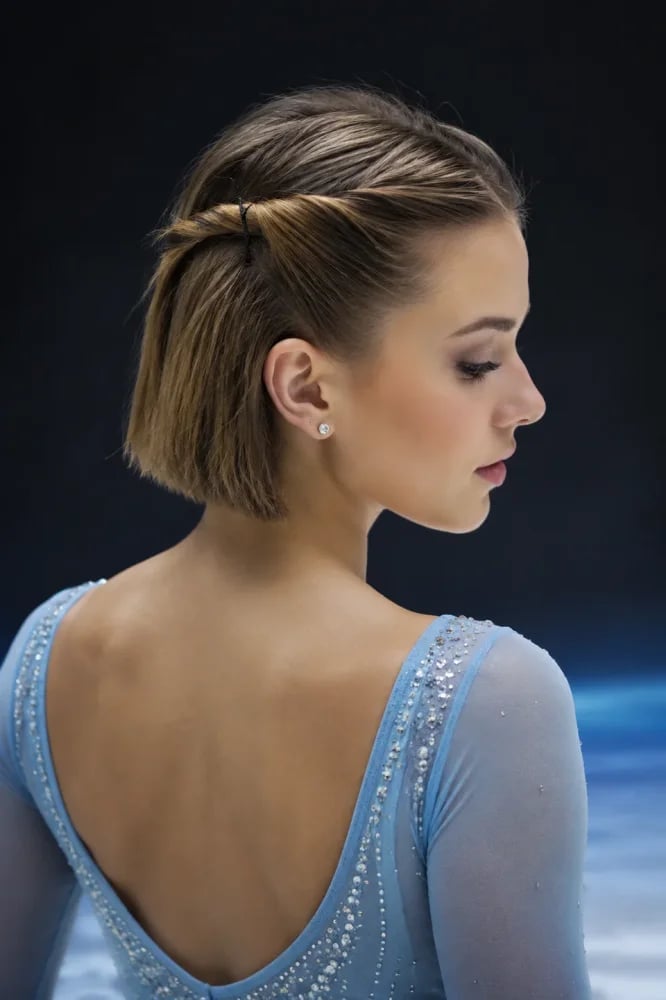
A chin-length bob with short wispy bangs is already a low-maintenance haircut. Adding two twisted front sections turns it into a gym-ready style without losing the bob’s clean line. This light brown, straight, fine bob has the front sections twisted back and secured, which keeps the hair off your face while the wispy bangs soften the forehead. Ask your stylist for: chin-length bob, short wispy bangs, twisted front sections. The twist works best on fine, straight hair that holds a bend without pins. Apply a texturizing spray to the front sections for grip before twisting. Trim the bob every six to eight weeks to maintain the chin-skimming length.
Final Thoughts
Fine hair holds best in tight braids or sleek ponytails that minimize movement and slippage. Thick hair benefits from structured updos and cornrows that manage bulk and reduce tension. Pick the style that matches your activity level and hair texture, then get moving.
- Trim braids and cornrows every 2-4 weeks to maintain scalp health and neatness.
- Refresh ponytails and buns with smoothing serums to tame flyaways.
- Use heat protectant before styling with dryers or curling irons for updos.
- Wash scalp thoroughly after intense workouts to prevent buildup.
Stay active, stay stylish.