18 Trendy Down Locs Hairstyles 2027 with Curly Highlights
Trendy Down Locs 2027 feature 18 looks. Explore honey blonde wavy locs and multi-tonal highlight options. See the looks and save your favorite.

Down locs are having a moment, moving beyond a single texture to embrace soft layers, lived-in color, and a glossy finish that reads as polished, not precious. The shift is toward styles that move with you, not ones that hold still.
This collection of 18 Trendy Down Locs covers the range: from collarbone to mid-back, faux to natural, subtle to saturated. Whether your hair is fine and needs volume or thick and needs shaping, there is a look here that solves the real struggle of a style that falls flat or a part that will not sit.
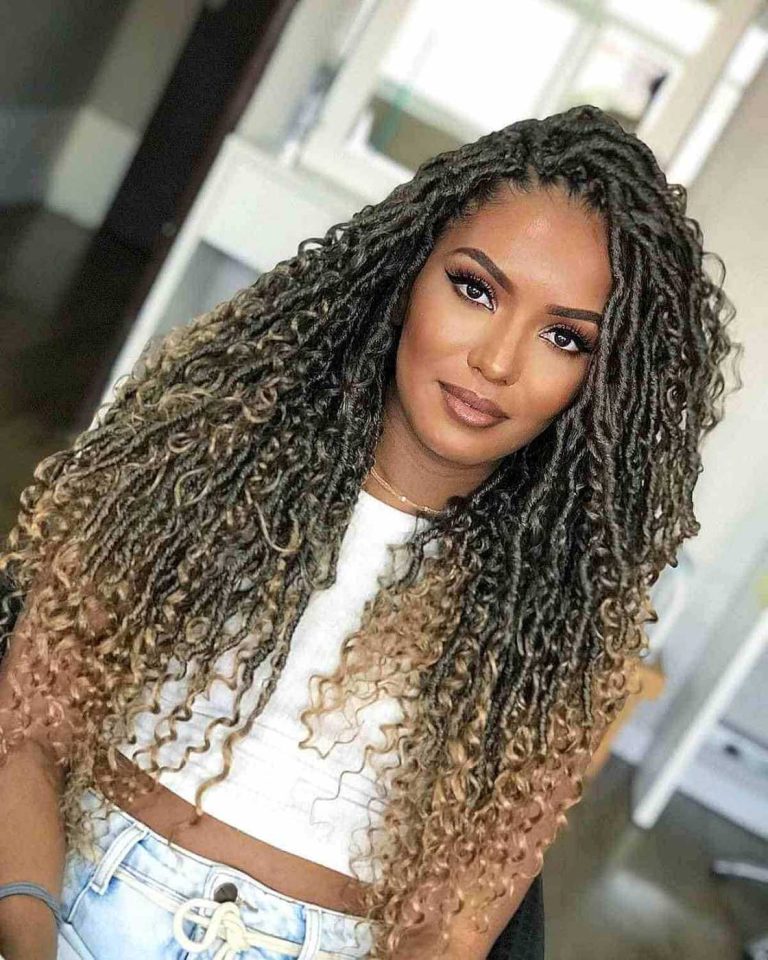
Voluminous Curly Locs With Blonde Highlights
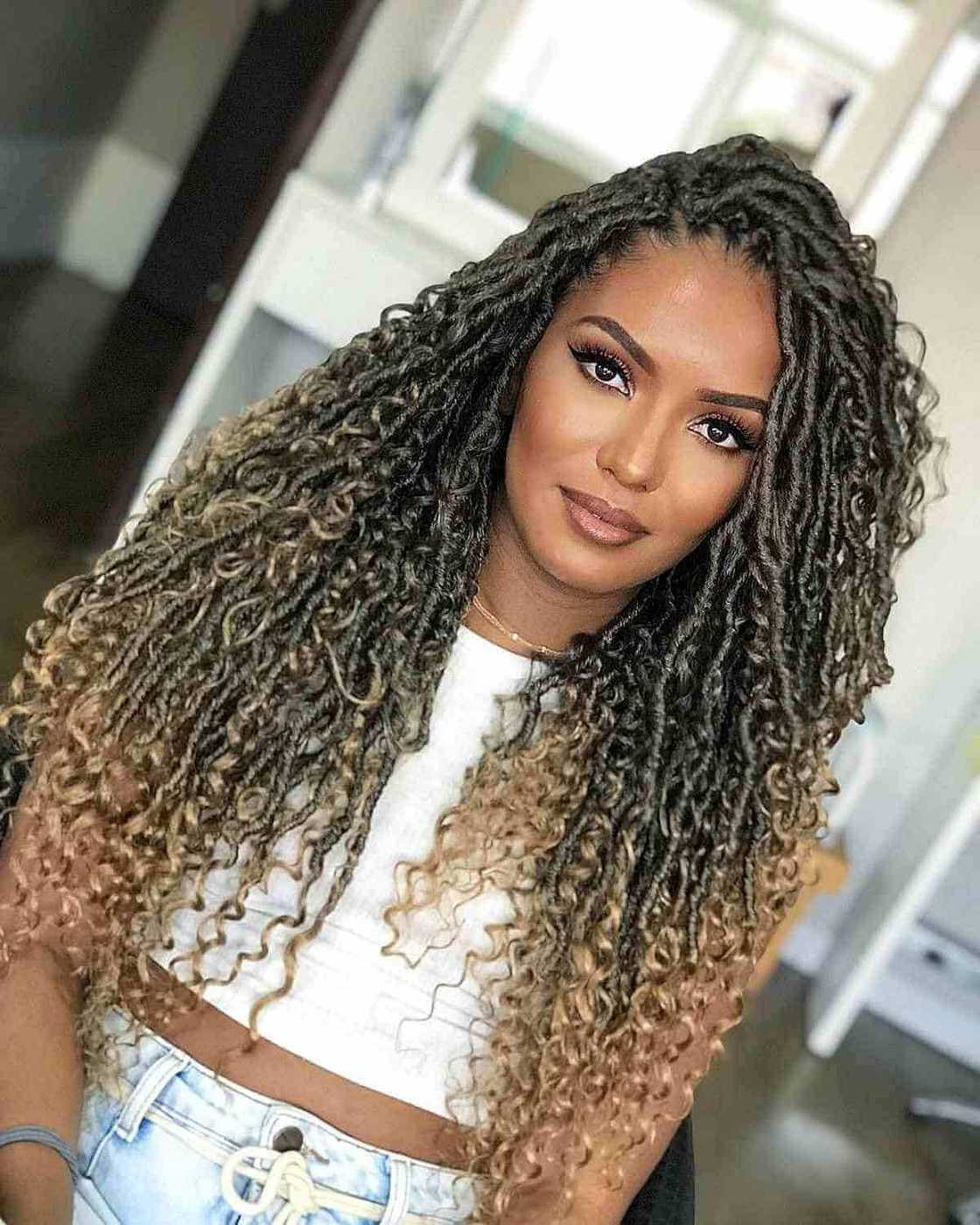
A side part and a pile of loose, curly volume make this loc style feel less like a default and more like a decision. The black base is punctuated with blonde and brown highlights that catch light at the ends, which is where the curl really lives. Medium to thick hair density can support the fullness here; the side part keeps the shape adaptable for most face shapes. Ask your stylist for mid-back locs with voluminous curly texture and blonde highlights. A diffuser on low heat after washing coaxes the curl definition without frizz, and a trim every 10 to 12 weeks keeps the curly ends from looking ragged.
Vibrant Honey Blonde Wavy Locs
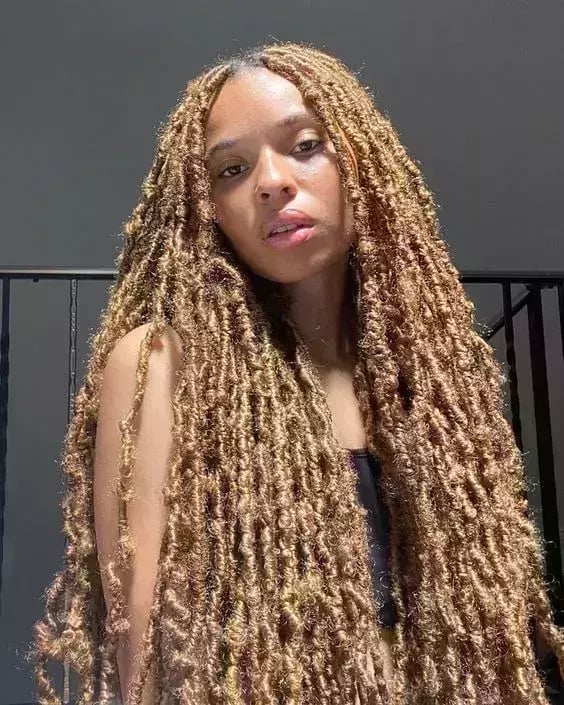
Getting a honey blonde this saturated on locs takes more than one round of color, because the hair needs to lift before it can take on that warm, almost golden tone. The wavy texture softens the uniform shade, so it doesn’t read flat. A middle part suits round faces by elongating the line, and the hair needs to be at least shoulder length before installation. Ask your colorist for mid-back wavy locs in a vibrant honey blonde. A color-depositing conditioner used weekly keeps the tone from pulling brassy between salon visits.
Dimensional Multi-Tonal Highlighted Wavy Locs
Solid color on locs can look intentional, but a multi-tonal blend of black, brown, red, and blonde mimics natural variation from different angles. The wavy texture helps each tone move separately. Medium to thick hair density at shoulder length or longer works best to show the depth. Ask your colorist for mid-back wavy locs with multi-tonal black, brown, red, and blonde highlights. A color-safe shampoo is essential, and a toning session every 8 to 10 weeks keeps the red and blonde from muddling together.
Dark Brown Faux Locs With Gold Beads
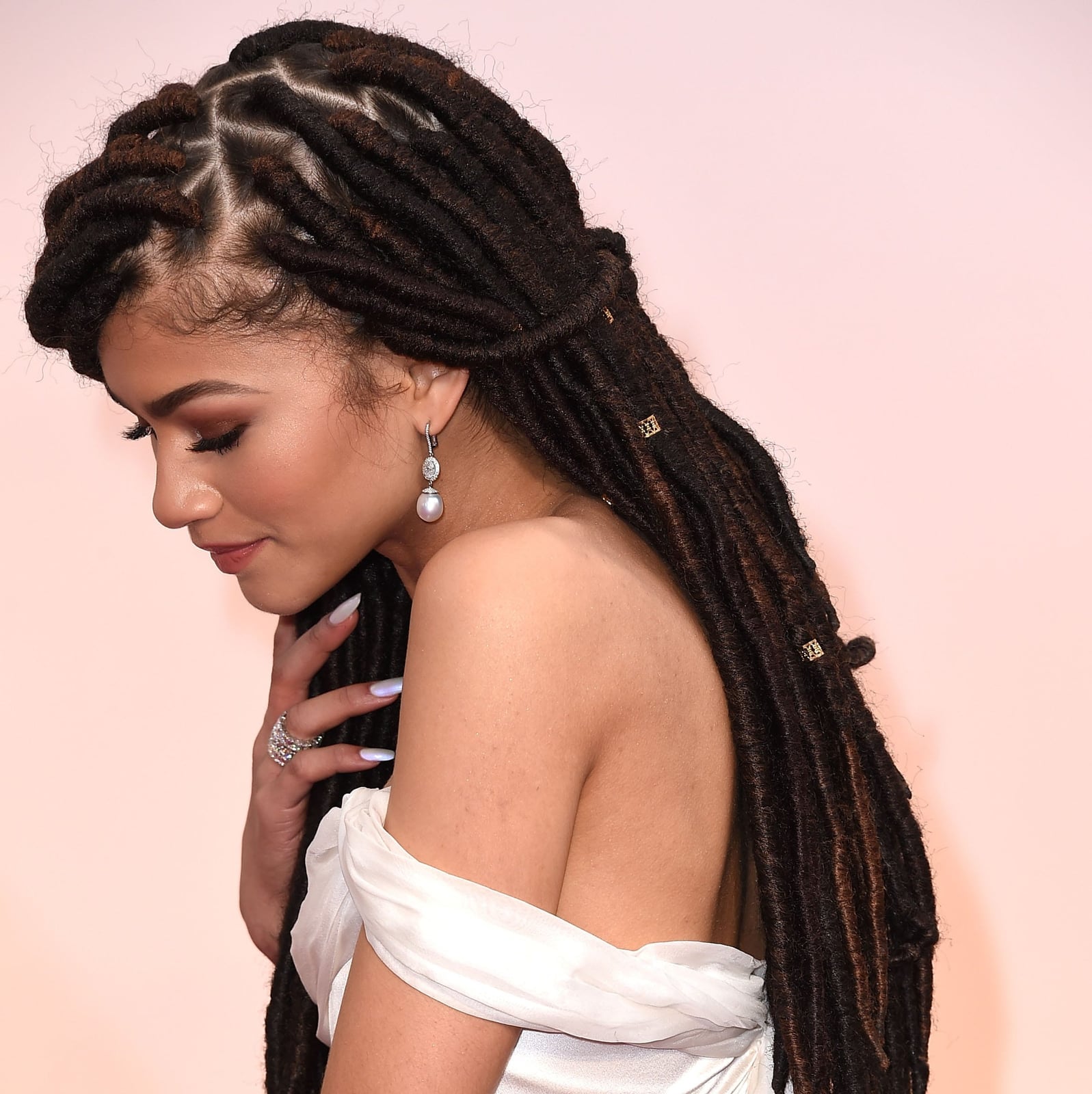
The beads add weight. That is the first thing to know about faux locs with metal or plastic beads: they pull on the root more than unadorned locs, and they snag on pillowcases and sweater collars. The dark brown base with subtle highlights keeps the attention on the gold accents. A middle part works for elongation on round faces; shoulder-length hair is the minimum starting point. Ask your stylist for mid-back wavy faux locs with subtle highlights and gold beads. Sleep with the locs loosely braided or wrapped in a scarf to keep the beads from catching or loosening.
Loose Faux Locs With Curled Ends
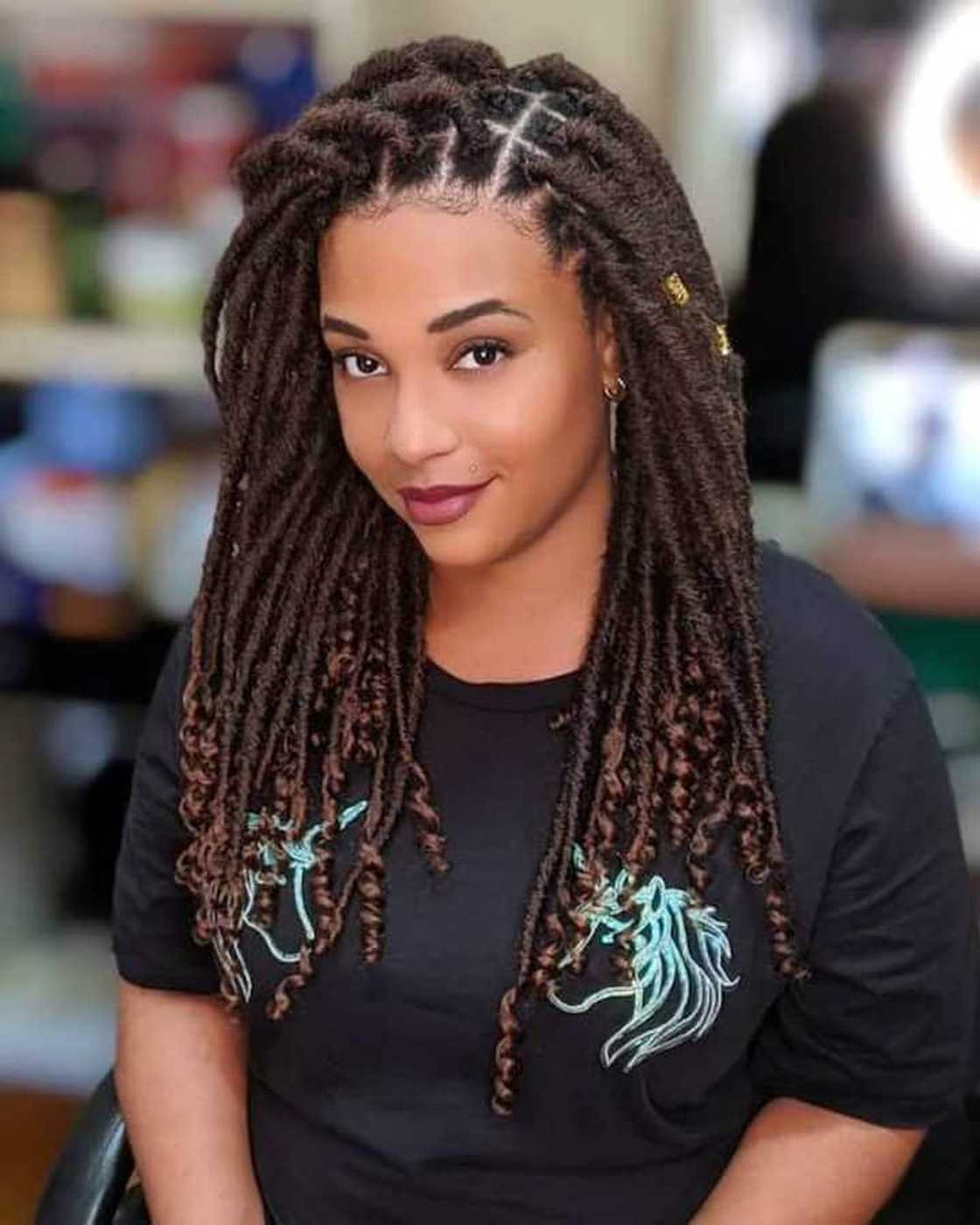
The curled ends are the point, so ask for them by name. Loose faux locs with a middle part and a dark brown base get a lot of their personality from lighter brown highlights that trace through the wave. The curl at the end keeps the locs from falling into a straight, heavy line. Medium to thick hair density starting at shoulder length can carry this look. Ask your stylist for mid-back faux locs with loose styling and curled ends. The ends will need a refresh with a curling iron or wand every few washes, and a trim every 6 to 8 weeks preserves the shape.
Thick Faux Locs With Striking Blonde Tips
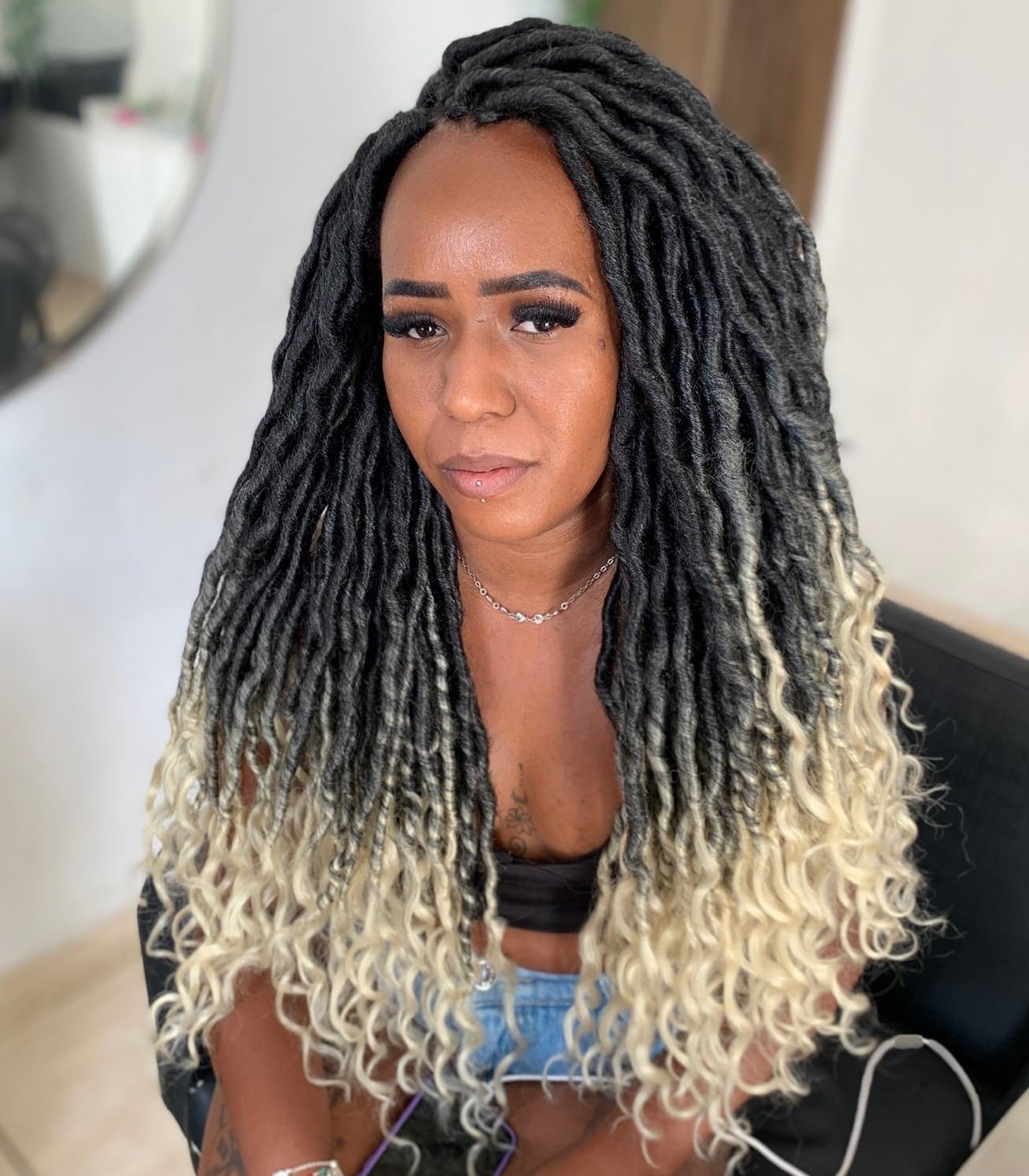
Thick, wavy faux locs hitting mid-back with a middle part and curly blonde tips are a design that asks for commitment. The contrast is the whole point, and the blonde ends need upkeep to stay that bright. A purple shampoo keeps them from turning brassy between toning appointments, which you will want every four to six weeks. Ask your stylist for: mid-back thick faux locs with curly blonde tips. This is not a DIY project; installation takes several hours in a salon chair. Medium to thick hair density starting at shoulder length works best, and a middle part helps elongate a round face.
Collarbone Soft Locs With Curly Ends
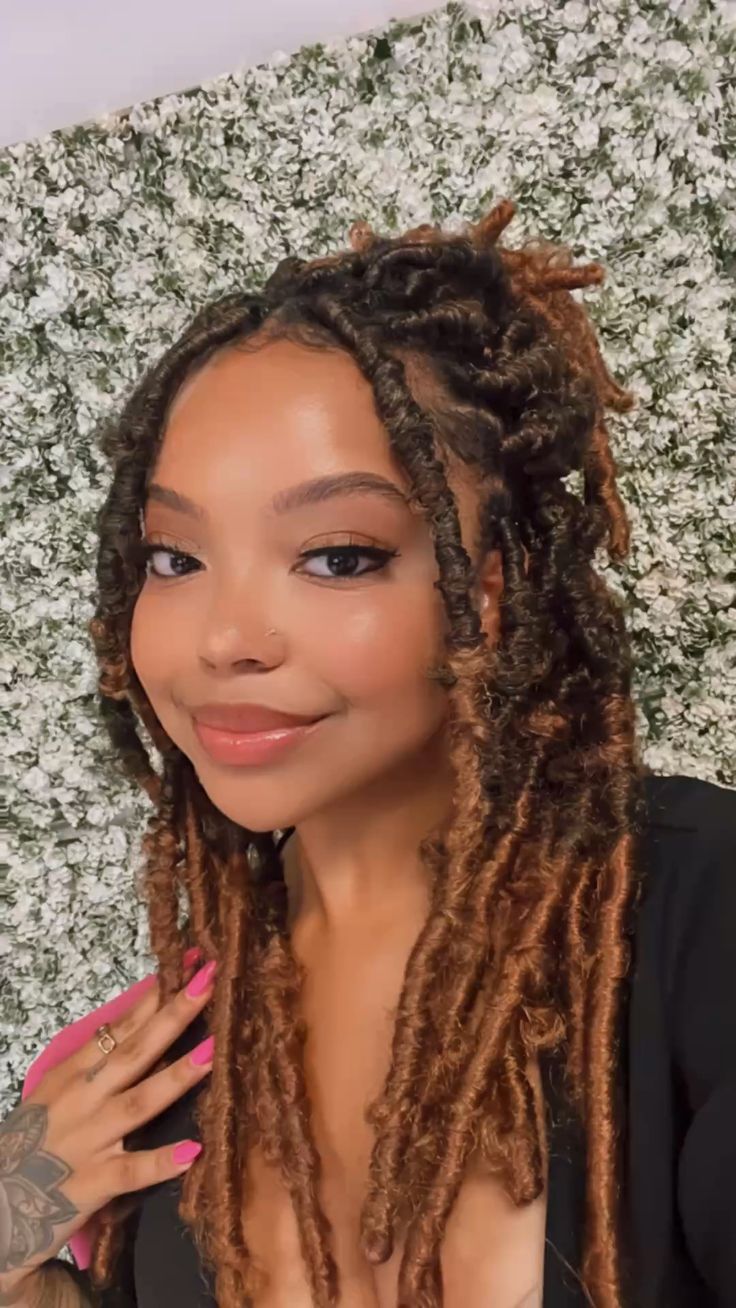
Wondering if locs can work at a shorter length without losing the look? Collarbone soft locs with a wavy texture, curly ends, and a mix of brown and blonde highlights prove the answer is yes. The shorter baseline means less weight and faster installation, though you still need a salon visit to get the curl pattern right. Ask your stylist for: collarbone soft locs with wavy texture and curly ends. Medium to thick hair density, starting at shoulder length, is ideal, and a middle part suits most face shapes. The curly ends keep the silhouette from feeling heavy.
Mid-Back Black Wavy Locs

Mid-back black wavy locs with a middle part lean on length and volume as their main assets. The uniform color keeps the focus on the texture and the way the locs move together. Styling is minimal: a light serum patted down the length controls flyaways without weighing the waves flat. The real work is in the retwist schedule. Plan for a salon visit every four to six weeks to keep the roots neat, and a trim every eight to ten weeks to prevent split ends from traveling up the shaft. Medium to thick hair density is ideal for holding the volume, and a middle part can add length to a round face.
Medium Brown Locs With Blonde Highlights
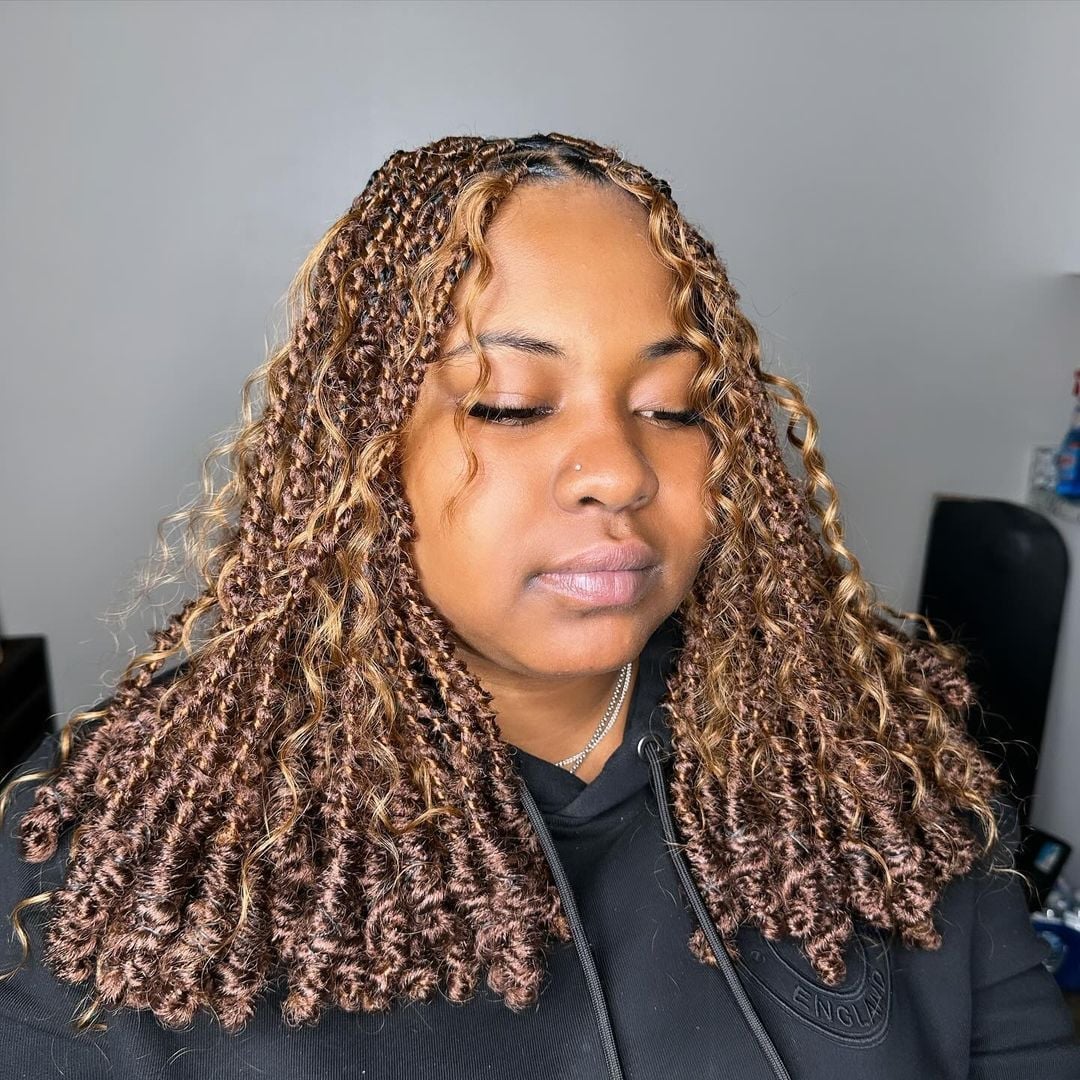
Medium brown locs with blonde highlights rely on a defined wavy texture to make the color placement read clearly. The highlights are painted onto the locs, not woven in, which gives each one its own dimensional stripe. A middle part and loose styling let the waves do the work. Ask your colorist for: mid-back locs in medium brown with blonde highlights and defined waves. The base color stays natural, so the grow-out is softer than a full blonde application. Medium to thick hair density starting at shoulder length holds the wave pattern best, and the middle part works for most face shapes.
Thick Black Wavy Locs Side Part
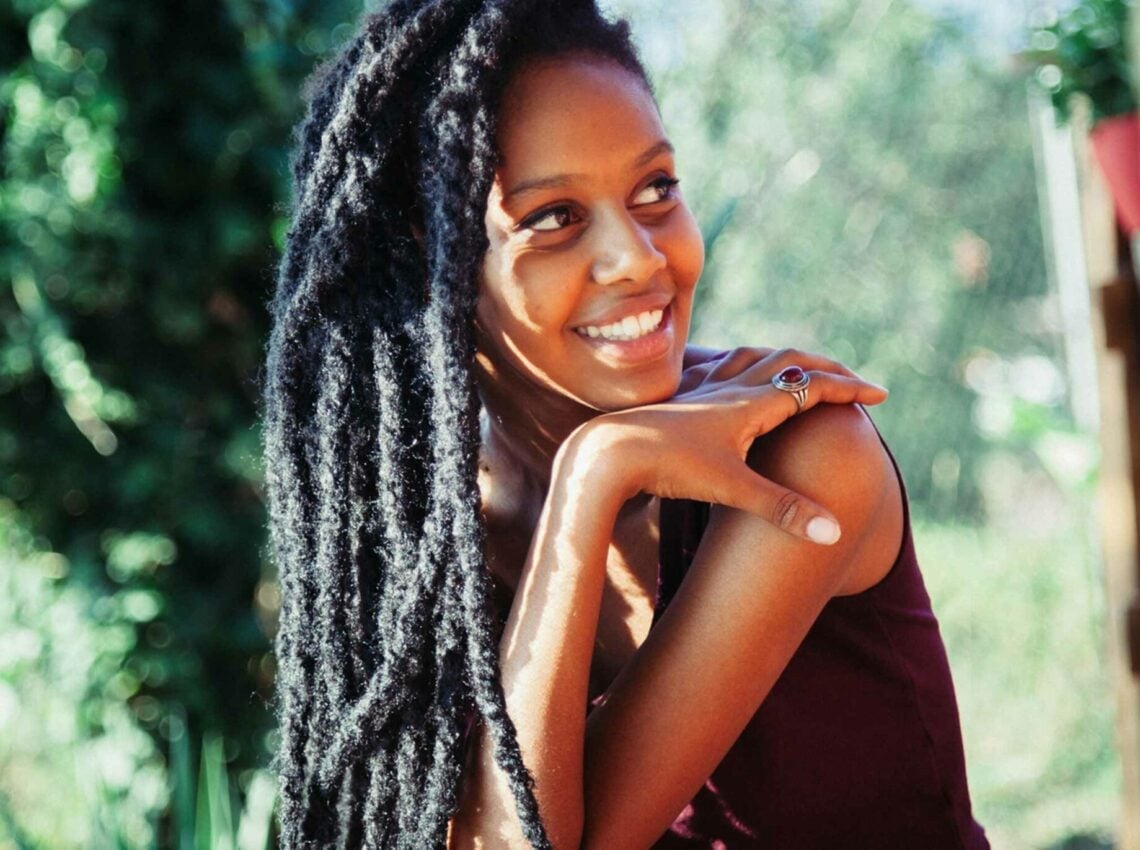
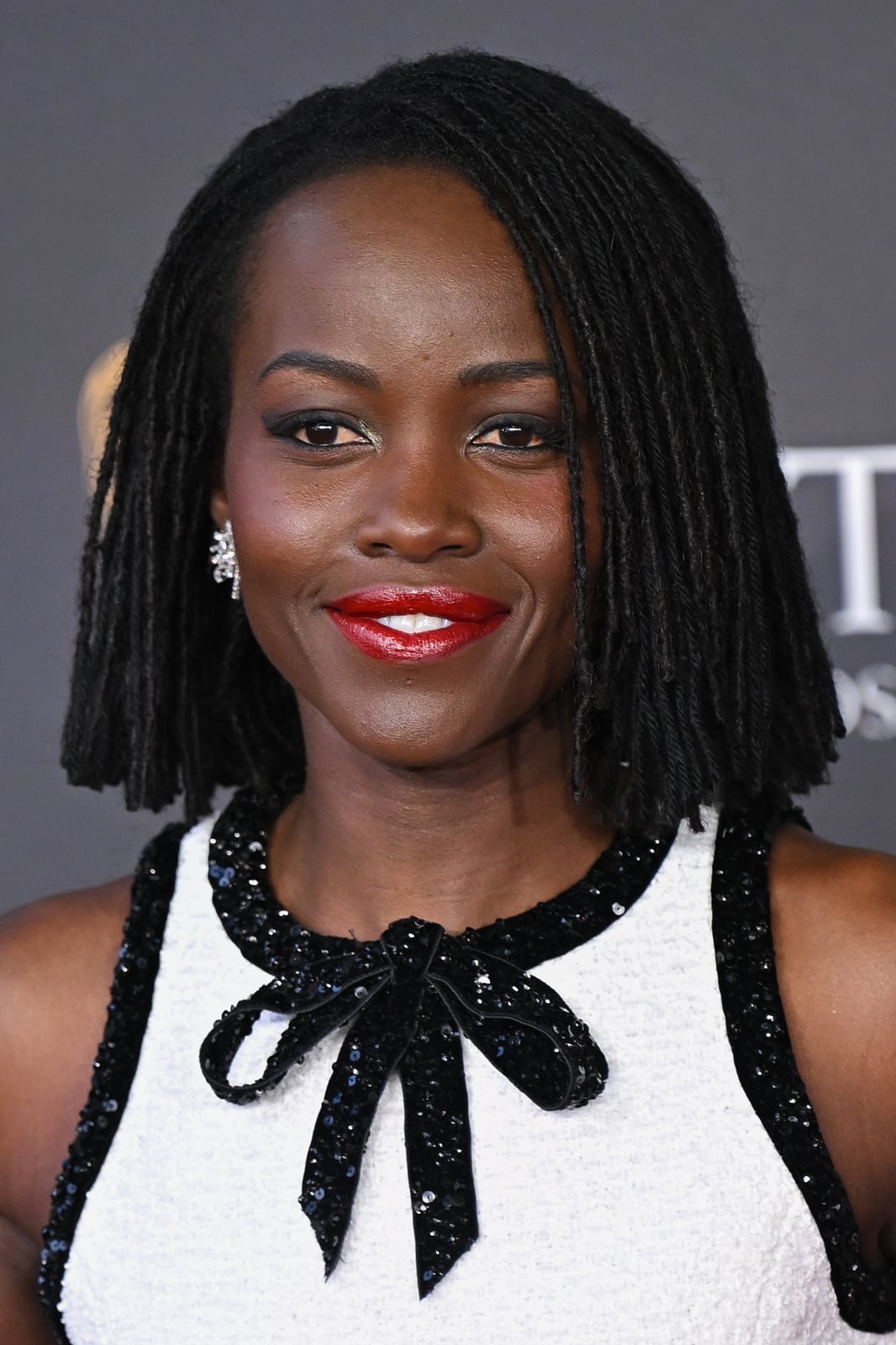
A side part on thick black wavy locs changes the whole silhouette. Where a middle part splits volume evenly, a deep side part piles it to one side for a heavier, more dramatic fall. This is the difference between natural texture that is styled and natural texture that is simply there. The side view in this look captures the shine and the way the locs stack over the shoulder. Ask your stylist for: mid-back thick wavy black locs with a side part. Medium to thick hair density, shoulder length or longer, gives the weight needed to hold the part. The side part also balances a long face by adding width on one side.
Collarbone Black Straight Locs Sharp Part
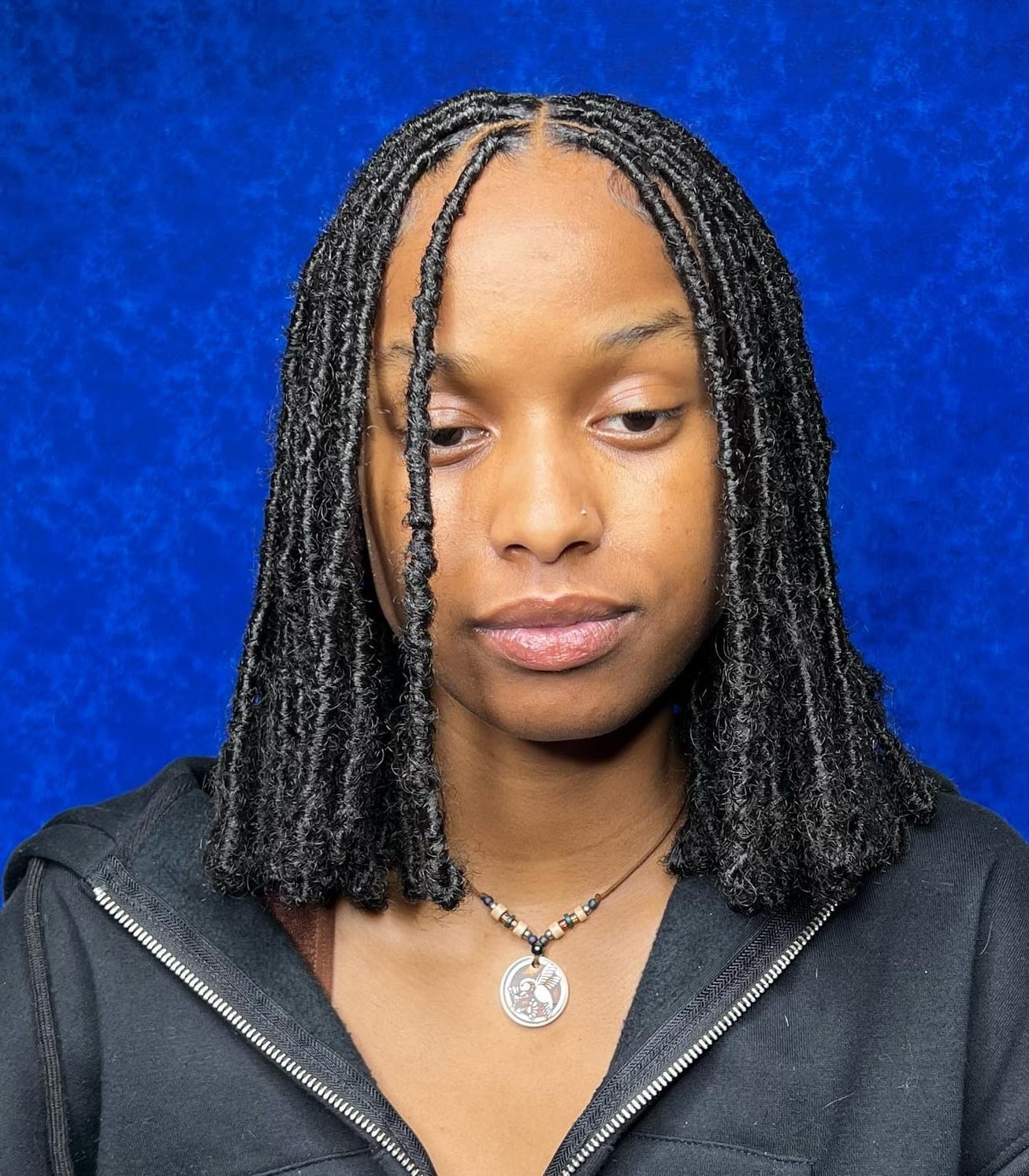
A sharp middle part turns a straightforward collarbone length into geometry. The locs are sleek and dense, so this reads as minimal rather than undone. It suits medium to fine hair density best: the straight texture shows every line, and density that is too low can make the part look sparse. Ask your stylist for: collarbone length straight black locs with a sharp middle part. Fine hair benefits from a smoothing serum to keep flyaways from softening the part. The straight style elongates the face, so it works well for round or square shapes that want a vertical line.
Collarbone Thick Wavy Locs With Side Bangs
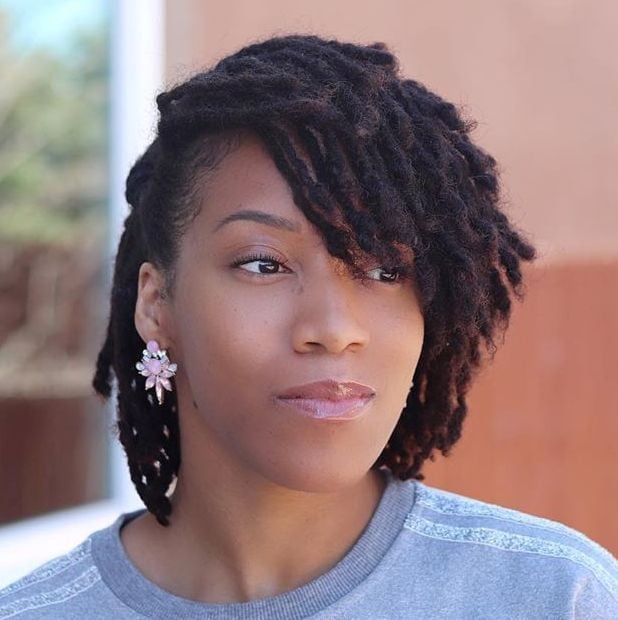
What do you ask for when you want density that moves? Collarbone length thick wavy locs with side-swept bangs. The bangs are the key: they break the weight of thick locs and soften the side part. Ask your stylist for: collarbone length thick wavy locs with side-swept bangs. The side-swept shape works on square or round faces by adding asymmetry. The air-dried texture is intentional here, so a texturizing spray helps the bangs fall the same way each day. A trim every eight weeks keeps the bangs from sliding past your cheekbone.
Collarbone Black Locs With Braided Accents
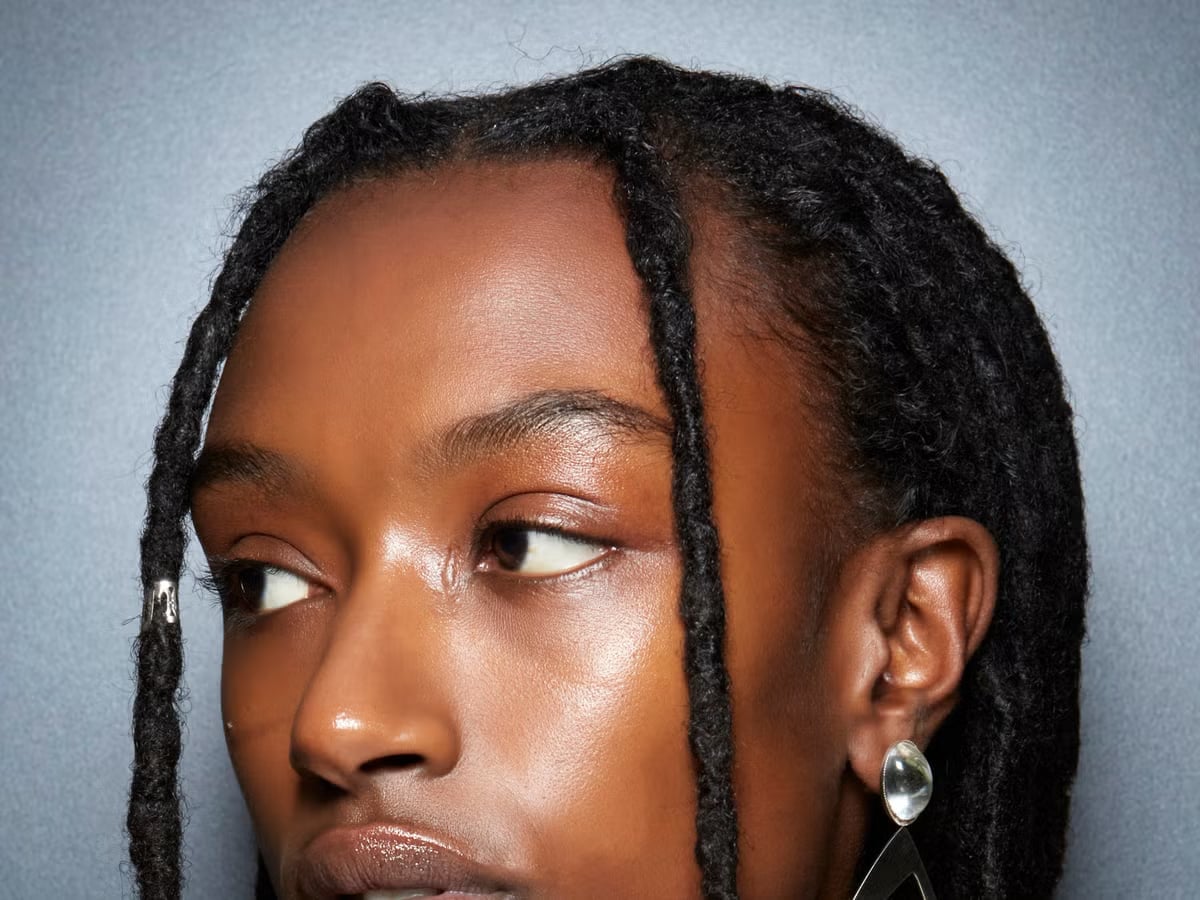
Braided accents add structure to an otherwise loose style. Here, small braided sections weave through collarbone length black locs, while a few loose strands frame the face from a middle parting. The defined texture keeps the braids from blending in. Ask your stylist for: collarbone locs with defined texture and braided accents. The braids will last about two weeks before they need a gentle retwist. The loose face-framing strands soften angular jawlines, and a trim every six to eight weeks keeps the ends from fraying into the braids.
Shoulder Length Layered Locs With Loose Curls
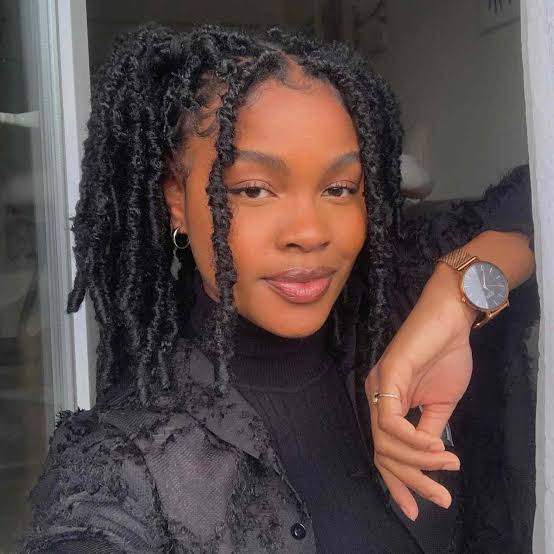
Loose curls at the ends give shoulder length locs a finishing detail that is deliberate. The face-framing layers and middle parting keep the volume from sitting too heavy. Ask your stylist for: shoulder length layered locs with loose curls at the ends. Here is the trade-off: the curls need a curl-defining cream and a cool shot of air to hold their shape, and they will relax faster than straight ends. You can refresh them at home with a small roller set, but a salon visit for a re-curl every four weeks is more reliable. It is not a set-it-and-forget-it style.
Short Wavy Locs With Brown Highlights
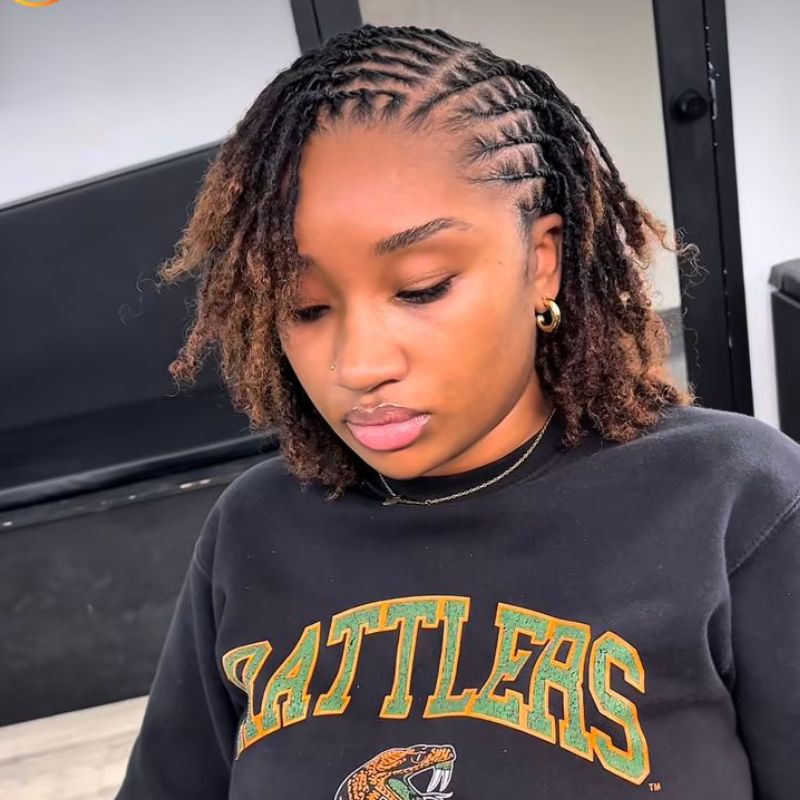
Short locs at shoulder length benefit from dimension that color provides. The black base is broken up by subtle brown highlights that catch light without dominating. The side parting adds lift on one side, which keeps the short shape from looking flat. Ask your stylist for: short shoulder length wavy locs with subtle brown highlights. The technique uses a balayage or babylights to keep the grow-out soft. The wavy texture means the highlights look like natural movement rather than stripes. A trim every eight weeks keeps the length from creeping past your shoulder.
Mid-Back Locs With Blonde Highlights and Beads
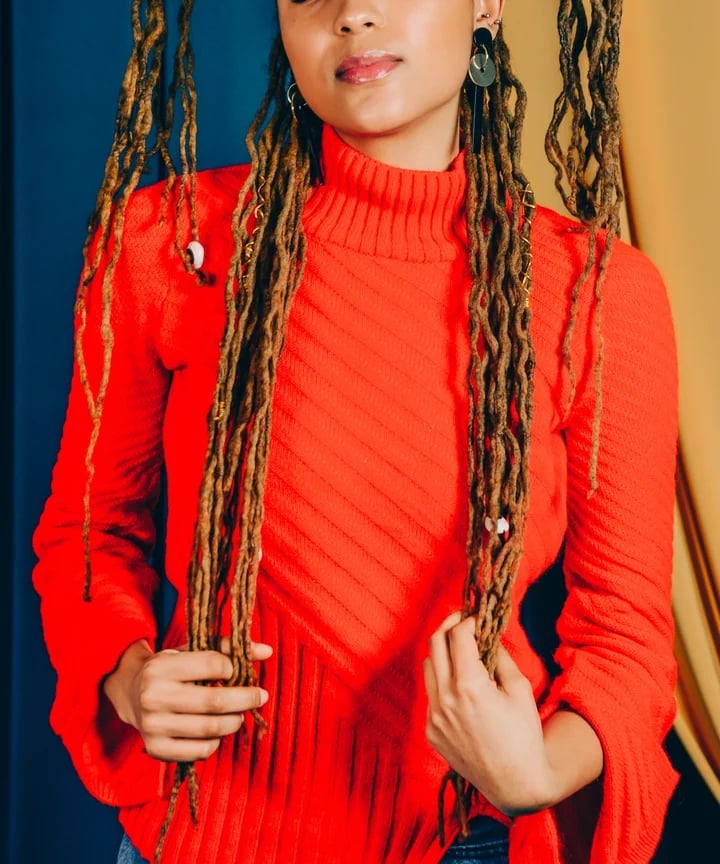
Locs worn down are versatile enough on their own, but add small beads and chains and you get a style that works for a festival or a night out without looking like you tried too hard. These mid-back locs alternate between brown strands and blonde highlights, with a middle part that keeps the weight balanced. Medium to thick hair density starting at shoulder length carries the accessories best; fine or young locs may not hold the extra weight evenly. Ask your stylist for: mid-back locs with brown and blonde highlights and decorative beads. Expect a trim every eight to ten weeks to keep the ends clean and the beads secure.
Shoulder Butterfly Locs With Two-Tone Color
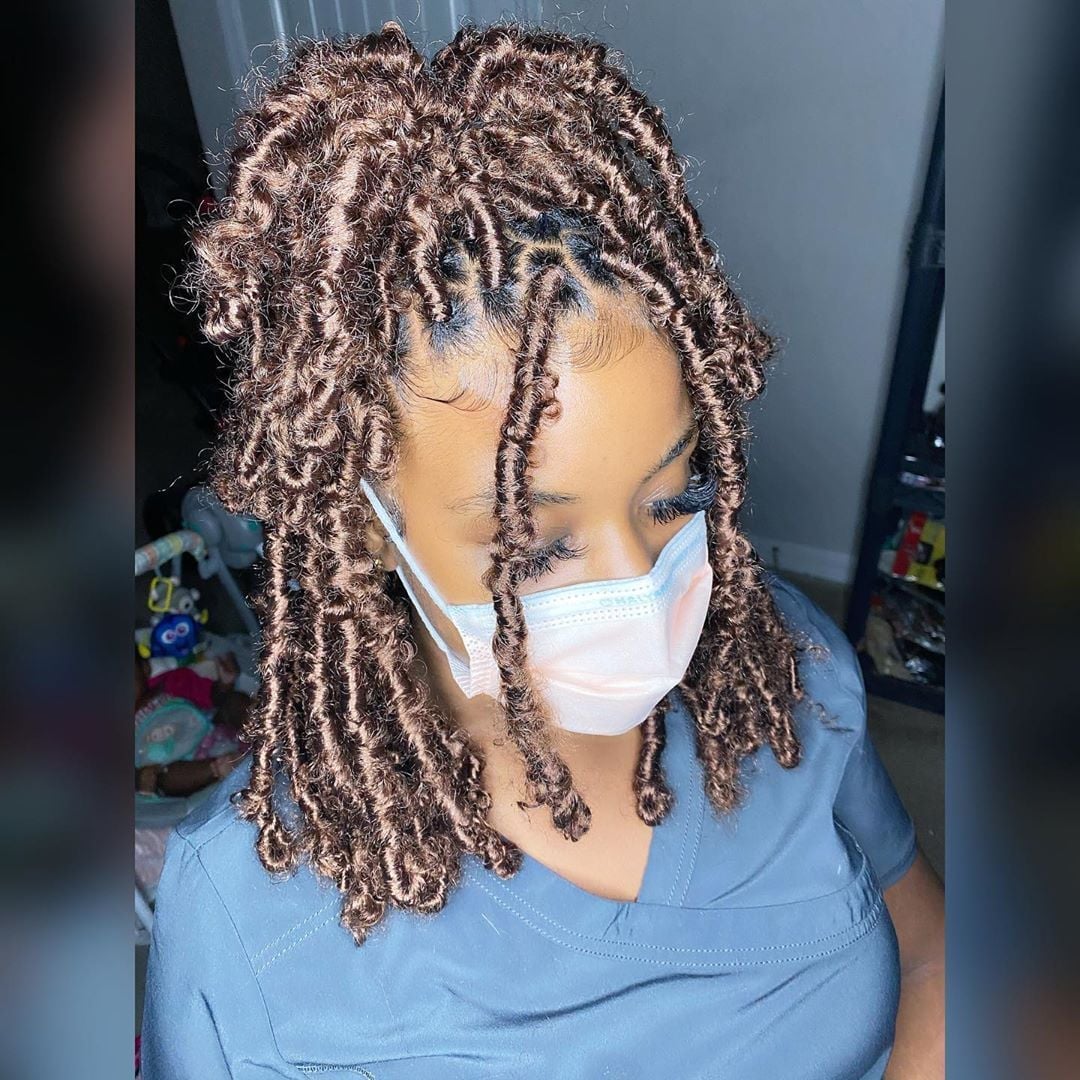
Butterfly locs get their name from the fluffy, wavy texture that fans out around the face, and the two-tone color here, brown base with blonde highlights, makes that shape read clearly. The face-framing pieces from a middle part soften a square or angular jaw without shortening the face visually. This is a solid choice for someone who wants the volume of locs without the weight of full thickness. Ask your stylist for: shoulder length butterfly locs with blonde highlights and face-framing pieces. A spritz of texture spray keeps the waviness defined, and a trim every eight to ten weeks maintains the shape. The style suits everyday wear but also works for events where you want something that moves.
Mid-Back Faux Locs Ombre With Beads
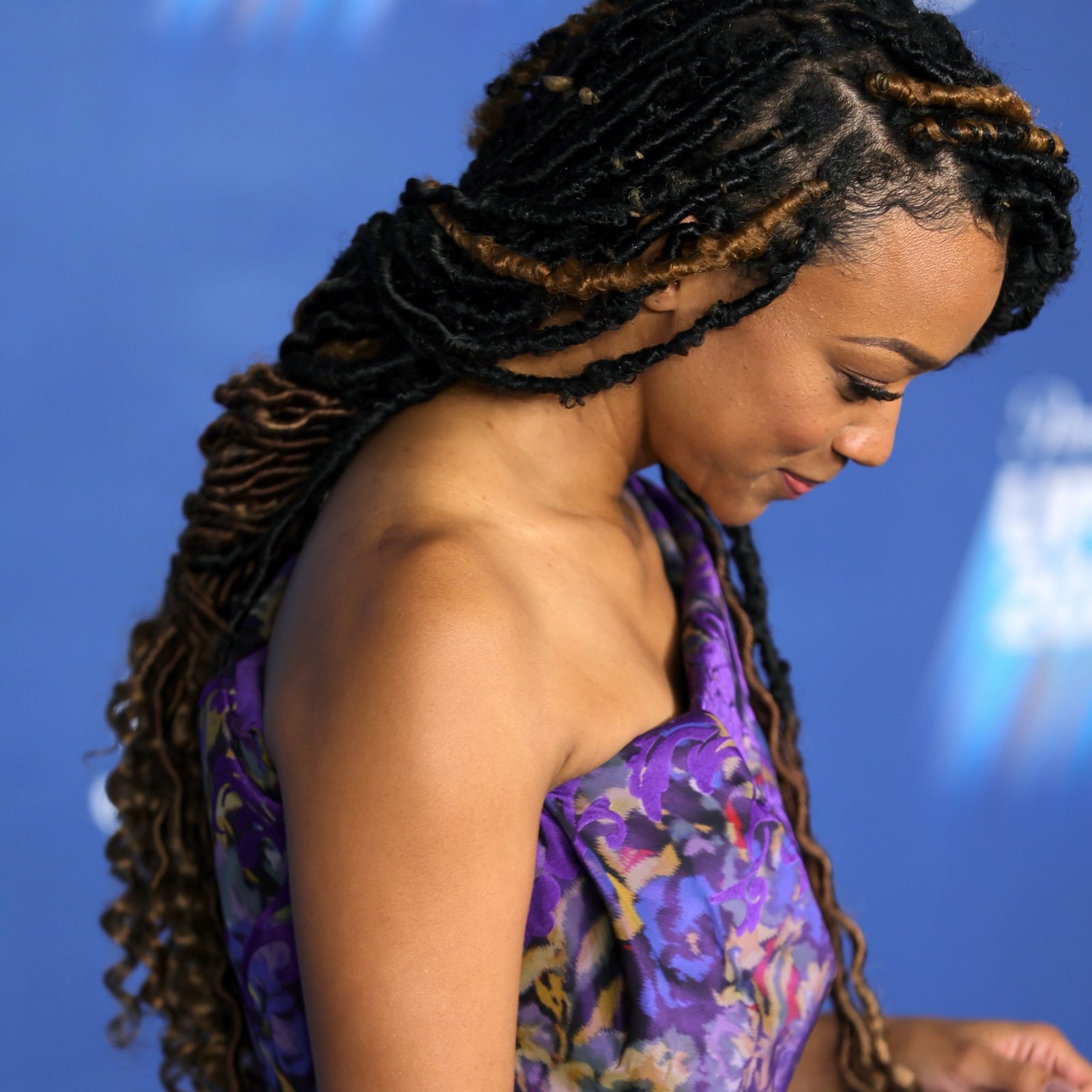
How does the ombre hold up when the ends are lightened and the roots are dark? With faux locs, the transition is installed instead of grown out, so there is no root shadow to track. These thick, wavy faux locs start dark brown at the crown and shift to blonde at the tips, with small beads scattered through the length and a side part that adds lift on one side. Ask your stylist for: mid-back faux locs with dark brown to blonde ombre and decorative beads. The blonde ends benefit from a purple shampoo every few washes to keep them cool-toned. Trims land around every eight to ten weeks if you want the hemline sharp.
Final Thoughts
The rule with down locs is simple: let your texture and color lead. Fine hair benefits from a blunt baseline and a few face-framing layers for movement. Thicker locs can carry more weight and more color without looking heavy. A side part or a center part changes the whole silhouette, so test both before you commit.
- Regular trims every 8-12 weeks to maintain shape and bluntness.
- Toning every 6-10 weeks to preserve color vibrancy.
- Use a silk scarf or bonnet at night to protect style and reduce friction.
- Deep condition locs monthly to maintain moisture and softness.
Embrace the freedom of wearing your locs down.