20 Classy Dyed Locs 2027 with Warm Brown Highlights
Classy Dyed Locs 2027 feature warm brown highlights and auburn tones for a sophisticated look. See 20 styles with microlocs and collarbone-length options.

Coloring locs used to mean a single all-over shade or a set of chunky highlights. Now the approach is more nuanced: subtle dimension, rich jewel tones, and root smudge effects are the markers of a sophisticated result.
This collection of 20 classy dyed locs ideas covers the full spectrum, from low-maintenance dark brown with lighter highlights to bold gradient techniques. Whether your locs are fine or dense, collarbone length or mid-back, you will find a color that adds depth without fighting your texture. The common struggle of a visible grow-out line is solved here with techniques like balayage and root shadowing that keep the look intentional for weeks.
Dark Brown Locs With Subtle Lighter Brown Highlights Updo
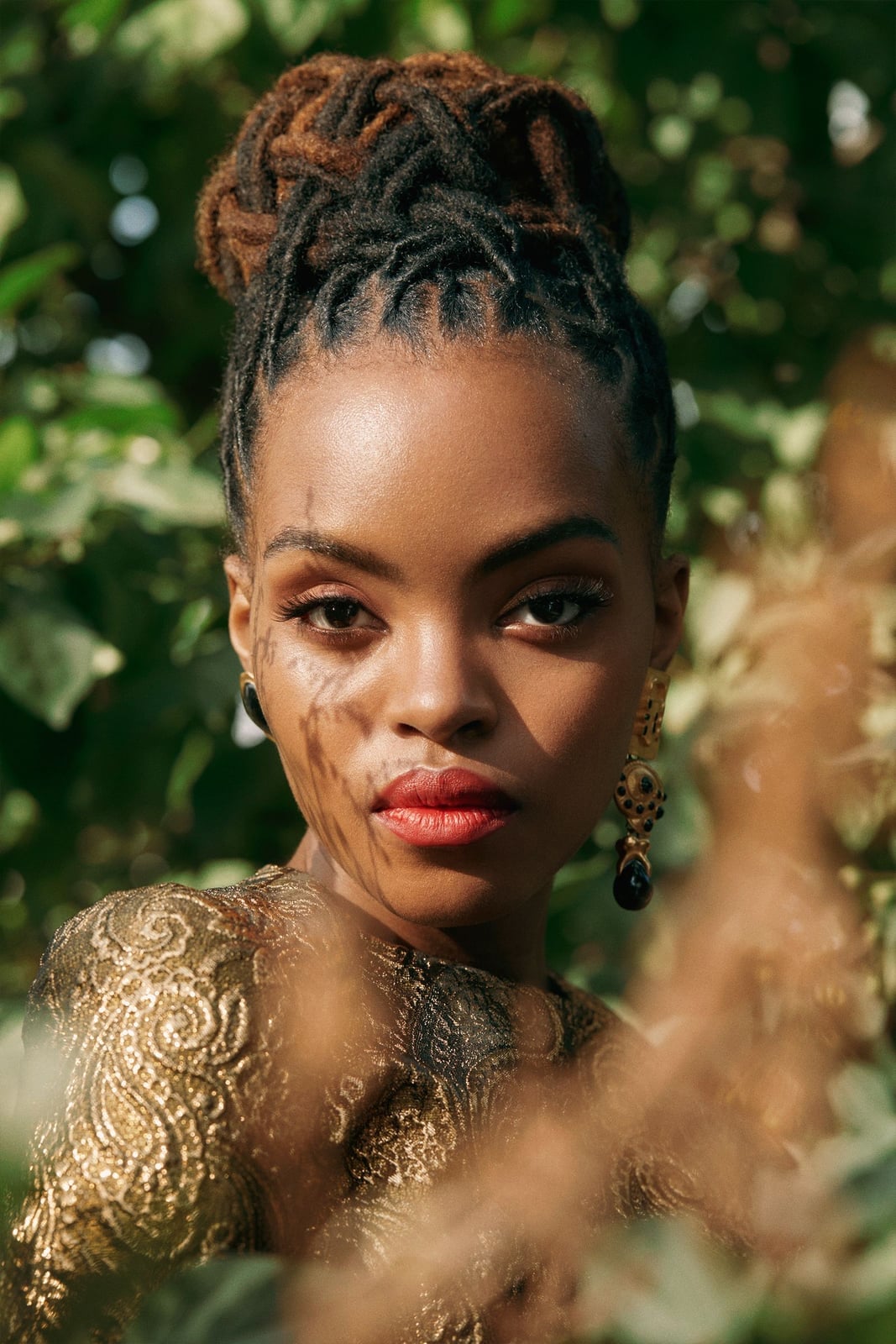
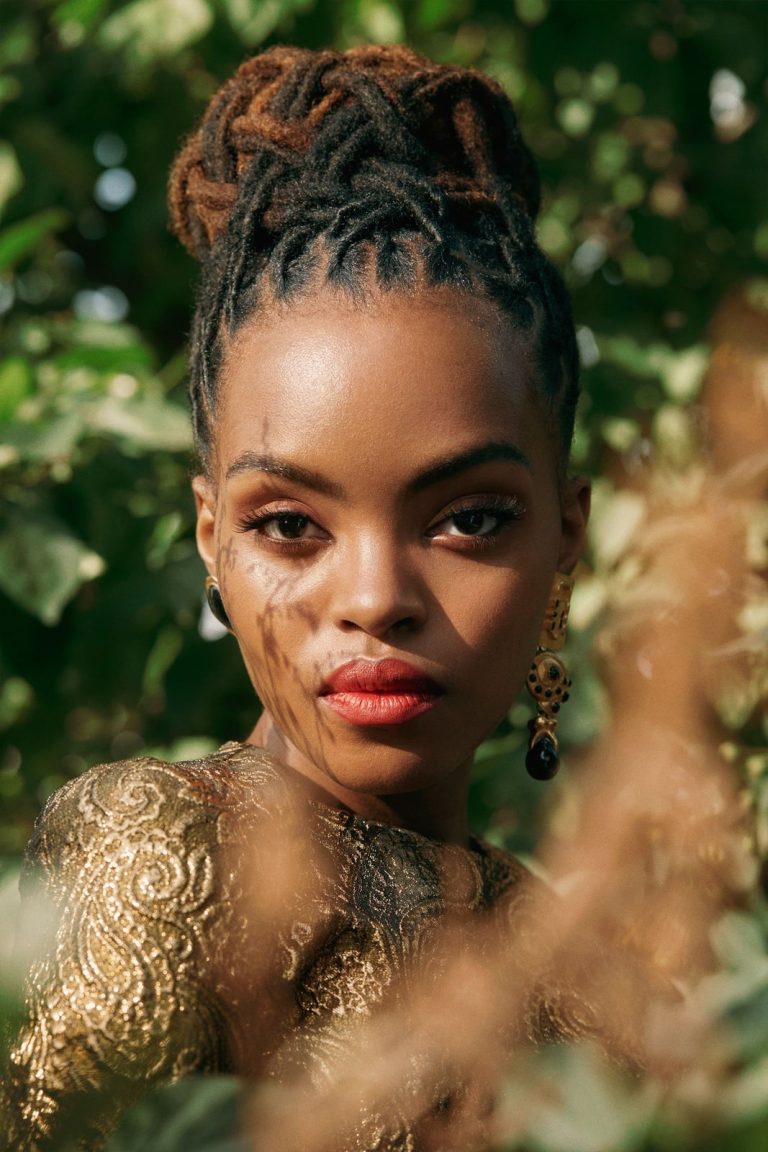
Thick, wavy locs in a dark brown base gain depth from subtle lighter brown highlights woven through the strands. The updo is intricate enough for a formal event but the real work is in the color placement: fine, thin ribbons of light brown that catch the eye without shouting. Ask your colorist for: dark brown locs with subtle lighter brown highlights, elegant updo. Thick, wavy locs of shoulder length or longer carry this dimensional effect best. The updo holds with pins or a strong elastic, and those highlights will need a trim every 8 to 10 weeks to stay sharp.
Warm Brown Microlocs With Lighter Highlights In A Bun
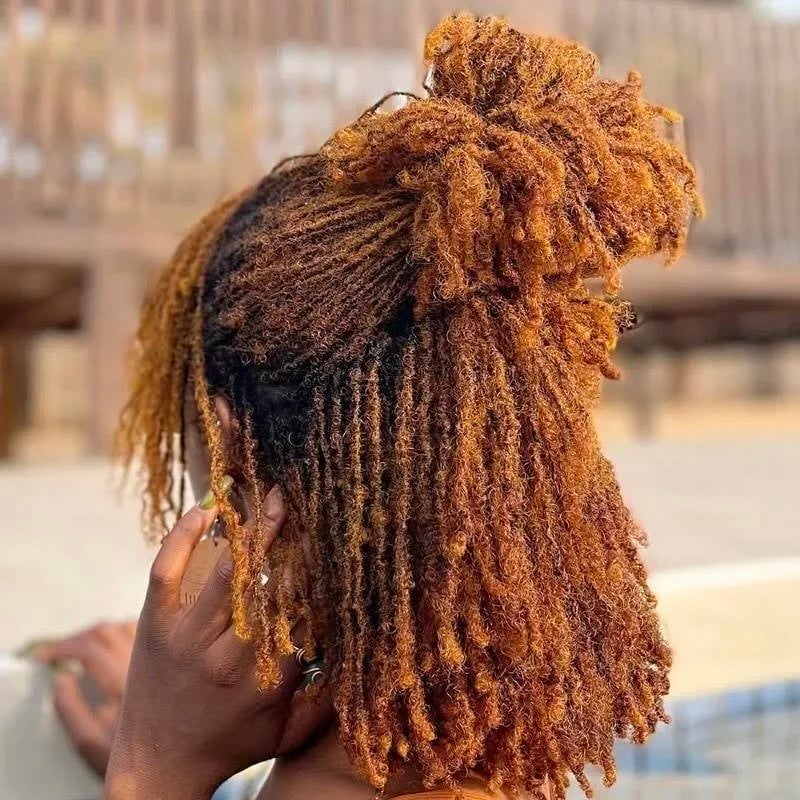
On coily, fine microlocs, a warm brown base with lighter brown highlights creates dimension that is visible from across the room. The bun pulls the color concentration toward the crown, so the lighter pieces don’t get lost in the length. Ask your colorist for: warm brown microlocs with lighter brown highlights, bun style. The technique here is precise: each strand is colored individually, which means the appointment takes longer but results in a uniform, sophisticated tone from root to tip.
Dark Brown Locs With Auburn Highlights
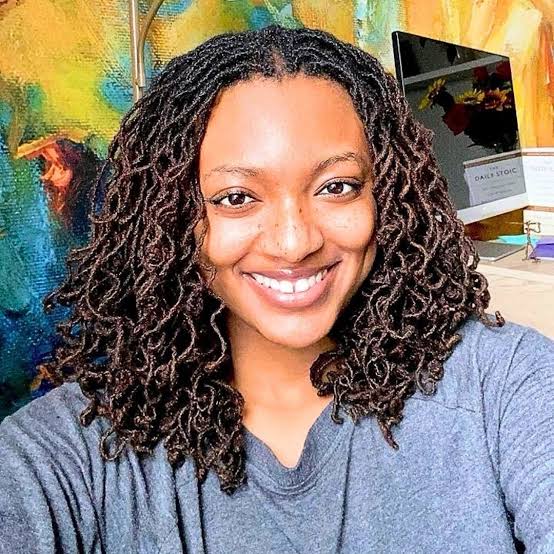
Wondering how to get auburn highlights without going full redhead? The answer is subtlety: a dark brown base with auburn highlights placed sparingly, so the warmth peeks out rather than dominates. Ask your colorist for: dark brown locs with subtle auburn highlights, side part. Coily, medium texture locs of collarbone length or longer let these tones breathe. The side parting opens up the color distribution, and air-drying with a texturizing spray keeps the definition intact without heat.
Collarbone Length Dark Red Locs
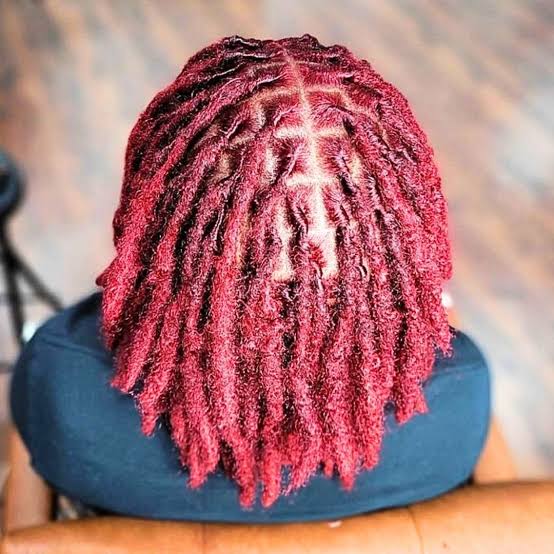
It’s not burgundy and it’s not cherry: collarbone-length locs in a dark red sit somewhere between jewel and earth, which makes them wearable without being costume. The bob shape keeps the color concentrated and easy to maintain. Ask your colorist for: collarbone length locs, deep dark red color. Coily, fine texture hair takes this shade well, but deep red fades faster than brown. A color-depositing conditioner every week keeps the tone rich, and a trim every 6 to 8 weeks prevents the ends from looking tired.
Dark Brown Locs With Honey Blonde Highlights And Braided Front
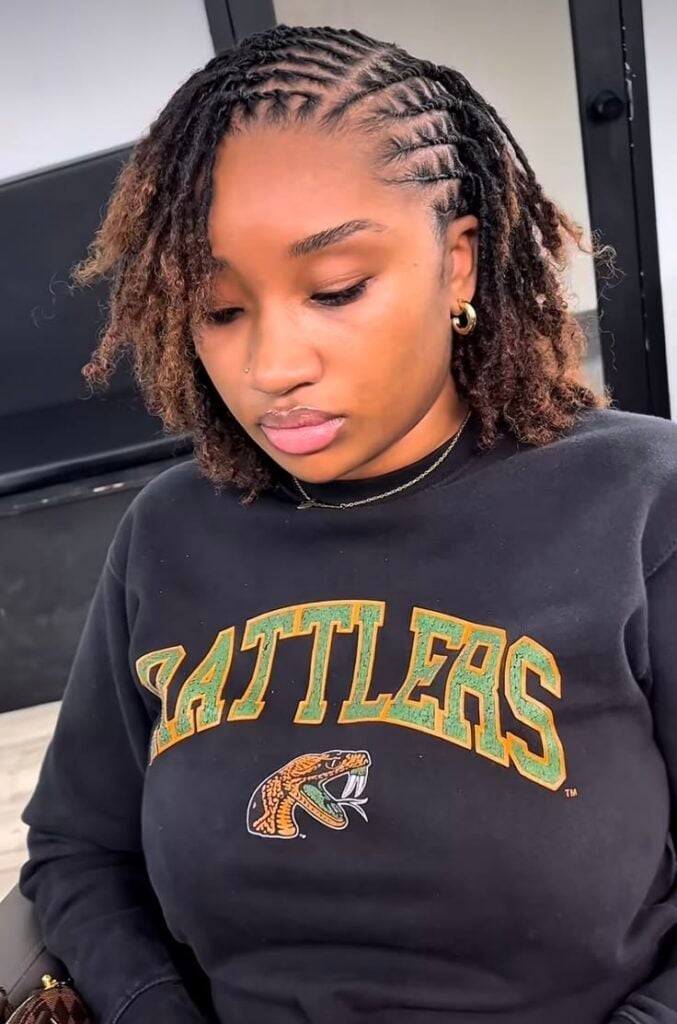
All-over honey blonde highlights add brightness, but the braided front detail changes the whole structure: it frames the face without requiring a cut or bangs. The dark brown base grounds the look while the honey pieces lift it. Ask your colorist for: dark brown locs with honey blonde highlights, braided front detail. Wavy locs of shoulder length or longer give the braids enough weight to stay put. A light hold gel keeps the front neat, and those highlights will need toning every 6 to 8 weeks to avoid brassiness.
Dark Brown To Blonde Gradient Half-Up, Half-Down Locs
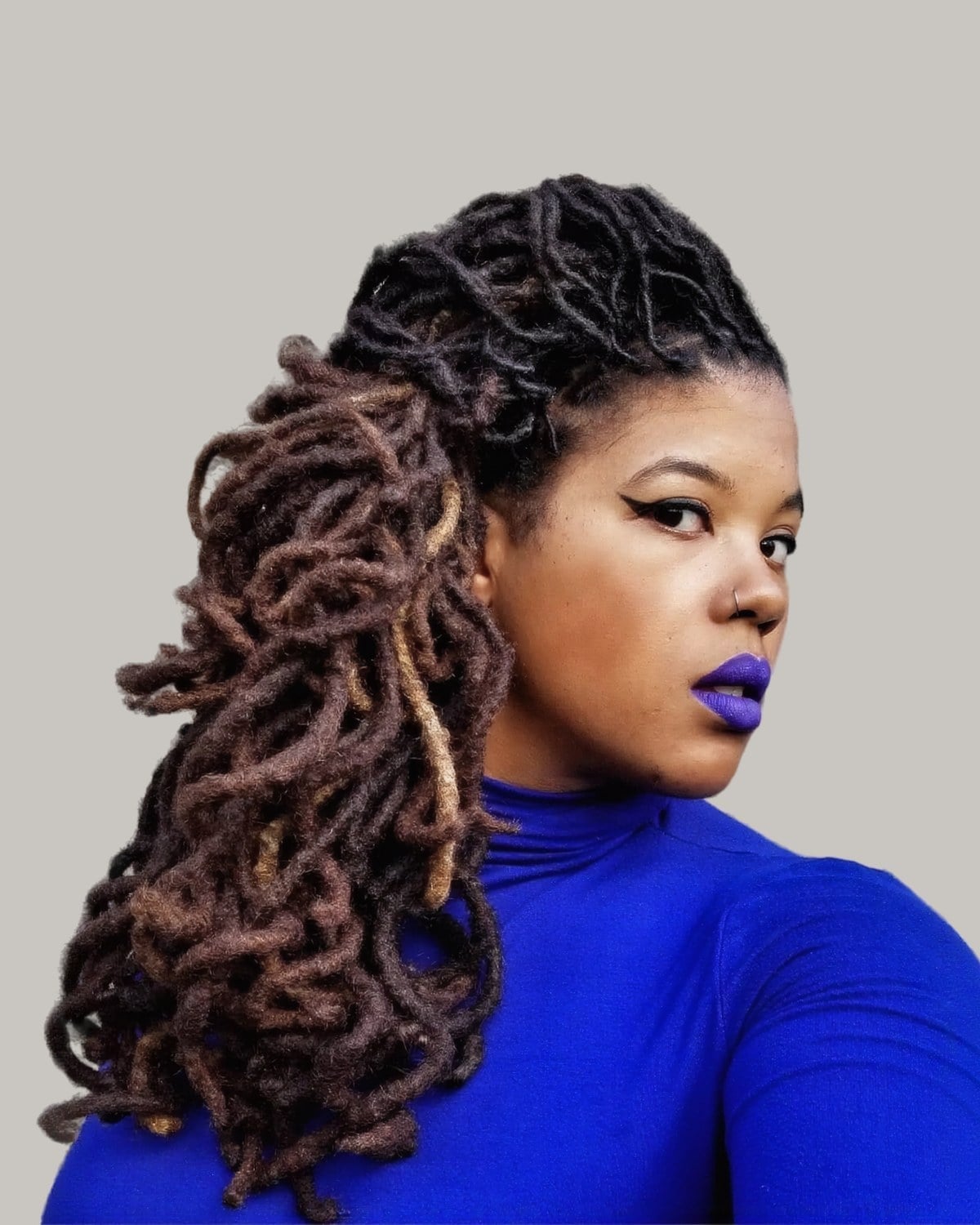
The gradient here is built from the crown down: a dark brown base at the roots transitions into blonde highlights that intensify toward the ends. The half-up styling pulls the darker top section back, letting the lighter lengths fall loose and draw the eye. Mid-back, wavy, thick locs give the color room to breathe. This design works best on hair that already has some length and density to carry the shift. Ask your colorist for: dark brown to blonde gradient locs, half-up half-down style. The blonde sections may need a toner every six to eight weeks to keep them from pulling brassy.
A side parting adds a little asymmetry to the silhouette. The half-up portion keeps the weight off your neck without sacrificing the visual payoff of the gradient. It’s a salon-level technique, but the result is a color that looks like it belongs in the hair, not painted on top of it.
Brown Locs With Caramel Highlights Loose
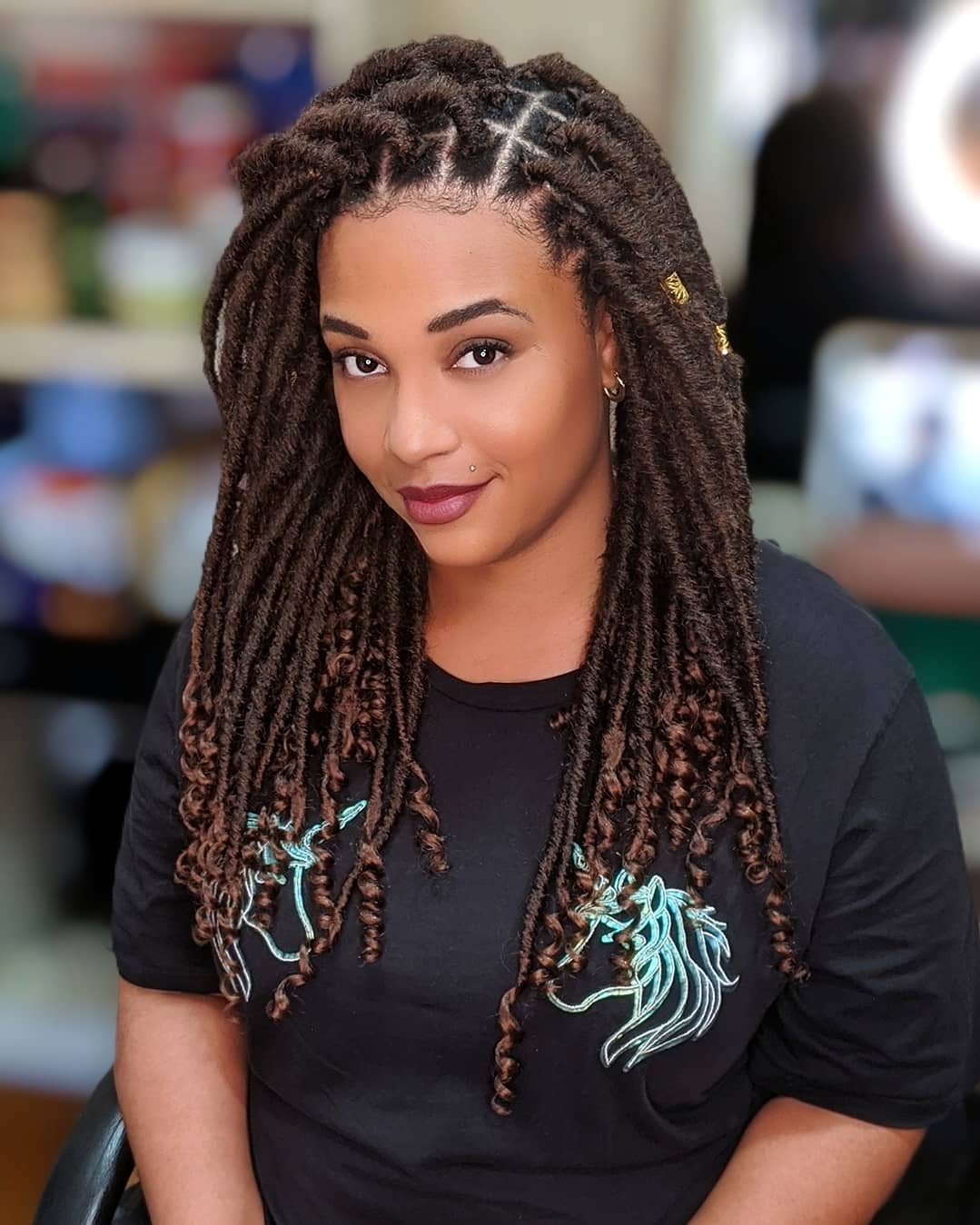
Who actually looks good in caramel highlights on brown locs? Anyone with wavy, mid-back length locs who wants dimension without a full color commitment. The brown base stays natural; the caramel pieces add warmth and movement, especially when the hair is worn loose with a middle parting. The wavy texture catches the lighter strands at different angles, so the effect changes as you move. Ask your colorist for: brown locs with caramel highlights, loose style. The highlights sit subtly throughout rather than in chunky sections.
This is a low-maintenance entry point into color. Because the base is close to your natural shade, grow-out is forgiving. The caramel tones might need a gloss every few months, but you can stretch the time between salon visits without it looking obvious. A smoothing serum on the ends keeps the wavy texture defined.
Mid-Back Dark Brown Locs With Lighter Highlights
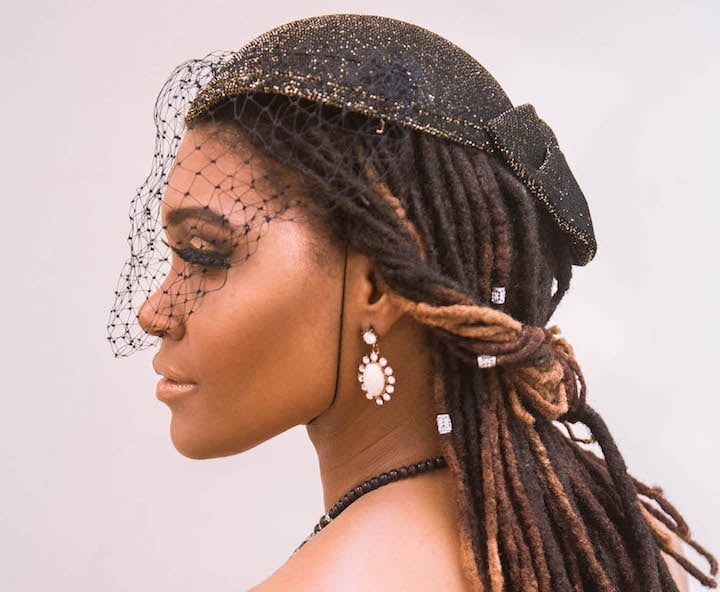
What reads as a solid dark brown from a distance reveals itself up close: subtle lighter brown highlights woven through mid-back, wavy, thick locs. The highlights are fine and spaced, so they add depth without contrast. The hair is partially tied back, which lets the darker sections at the crown anchor the look while the lighter strands peek out near the ends. Ask your colorist for: dark brown locs with lighter brown highlights, partially tied back. The tone stays warm and natural.
Upkeep here is straightforward. The highlights are subtle enough that they do not require a toner every month, but a gloss every six to eight weeks keeps them from dulling. The partially tied-back style is practical for daily wear. Those lighter strands will catch light even when the hair is pinned, so you get dimension without extra styling effort.
Black Locs With Red and Yellow Fiery Streaks
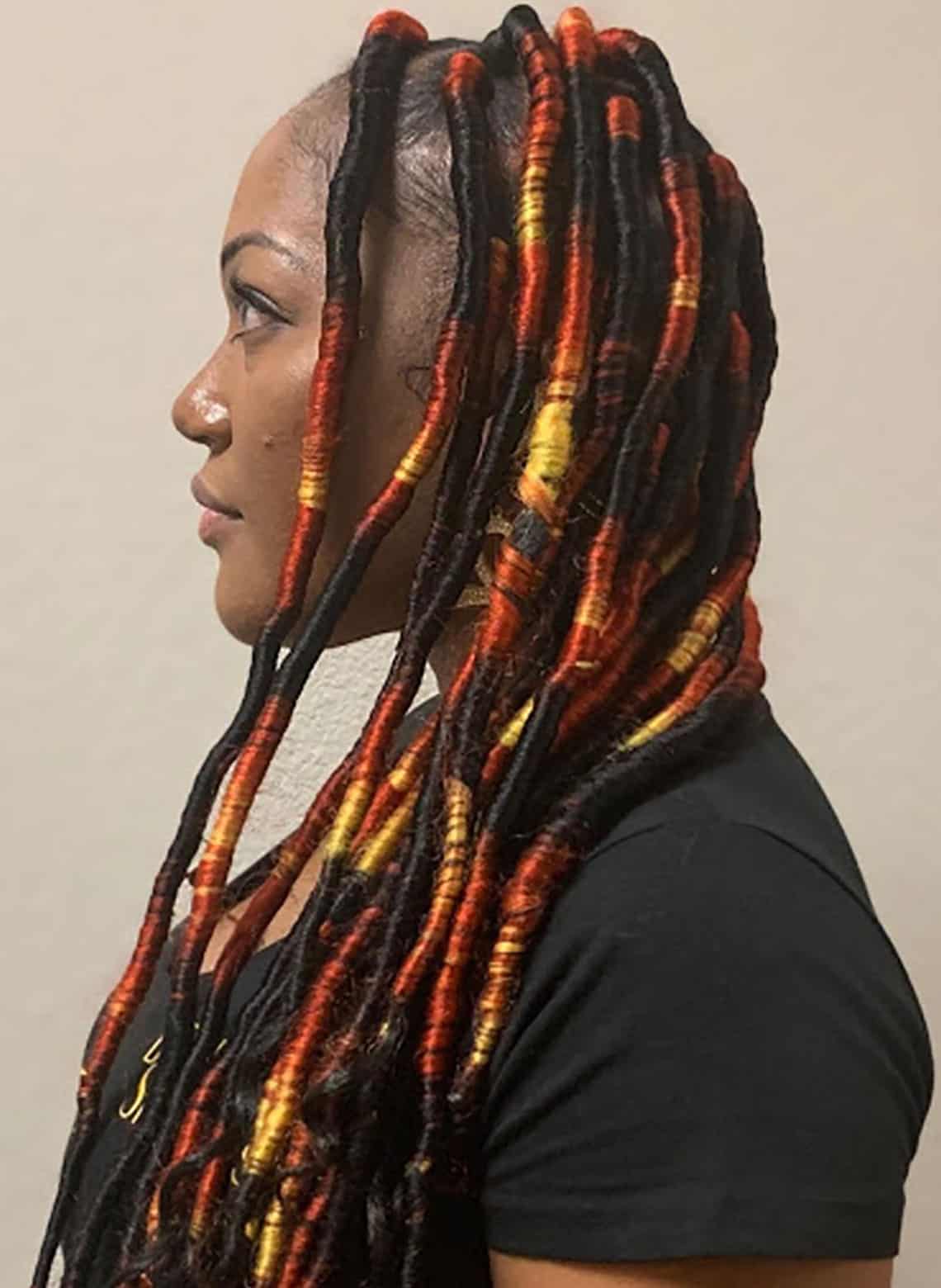
This is not a subtle color choice, and it knows it. Black mid-back, wavy thick locs form the base, with red and yellow streaks woven through like threads of fire. The effect is dimensional: the warm streaks pop against the dark background without overwhelming the texture. The locs are loose with a middle parting, letting each streak show on its own term. Ask your colorist for: black locs with red and yellow streaks, fiery effect. It is a look built for a festival, a concert, or any day you want the hair to do the talking.
Mid-Back Vibrant Copper Locs Loose
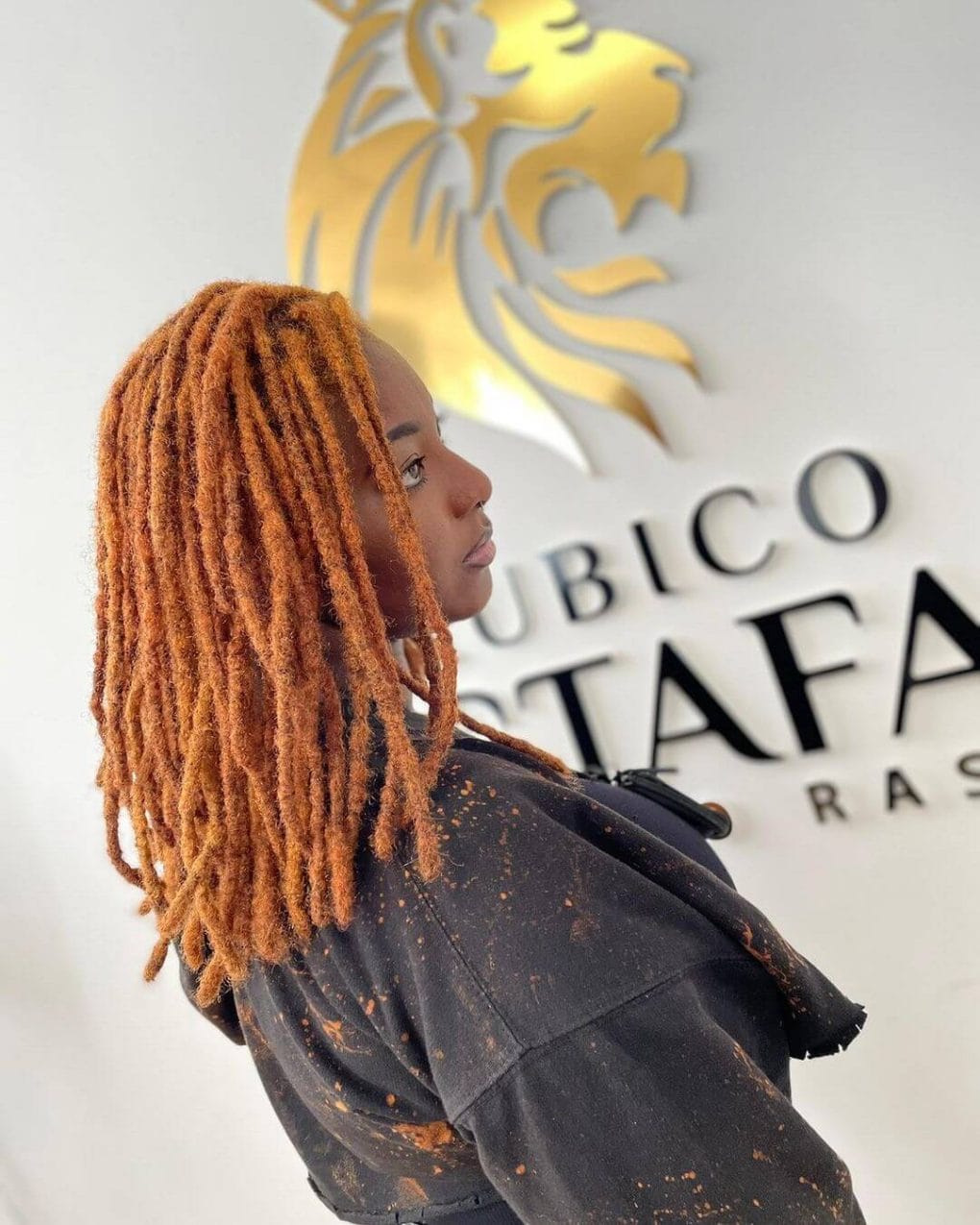
Vibrant copper is a color that demands maintenance and delivers payoff. On mid-back, wavy locs with a middle part, the uniform shade looks deliberate. The tone is rich and warm, with no highlights or lowlights to break it up. Ask your colorist for: mid-back locs, vibrant copper color, loose style. The locs texture gives the copper a matte finish that glossy hair can not replicate.
Here is the trade-off: copper fades faster than brown or black, and it shows. Without regular upkeep, it can shift to a brassy orange within a few weeks. A color-depositing conditioner or gloss every other wash helps, but this is not a set-it-and-forget-it color. If you are not ready for that rhythm, skip it. If you are, the shade stops people mid-sentence.
Mid-Back Deep Red Locs With Wispy Bangs
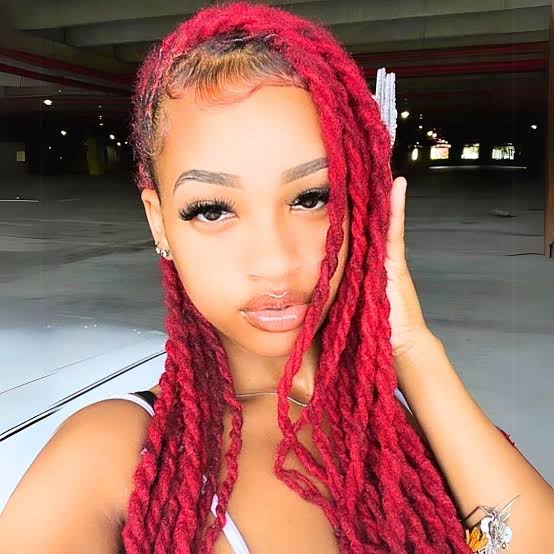
Can deep red feel like a wardrobe staple? On fine, coily locs at mid-back length or longer, a rich, deep red base with a softer root shadow and wispy bangs achieves that. Ask your colorist for: mid-back locs, deep rich red color, wispy bangs. The bangs are the key detail here, they frame without weight and need a trim every three to four weeks to stay wispy. The red shade has staying power if you wash with cool water and avoid harsh shampoos. The middle part keeps the look grounded; the color provides the main impact.
Shoulder Length Teal Locs
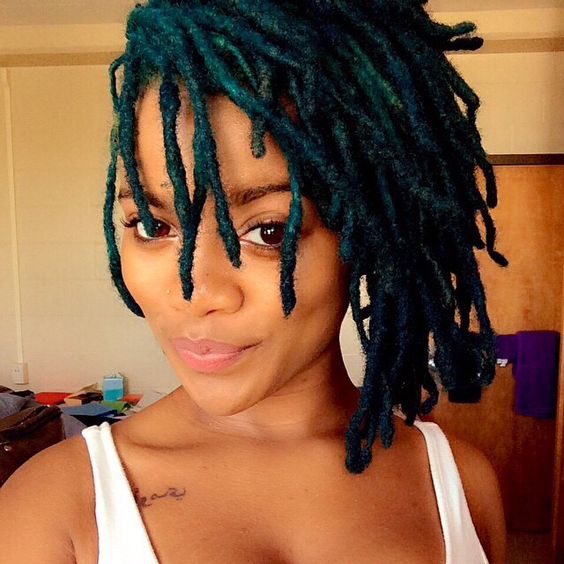
Teal is a deliberate choice, not a trend accident. On shoulder-length coily, fine locs with a side part, uniform teal lands more like a custom pigment than a fashion color. Compare it to traditional brown tones: brown blends in, teal announces itself. Choose teal if you want the locs themselves to be the accessory. Skip it if you prefer a shade that fades gracefully, teal needs color-depositing shampoo and minimal washing to stay vibrant.
Shoulder Length Red Locs With Undercut
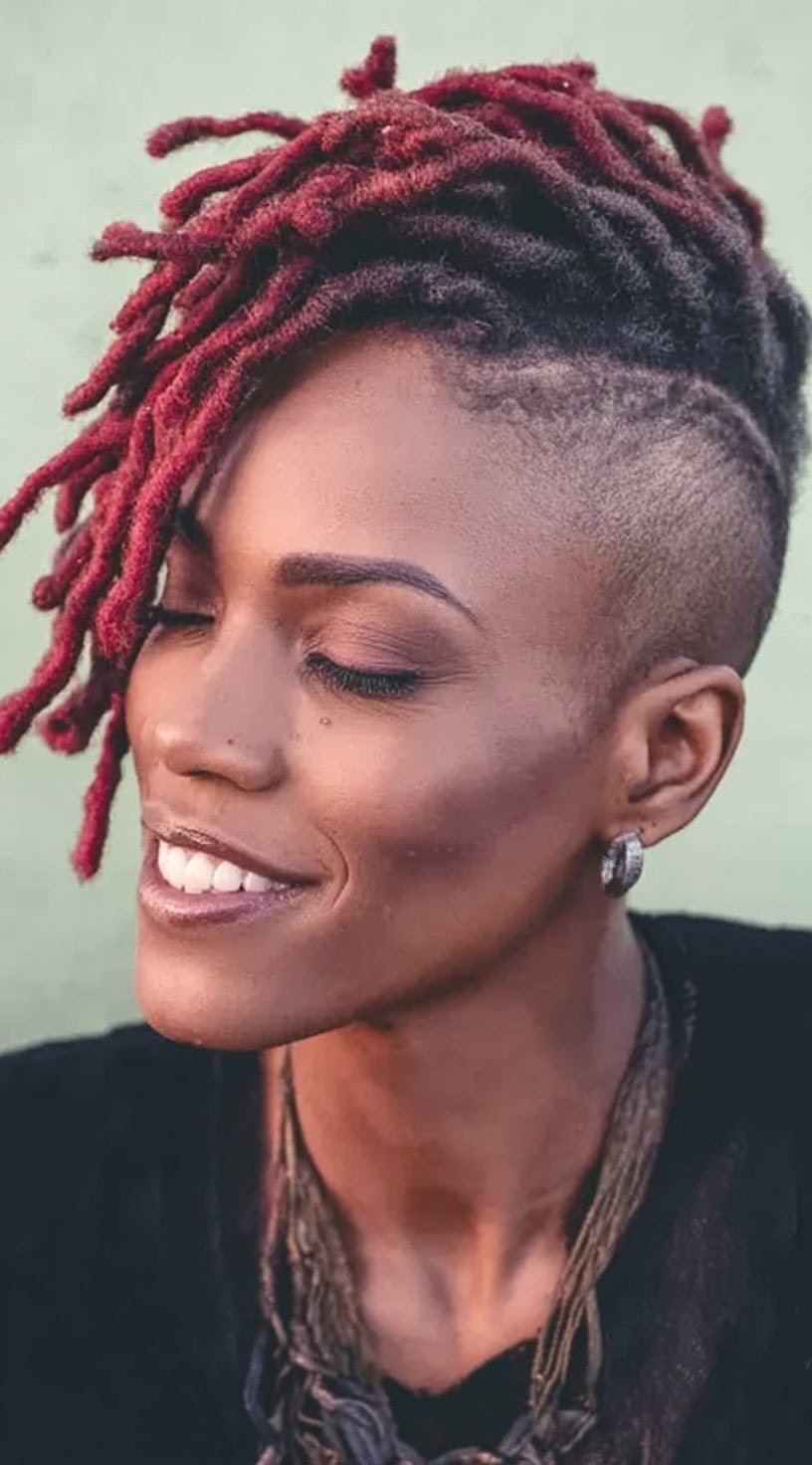
A side undercut changes the geometry of locs entirely. On thick, wavy locs at shoulder length, the undercut sits on one side while the vibrant red color covers the rest, creating contrast without bulk. Ask your colorist for: shoulder length locs, vibrant red color, side undercut. The red is applied evenly across all locs, so the undercut zone shows that color when exposed. The side part directs the length over the shaved section, which means the undercut needs a clipper pass every two to three weeks to keep the line clean.
Collarbone Length Black To Honey Blonde Ombre Locs
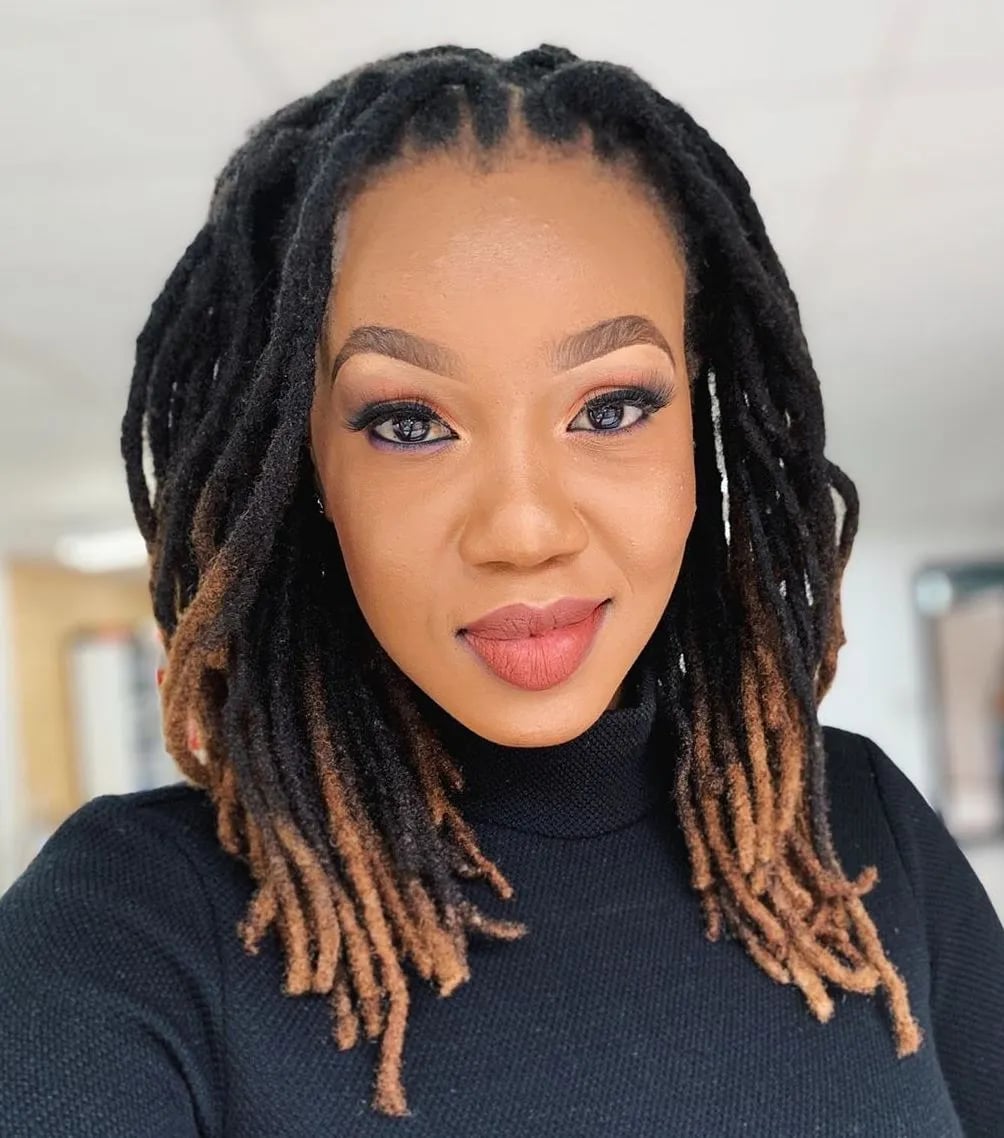
An ombre on locs is not the same as an ombre on loose hair. On collarbone-length coily, thick locs with subtle layers, a black base fading into honey blonde ends works because the transition sits in the lower half, not mid-shaft. Ask your colorist for: collarbone length locs, black to honey blonde ombre. The grow-out is forgiving since the dark root is intentional, but the blonde ends will need a trim every eight weeks and a toner every four to six to keep the honey tone from pulling brassy. The middle part and air-dried texture keep it from looking overdone.
Mid-Back Black To Orange Brown Ombre Curly Locs
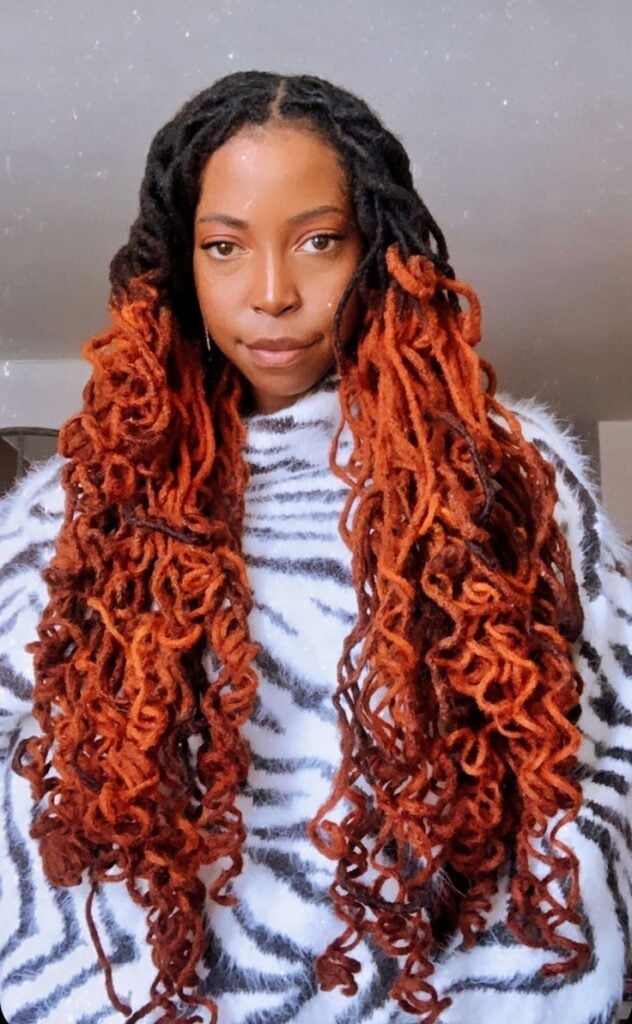
Who should actually try black to orange brown ombre on curly locs? Thick, curly locs at mid-back length or longer, with enough density to handle a visible color shift. The black base grounds the look, and the orange and brown tones add warmth to the curls. Ask your colorist for: mid-back locs, black to orange brown ombre. This transition suits anyone who wants a warm, dimensional color without committing to full blonde lift. It is less forgiving on fine or thin locs, where the contrast can look stark instead of blended. The middle part and voluminous curl pattern give the ombre room to blend naturally.
Mid-Back Black To Blonde Curly Faux Locs
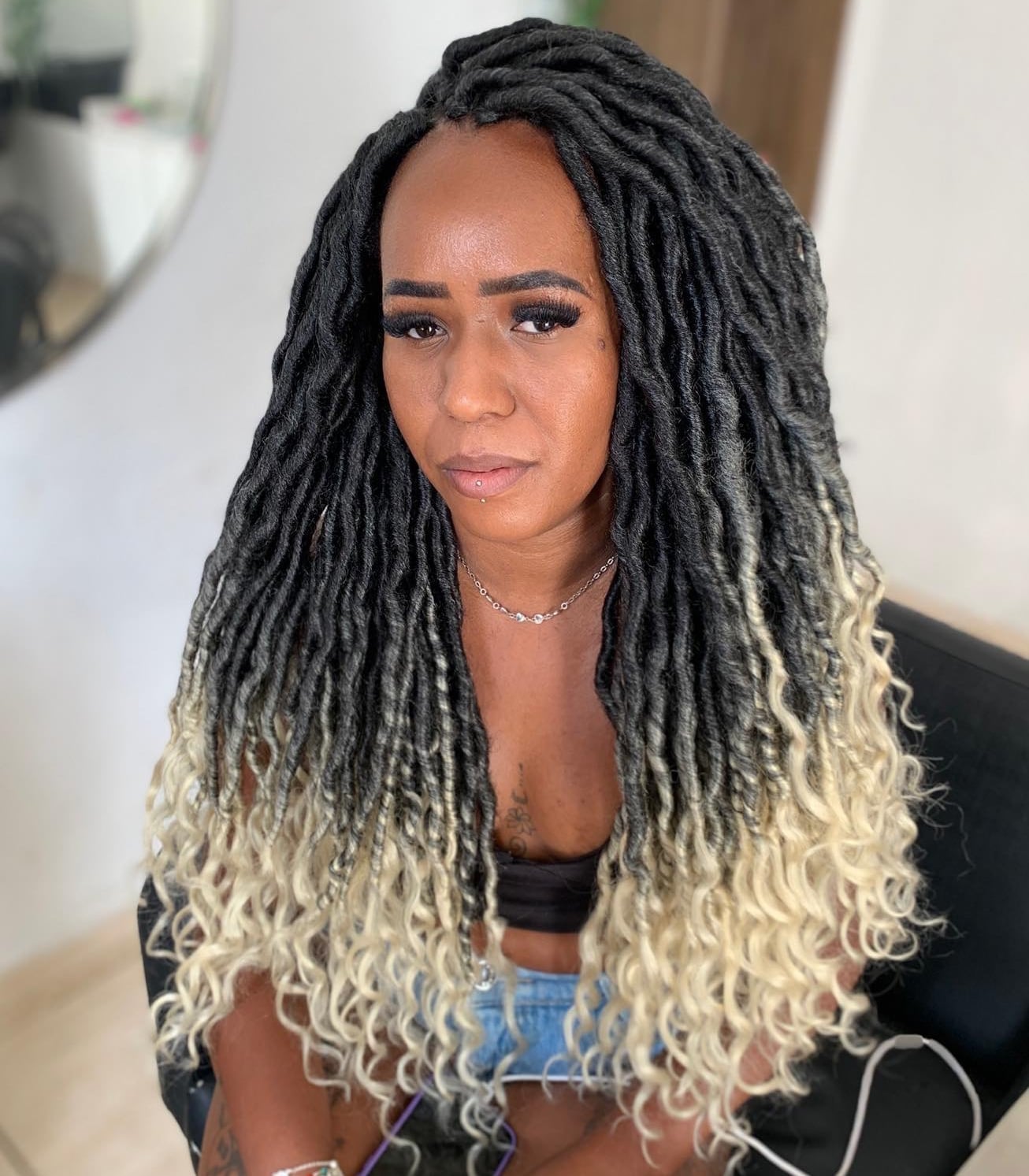
Curly blonde ends on a black base give these faux locs a finish that looks deliberate. The design is simple: thick, mid-back length faux locs with a middle part, transitioning from black at the roots to distinct blonde curls at the tips. It is a statement of contrast, and it requires a salon visit to pull off properly. Achieving that clean blonde on curly ends from a black base is not a DIY task; a professional will lift the color evenly and place the tone so the ends appear blonde rather than brassy.
Ask your colorist for: mid-back faux locs, black to blonde curly ends. The curly ends need specific styling to keep their definition, and the blonde sections will demand a toning shampoo every few washes to stay cool. This two-tone loc style offers the drama of color without the permanent commitment of dyeing natural hair. Just budget the time: a full set of faux locs with color takes several hours in the salon.
Shoulder Length Brown Locs With Red Undertones And Beads
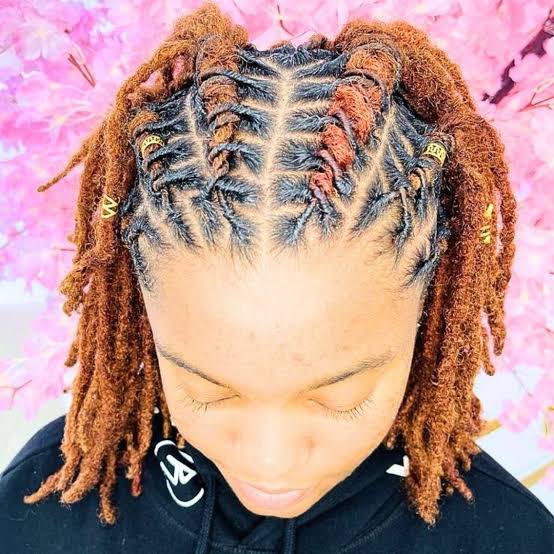
An intricate braided pattern on the scalp turns these shoulder-length locs into a piece of wearable art. The base is a rich brown with subtle red undertones, a color that shows dimension without shouting. Fine, coily locs are sectioned into precise braids that follow the curve of the head, and gold beads are threaded into some of the strands for a bit of shine. Ask your colorist for: brown locs with red undertones, intricate braids with beads. The braiding itself is a technique that requires a steady hand, so this is a salon-only project. The beads can be swapped out or removed as the mood strikes, which gives the style some flexibility after the initial install.
Mid-Back Brown Locs With Blonde Highlights Updo
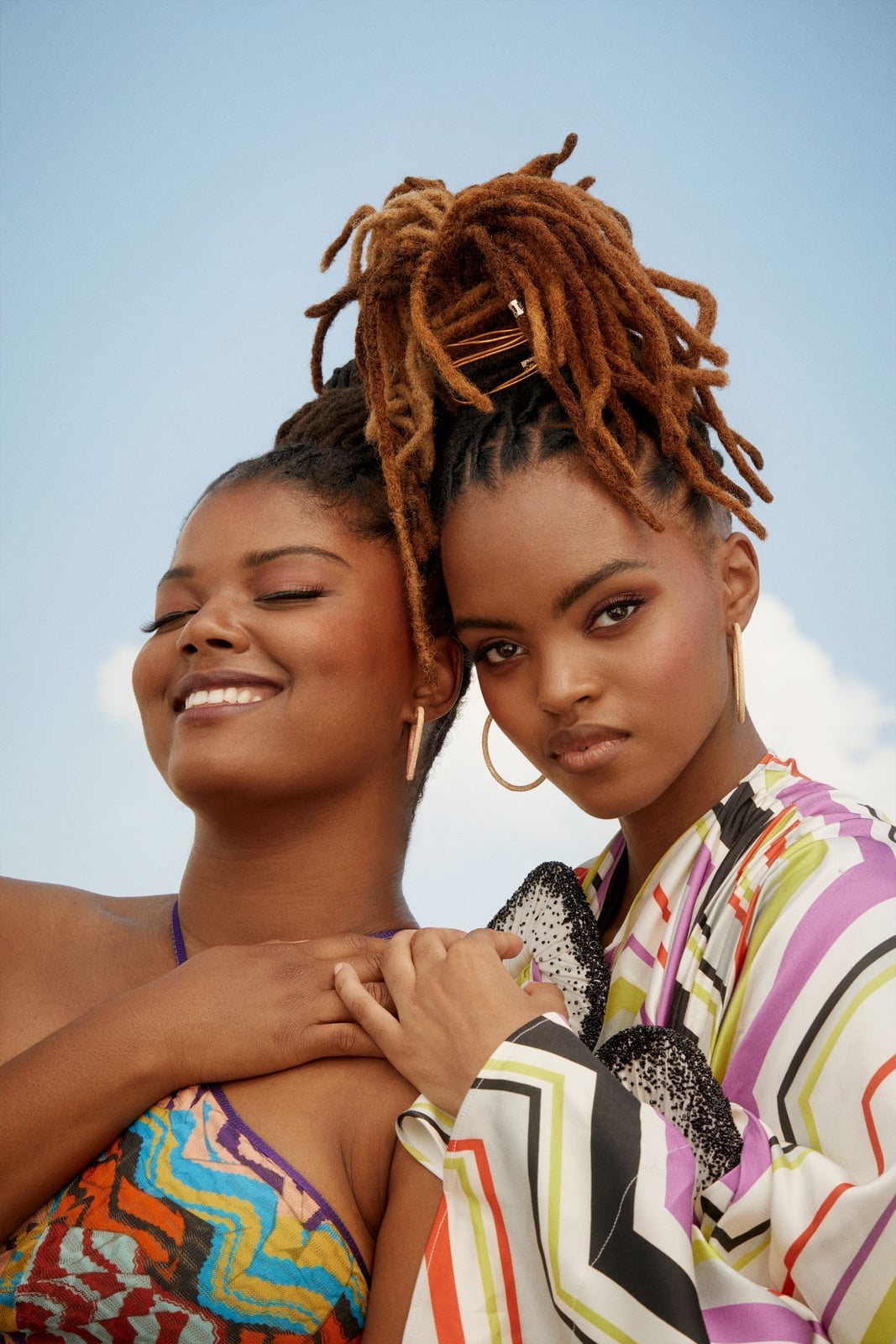
What makes a brown base with blonde highlights feel appropriate for a formal event rather than casual? The updo. Here, thick, wavy locs at mid-back length are swept into a high updo that shows off the dimensional color work. The brown base grounds the style, and the blonde highlights keep it from reading as too heavy or severe. A middle part keeps the silhouette balanced.
Ask your colorist for: brown locs with blonde highlights, high updo. This style works well for weddings, galas, or any occasion where you want the hair to look polished without being fussy. A strong hold hairspray will keep the updo in place through a long evening. The blonde highlights will need a toning gloss every six to eight weeks to maintain their brightness, but the brown base can go longer between color services.
Mid-Back Pink Gradient Braided Locs
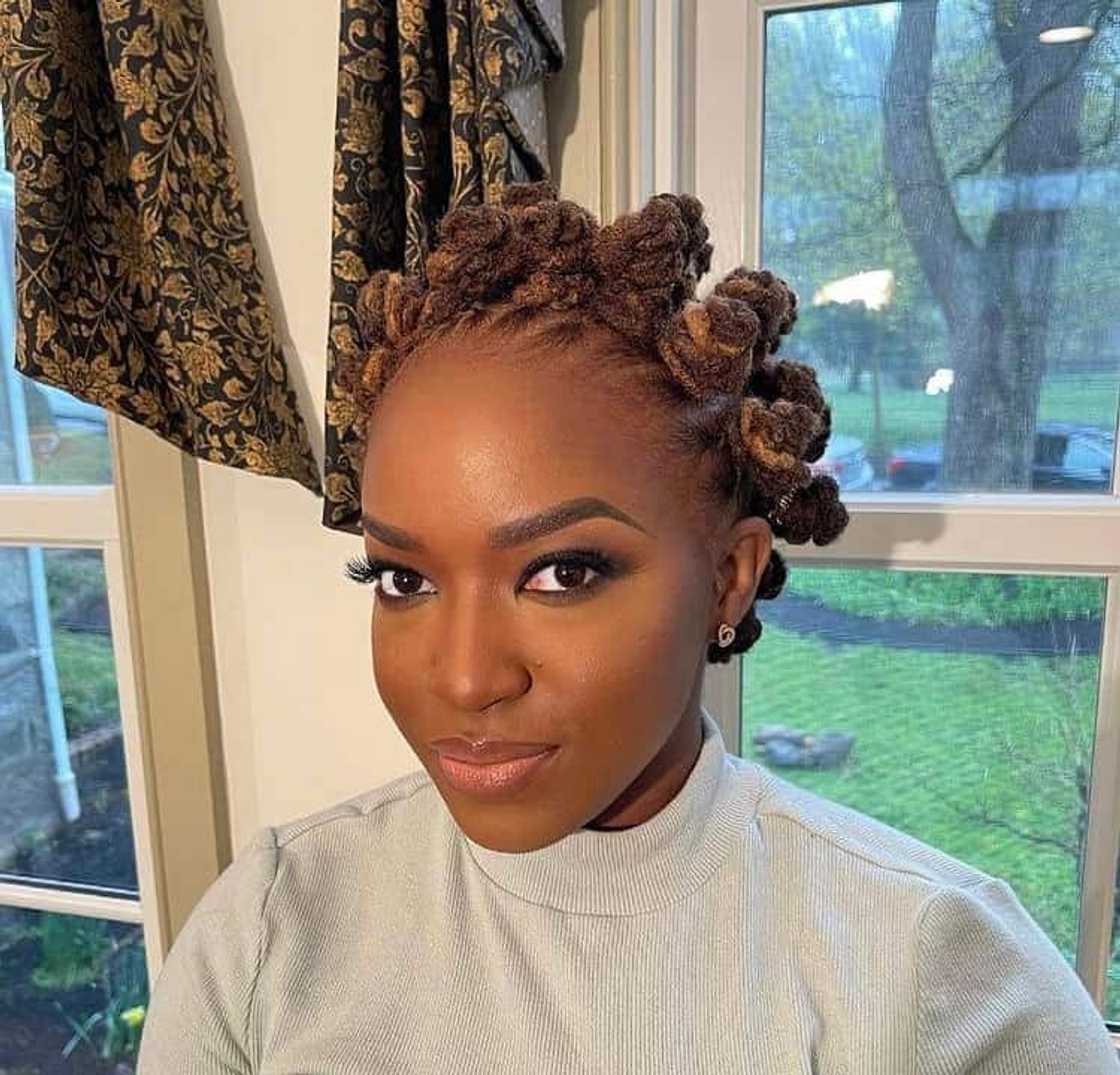
Here is a fair look at a bold color: vibrant pink to lighter pink gradient braided locs are eye-catching, but they come with a real upkeep trade-off. The thick locs reach mid-back and are styled in braids, with a middle part and a color that moves from a deep, saturated pink at the roots to a soft, pastel pink at the ends. This gradient is modern and high contrast.
Ask your colorist for: mid-back locs, vibrant pink to lighter pink gradient, braided. The drawback is that pink shades are notorious for fading, especially in the lighter sections. A color-depositing conditioner will be your friend between salon visits, and you will want to wash in cool water to slow the fade. This is not a low-maintenance color, but for someone who wants a playful, festival-ready look, it stands out in a crowd.
Mid-Back Multicolor Dyed Locs Updo
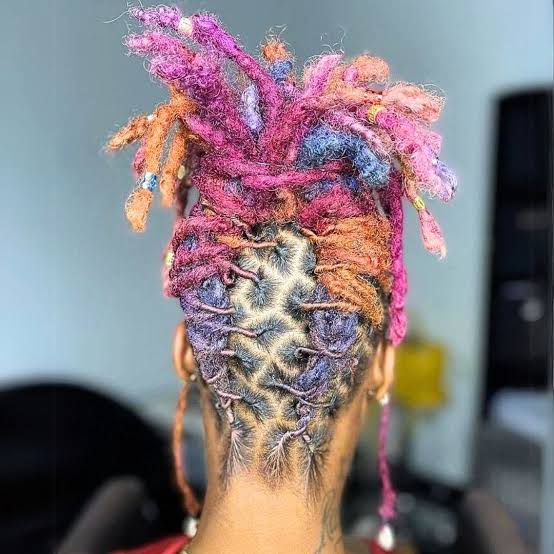
Geometric sections at the back of the head create a structured canvas for a multicolor dye job. Thick, wavy locs in an updo show off a rainbow of pink, orange, blue, and purple tones, with small decorative beads threaded into some of the locs for extra texture. The mid-back length gives the colorist enough space to place each shade with intention, and the updo keeps the look sculptural rather than chaotic.
Ask your colorist for: mid-back locs, multicolor dye with pink, orange, blue, purple tones, updo. When requesting a multicolor look, bring reference photos and be specific about placement: you want the colors to read as distinct sections, not a muddy blend. A color-safe shampoo and cool water will help prevent the shades from bleeding into each other. This is a salon-only project, and the result is a wearable piece of color art that works for festivals, photoshoots, or any time you want the hair to do the talking.
Final Thoughts
Pick a color that works with your natural undertone and the depth of your locs. For a subtle effect, ask for highlights or a root smudge; for a bolder statement, go with a gradient or ombre in a rich jewel tone.
- Color maintenance trims are typically needed every 8-12 weeks.
- Toning might be required every 4-6 weeks to prevent brassiness.
- Use color-safe shampoos and conditioners to preserve the shades.
- Limit heat styling to once or twice a week with a heat protectant.
Color your locs with confidence and let the depth speak for itself.